
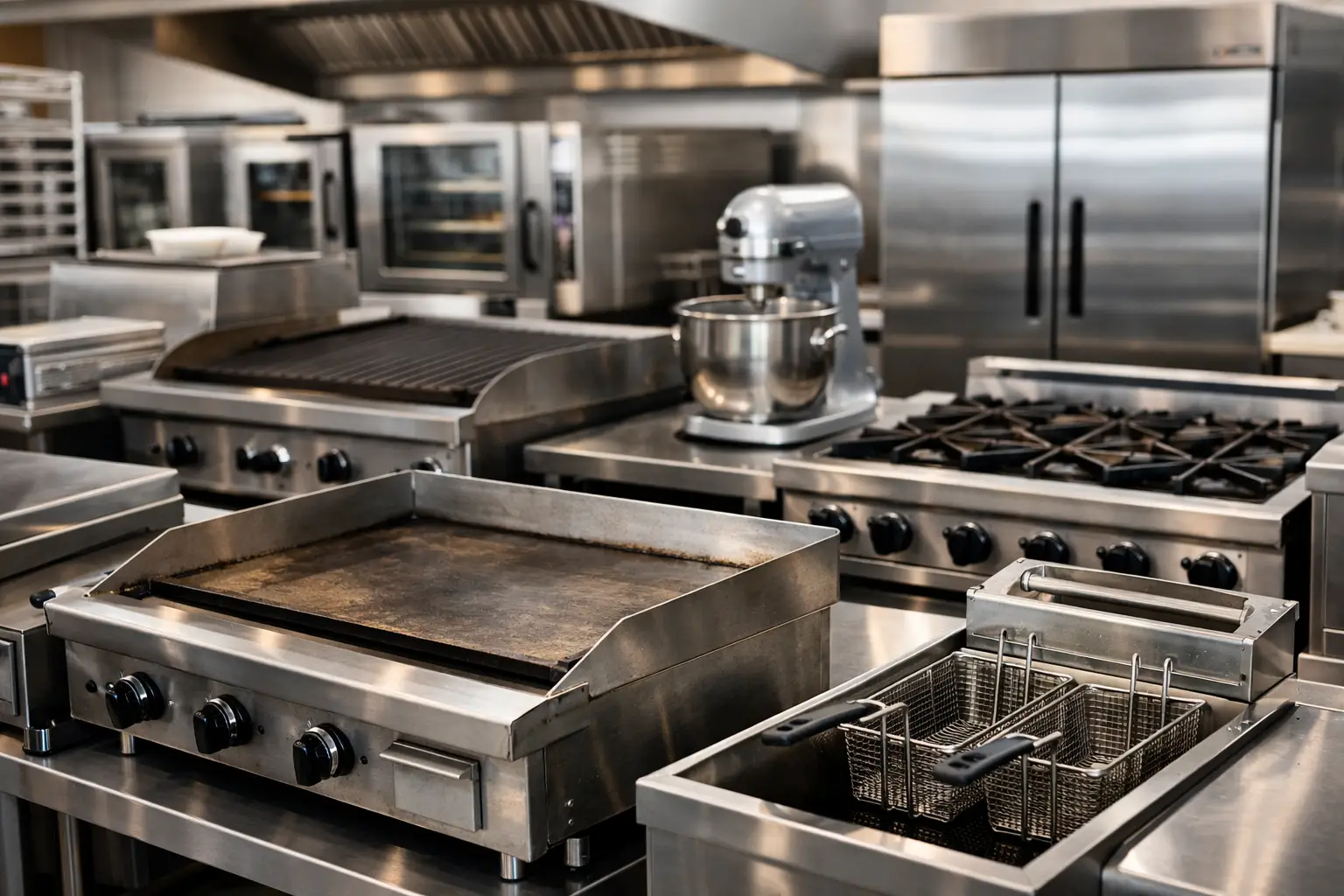
A combi oven that is only a few years old, a well-maintained dishwasher or a solid stainless-steel bench can reduce the cost of a kitchen project without reducing your service standard. For cafés, restaurants, takeaways, pubs, caterers and institutional kitchens, used commercial kitchen equipment can be a practical way to open sooner, replace failed gear quickly or add capacity before a busy period.
The key is buying for the job, not just the ticket price. A bargain is only a bargain when it suits your menu, space, services and expected volume. A fryer that is too small for Friday trade, or a refrigerator that cannot hold temperature under load, will cost more in lost product and downtime than it saved upfront.
Why pre-owned equipment makes business sense
For many operators, the biggest advantage is straightforward: quality branded equipment can be available at a lower purchase price than new. That leaves more of the budget for extraction, plumbing, electrical work, fitout labour, stock, signage or the working capital every new venue needs.
Pre-owned equipment is also useful when a kitchen has a targeted problem to solve. A bakery may need another planetary mixer for seasonal production. A club may need an additional underbench fridge at the bar. A caterer may need mobile hot-holding equipment before an event run. In these cases, buying used can be faster and more sensible than redesigning the whole kitchen around brand-new equipment.
There is also a practical sustainability benefit. Extending the working life of commercial-grade equipment keeps serviceable machinery in use and reduces unnecessary waste. That said, sustainability should be the result of a sound purchase, not the only reason for it. Commercial equipment must still be safe, reliable and fit for purpose.
Used commercial kitchen equipment starts with your workflow
Before comparing models, map how food and staff move through the kitchen. Receiving, cold storage, preparation, cooking, pass, wash-up and waste should work in a logical order. An item may be priced well, but if it blocks a walkway, creates a bottleneck at the pass or forces staff to cross paths during service, it is not good value.
Start with capacity. Consider covers per service, peak-hour orders, batch sizes and the number of staff using the item. A small café may be well served by a compact bench-top unit, while a high-volume takeaway shop needs equipment built for sustained output. The same applies to refrigeration. Look at usable internal capacity, tray or pan configuration, door opening direction and where stock will be loaded during trade.
Then confirm the services. Gas equipment needs the right gas type and a compliant installation. Electric equipment can require single-phase or three-phase power. Dishwashers need suitable water supply, drainage and often ventilation. Refrigeration needs clear airflow around condensers and enough room for doors to open properly. Measure doorways, corridors, lifts and the final equipment position before ordering. A large oven that cannot get through the back entrance is not a small problem.
What to inspect before you buy
Condition matters more than appearance alone. Stainless steel is durable and often cleans up well, but dents, corrosion and damaged doors can indicate heavier wear or affect daily use. Ask about the equipment’s age, history and what checks have been completed. Where possible, inspect the unit in operation or request clear details of its tested condition.
For cooking equipment, check burners, pilot lights, thermostats, ignition, oven doors, seals, knobs, grates and grease-management components. On fryers, pay close attention to the tank, taps, baskets and thermostat operation. For combi ovens, inspect the door seal, racks, spray arm, drain, controls and steam function. Repairs on specialised parts can quickly change the value equation.
Refrigeration should be assessed beyond whether it feels cold at the time. Ask whether it pulls down to temperature, holds temperature, has clean door seals, closes correctly and has a condenser that has been maintained. Look for excessive noise, visible ice build-up, water leaks or signs of hard use around hinges and shelves.
With dishwashers, inspect wash arms, baskets, pumps, hoses, filters, door condition and controls. Confirm the unit suits your available power and water setup. A machine designed for a different electrical supply or wash cycle demand can create installation costs that were not included in the original purchase price.
A useful buying check should cover at least these five areas:
- Equipment dimensions, access path and final placement
- Gas, electrical, plumbing and ventilation requirements
- Capacity for your busiest trading period, not your quietest day
- Tested operation, service history and available warranty
- The cost of delivery, installation, commissioning and any repairs
Compliance is part of the purchase price
Commercial kitchens operate under strict safety and foodservice requirements. Used equipment must be suitable for commercial use and installed correctly. In Australia, gas, electrical and plumbing work should be completed by appropriately licensed trades. Requirements can also vary by site, council, landlord, insurer and the type of food operation you run.
For gas appliances, verify appliance approvals and make sure the installation will meet local requirements. For electrical units, confirm voltage, phase and plug or hard-wiring needs before delivery. For refrigeration and food display cabinets, make sure the equipment can support safe food storage temperatures in the actual environment where it will operate, not just in a showroom.
Do not overlook ventilation and extraction. Adding a chargrill, wok burner, gas range or fryer may trigger further work to your exhaust canopy, fire suppression or make-up air arrangements. It depends on the appliance and the existing site, but this is an area where early advice avoids expensive changes after delivery.
When buying used is the right call – and when it is not
Pre-owned equipment is often a strong choice for stainless-steel benches, shelving, sinks, worktables, display units and many durable cooking appliances. These items can offer years of service when their structure and working components are in good order.
It can also be a smart option for operators replacing like for like. If an existing underbench fridge, fryer or oven has failed and the kitchen layout already works, a suitable quality pre-owned replacement can get the operation moving again without a full refurbishment.
New equipment may be the better choice where energy efficiency, manufacturer warranty, exact dimensions or current technology are critical. High-use refrigeration, specialised combi ovens and dishwashers can have a different long-term cost profile depending on their condition, utility use and expected service demand. If your venue runs seven days a week at high volume, a lower upfront price should be weighed against likely maintenance, lost trade and energy consumption.
The best approach is often mixed. Use new equipment for the items that carry the highest operational risk or need a specific specification, then use quality pre-owned equipment for benches, storage, selected cooking pieces or secondary capacity. This can protect your budget without compromising the parts of the kitchen that must perform every minute of service.
Plan the full cost, not just the sale price
A realistic equipment budget includes more than the item itself. Allow for freight, positioning, removal of old equipment, installation, commissioning, trades, ventilation changes and consumables. If the item needs a new water filter, castors, shelving, trays, baskets or replacement seals, factor that in before you commit.
For a complete venue build or refurbishment, buying equipment through a supplier that understands kitchen design can reduce guesswork. CKE Sydney can assist with equipment selection alongside custom kitchen design and fitout requirements, whether you are sourcing one replacement item or planning a full operational kitchen. Finance options may also help eligible businesses spread the cost of larger purchases rather than delaying an essential upgrade.
Ask direct questions before you buy: Does this model suit my output? What services does it need? Has it been tested? What warranty applies? Can it be delivered to my site? Clear answers are worth more than a vague discount.
A well-chosen pre-owned unit should earn its place in the kitchen from the first service. Buy equipment that fits your menu, your staff and your site, then arrange proper installation and maintenance. That is how a lower purchase price becomes genuine value for your operation.