
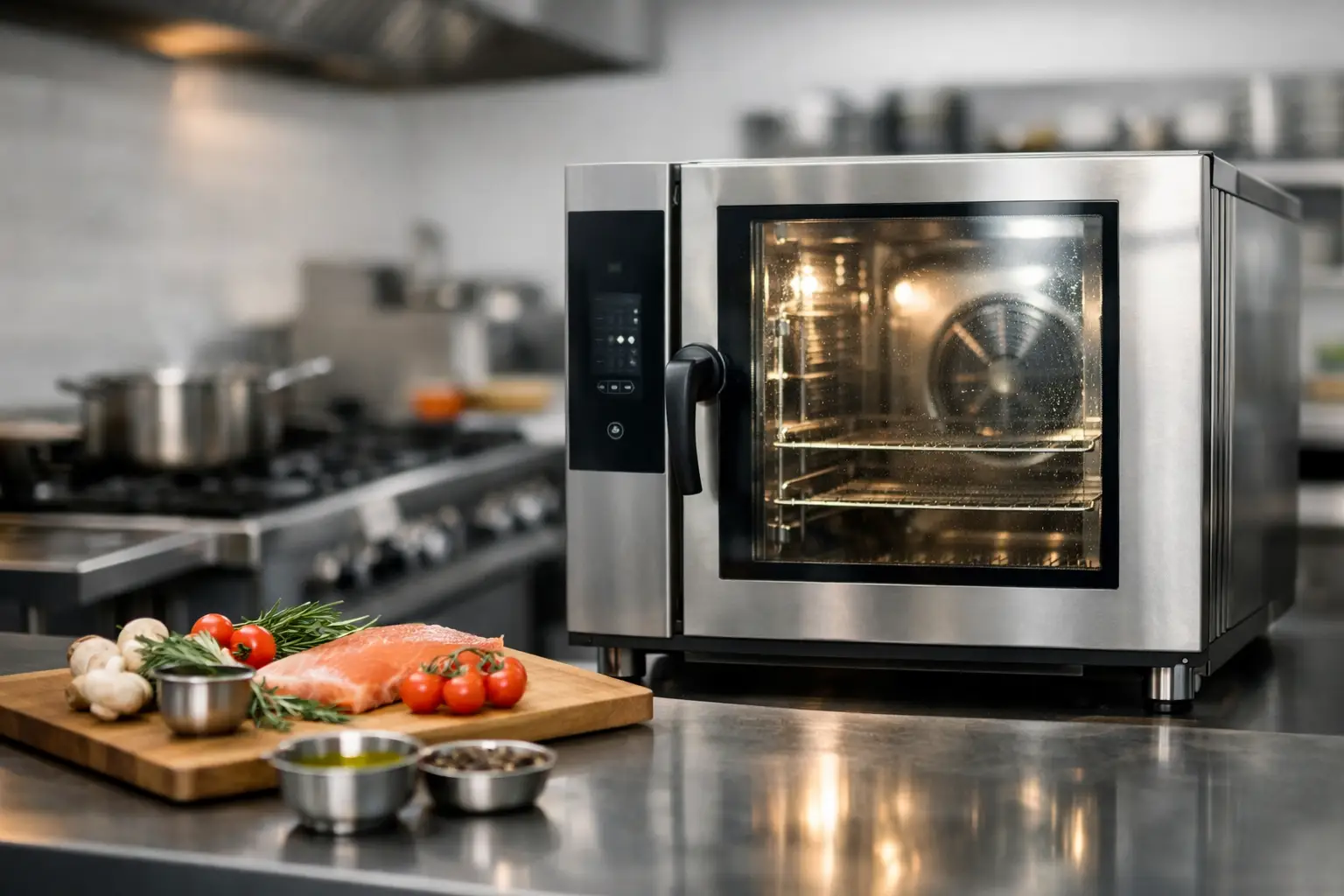
A combi oven can replace several pieces of cooking equipment, but only if it suits the way your kitchen actually works. The wrong unit can leave a small café paying for capacity it never uses, or a busy pub kitchen short of trays during a lunch rush. Knowing how to choose a combi oven starts with production volume, menu demands and available services – not simply the biggest model that fits through the door.
For restaurants, caterers, clubs, bakeries, aged-care kitchens and takeaway operations, a combi oven can roast, steam, regenerate, bake and cook with controlled humidity in one cabinet. That flexibility can save bench space, improve consistency and reduce pressure during service. It also means the purchase needs proper planning.
Start with what you need to cook
Before comparing brands, tray counts or control panels, look at your current menu and busiest production periods. A combi oven is particularly useful where food quality depends on moisture control or repeatable results. Think roasted meats, fish, vegetables, bakery items, steamed dishes, plated meals for regeneration and bulk function catering.
A high-volume venue may use the oven continuously for prep, service and regeneration. A smaller operation may mainly need it for batch roasting, baking and holding quality during a short lunch trade. These are very different requirements.
Write down the foods you expect to cook, how many portions are required at peak times, and whether the oven must produce multiple menu items at once. Also consider what happens before and after cooking. If staff need to load gastronorm pans from a coolroom, plate nearby and move trays directly to a pass, the oven location matters as much as its specifications.
Choose the right tray capacity
Combi ovens are commonly sized by the number and type of gastronorm trays they hold. Smaller countertop units can suit cafés, compact kitchens and lower-volume venues. Floor-standing units with six, 10 or 20 tray capacity are better suited to restaurants, hotels, production kitchens, institutions and caterers.
Do not choose capacity based only on average trade. Build around the busiest realistic period: a Saturday night function, a school holiday rush, a large delivery order or a catering job with staggered collection times. If the oven will be central to your operation, a little additional capacity can protect service when demand lifts.
That said, more trays are not always better. A larger oven costs more to buy, uses more floor space and may need greater electrical, gas, water and ventilation provision. It can also be inefficient if you regularly run only one or two trays. For some venues, two smaller ovens provide better flexibility than one large cabinet, especially when separate cooking programmes are needed at the same time.
Consider tray size and clearances
Check whether the unit accepts GN 1/1 trays, bakery trays or another format used in your kitchen. Standardising pans across your prep benches, refrigeration and cooking line makes loading and storage simpler. Confirm the external dimensions too, including door swing, trolley access and clearance for cleaning and servicing. A machine that fits on a plan may still be difficult to operate in a tight cookline.
Decide between electric and gas
Both electric and gas combi ovens can be excellent commercial choices. The best option depends on site services, operating costs, local installation requirements and the output your kitchen needs.
Electric models are common and can offer precise control, but they may require substantial three-phase power. If you are fitting out a new kitchen, it is usually easier to plan this into the electrical design from the start. In an existing venue, confirm the available supply before committing to a model.
Gas combi ovens can be a practical option where gas infrastructure is already available and the kitchen has the required ventilation and compliance provisions. They may suit high-output operations, but installation needs to be assessed carefully by qualified trades. Do not assume a direct replacement is straightforward just because the old oven was gas or electric.
The right decision is often determined by the building rather than personal preference. Checking services early avoids costly changes after delivery.
Water quality and drainage are not optional
A combi oven needs more than power and floor space. Water supply, filtration and drainage have a direct effect on cooking performance, cleaning and equipment life. Steam generation relies on clean water, and hard or poor-quality water can lead to scale build-up, faults and unnecessary maintenance.
Ask what water treatment the selected oven requires, and factor replacement filters into ongoing costs. The unit will also need an appropriate drain connection. Depending on the model and site layout, you may need to allow for a tundish, waste point and correctly positioned plumbing.
This is one area where a low purchase price can become expensive later. A quality oven installed without the right filtration or drainage is not a saving. It is a service call waiting to happen.
Select controls your team will use
Combi ovens are available with manual controls, programmable touch controls and advanced automatic cooking systems. More programming can improve consistency, especially across multiple shifts, venues or less experienced teams. A chef can set repeatable programmes for roast chicken, vegetables, bakery products or regeneration, helping every batch come out closer to standard.
However, the most advanced screen is not automatically the best choice. If a small team needs quick temperature, time and humidity adjustments, simpler controls may be faster to use and easier to train. Consider staff turnover, the complexity of the menu and whether your operation benefits from saved recipes and multi-step cooking cycles.
Cleaning programmes deserve the same attention. Automatic washing can reduce labour and support hygiene standards, but it requires the correct chemicals and staff procedures. Ask how long cleaning cycles take and when they can run. An overnight wash may be convenient for one venue and impractical for another that needs an early-morning bake-off.
Plan ventilation, workflow and safe access
A combi oven produces heat, steam and humidity. Your kitchen design must account for ventilation, canopy requirements and the surrounding equipment. In some applications, a ventless or condensate-hood solution may be available, but it is not a universal substitute for proper ventilation planning. Check the requirements for the specific oven, building and local approvals.
Position the oven where staff can safely load hot trays without crossing a busy walkway. Allow a nearby landing bench for pans, heat-resistant gloves and safe trolley movement. In high-volume kitchens, a roll-in trolley or rack system can reduce manual handling and make batch cooking much faster.
For new venues and refurbishments, combi oven selection should happen alongside the kitchen layout. CKE Sydney can assist with equipment selection and broader kitchen design so the oven, refrigeration, preparation areas, ventilation and service line work as one operation rather than a collection of individual purchases.
Compare the full cost, not just the ticket price
A combi oven is a long-term production asset. Compare the purchase price with installation, water filtration, cleaning chemicals, energy use, warranty coverage, service access and expected workload. A quality pre-owned unit can be a sensible value option for the right buyer, particularly when budget is tight and the condition, history and warranty are clear. For a new operation with heavy daily use, a new branded unit may offer greater certainty and current features.
Finance can also change what is practical. Spreading the cost may allow a venue to choose the correct capacity rather than under-sizing a vital piece of equipment. The aim is not to buy the cheapest oven. It is to buy an oven that earns its place by reducing labour, improving consistency and keeping up with trade.
Ask these questions before ordering
Before making a final decision, confirm these practical points with your supplier and installer:
- What tray size, capacity and loading system match peak production?
- Does the site have the required electrical or gas supply?
- What water filtration, drainage and cleaning products are required?
- Does the kitchen have suitable ventilation, clearances and safe access?
- What warranty, servicing and operator training support is available?
A combi oven should make your team quicker and your food more consistent, not add complexity to an already busy kitchen. Choose the model around your menu, services and peak workload, then get the installation details right before it arrives. That preparation gives the equipment the best chance to deliver value from its first service onward.