
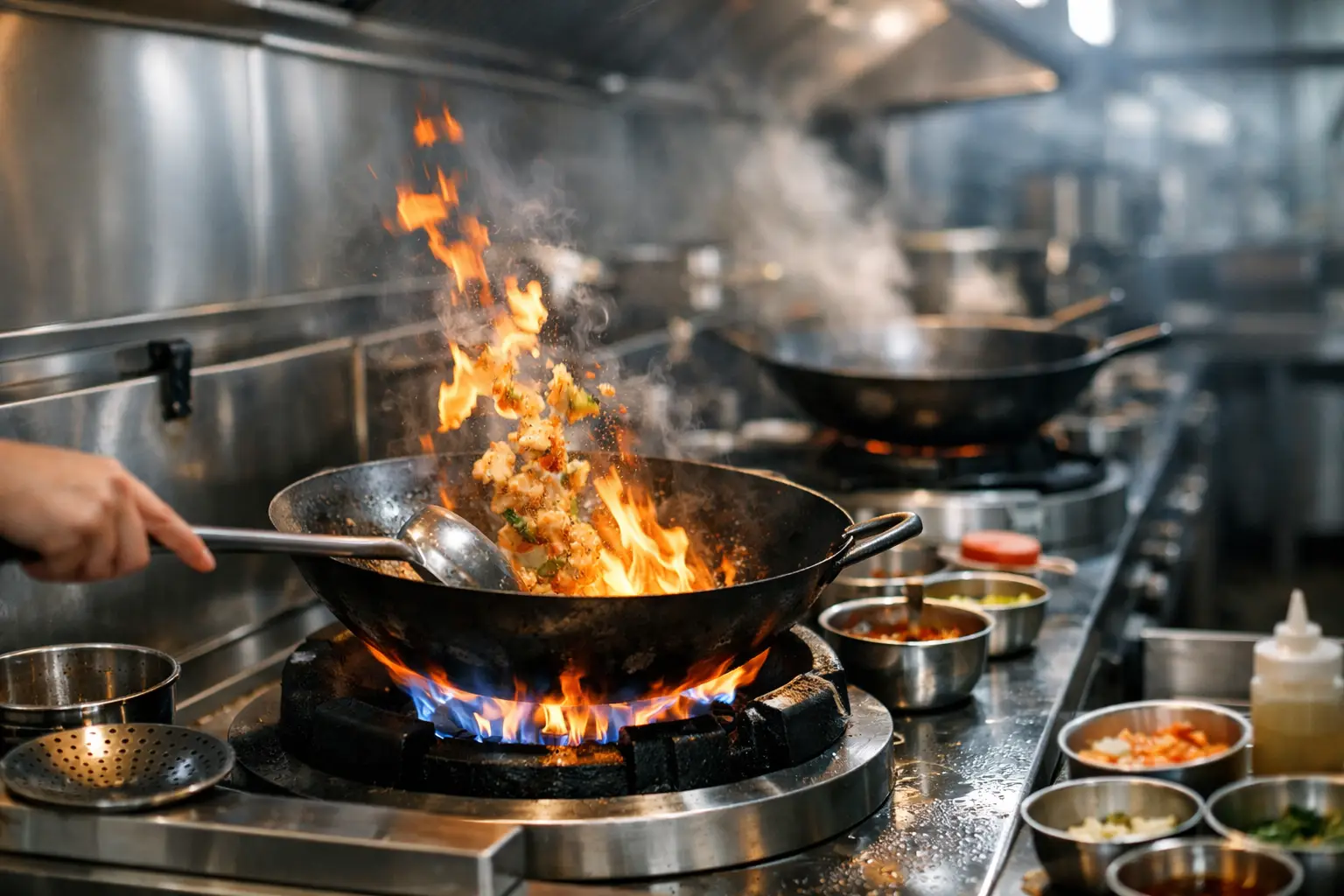
A wok station can make or break a busy Asian restaurant service. The right commercial wok burner restaurant setup gives chefs immediate heat, room to move and dependable recovery between orders. The wrong one creates bottlenecks, excessive heat in the kitchen and costly changes after the fitout is complete.
For a new venue, replacement project or menu expansion, do not select a wok burner on BTU figures or price alone. Burner style, gas supply, ventilation, bench layout, drainage and the type of food leaving the pass all need to work together.
Start with the food volume, not the burner price
A compact takeaway shop producing fried rice, noodles and a handful of stir-fries at lunch has different needs from a full-service restaurant running several wok chefs through dinner. Start by looking at your busiest 15-minute period. How many wok dishes must be cooked at once, how quickly must pans be turned over, and how many chefs will be working the line?
A single-hole commercial wok burner may suit a low-volume operation or a specialty station. Two-hole and three-hole wok ranges are usually a better fit where several cooks need access to high heat at the same time. More burners can lift output, but only if there is adequate prep space, refrigeration access and a clear path for finished dishes to reach the pass.
It is also worth considering the menu mix. A venue that relies on fast wok-tossed noodles needs strong, responsive flame and rapid heat recovery. A restaurant cooking more braised dishes, soups or sauces may benefit from a combination of wok burners and standard gas ranges rather than adding wok holes that will sit unused for most of the day.
Choose the right commercial wok burner restaurant configuration
Commercial wok burners are built to direct intense heat around a round-bottom wok. Their recessed wok bowls support the pan while allowing the flame to reach its sides, helping cooks achieve the speed, char and texture expected from high-volume wok cooking.
Traditional high-output wok burners are a practical choice for restaurants that need genuine flame power and fast response. They are commonly supplied with a water-cooled wok bowl or splash area to help manage heat and cooking debris around the station. Water-cooled designs can improve comfort and make cleaning easier, but they need correctly connected water supply and drainage. That is a service requirement, not an optional extra to sort out after installation.
A Chinese wok range with multiple holes can provide a dedicated cooking line in one footprint. This is often more efficient than placing individual burners along a bench, particularly in venues where wok chefs work side by side. Before committing, check bowl size and spacing. A range may have the number of holes you want but still feel cramped if the chef cannot safely handle a loaded wok or place ingredients within easy reach.
Duckbill burners and ring burners can suit different cooking methods and pan sizes. The best choice depends on the wok diameter, cooking style and the gas output required. Ask for practical advice based on the pans your chefs use, rather than assuming one burner style suits every menu.
Gas output must match your site services
High heat is the reason to buy a commercial wok burner, but higher output also means greater demand on the gas installation and extraction system. Confirm whether the equipment is configured for natural gas or LPG, and make sure the site supply has sufficient capacity for the full cooking line, not just the new wok range.
A qualified gasfitter should assess the installation requirements before purchase. Gas pipe sizing, isolation valves, regulators, clearances and commissioning all matter. If you are replacing one burner with a larger multi-hole range, the existing gas line may not be adequate even though a wok burner was already installed in that location.
Australian commercial kitchens must also meet relevant gas, fire and building requirements. Requirements can vary by site, landlord, council and certifier, so factor compliance into the project schedule early. A low purchase price is no saving if the equipment cannot be installed or requires major alterations to be approved.
Plan ventilation before the wok range arrives
Wok cooking produces intense heat, steam, grease and smoke. The extraction canopy must be sized and positioned to capture it effectively. An underpowered canopy can leave the kitchen hot, uncomfortable and difficult to work in, while grease-laden vapour can spread to surrounding equipment and dining areas.
Your kitchen designer or ventilation contractor should assess the total heat load from wok burners, fryers, chargrills, ovens and other cooking equipment. Wok ranges are often installed under a dedicated canopy section because of their high output. Make-up air is equally important. If air is extracted without being replaced properly, the kitchen can become negatively pressurised, affecting burner performance and making doors hard to open.
Think about the working environment as well as compliance. A well-planned wok line gives chefs enough elbow room, suitable lighting, safe floor conditions and a practical way to move ingredients, clean utensils and completed dishes. It is far easier to create this workflow during a fitout than after staff have started service.
Build the station around the chef’s movement
A productive wok line is not simply a burner placed under a canopy. Ingredients should be close enough to reach without constant turning, while raw and cooked food handling must remain organised. Refrigerated ingredient rails, underbench refrigeration, stainless-steel work benches and shelving can all improve speed when positioned properly.
Allow space on both sides of the wok burner for oil, sauces, ladles and mise en place. Consider where pots will be filled, where woks are cleaned and where hot food is plated. A floor waste and sensible drainage arrangement are especially useful around water-cooled equipment, but floors must not become slippery during a busy shift.
Do not overlook adjacent equipment. A rice cooker, noodle boiler, fryer or bain marie may be essential to the menu, yet placing too much equipment on the same line can crowd the cook and create a difficult cleaning area. Sometimes a slightly longer cookline with a clear workflow is more valuable than squeezing every appliance into the smallest possible footprint.
Check construction, cleaning and service access
Commercial wok burners work hard. Look for durable stainless-steel construction, solid pan supports, accessible controls and components that can be cleaned without dismantling half the line. Daily cleaning is not glamorous, but it protects equipment, improves hygiene and helps identify worn parts before they interrupt service.
Ask how easily burner components, drip trays and splash sections can be accessed. Check whether the wok bowls are practical for your team’s cleaning routine and whether there is clear access behind or beneath the unit for plumbing and gas service. A range pushed tightly into a corner may save space on paper but can be frustrating and expensive to maintain.
For pre-owned equipment, inspect the condition carefully. Check burners, controls, frames, welds, water connections and signs of corrosion or heavy grease build-up. Quality pre-owned equipment can offer strong value for a startup or refurbishment, provided it is suitable for the site, checked properly and supported by a clear warranty arrangement where applicable.
Budget for the complete installation
The purchase price of the wok burner is only one part of the project cost. Allow for gas work, plumbing, extraction, electrical connections where required, commissioning, freight, installation and any changes to flooring or stainless-steel benches. A larger range can be more cost-effective over time if it prevents queues at peak service, but it needs to earn its footprint and installation cost.
For operators balancing budget and output, compare new and quality pre-owned options, then consider the lifecycle cost. Better construction, readily available parts and easier cleaning can reduce downtime over years of service. Finance may also help a venue acquire the right equipment now rather than settling for a configuration that limits trade from day one.
CKE Sydney can assist with commercial cooking equipment, stainless-steel infrastructure and broader kitchen fitout planning, helping operators consider the station as part of a working kitchen rather than a stand-alone purchase.
Before placing an order, measure the site, confirm utility capacity and have the chef review the proposed layout. A commercial wok burner should give your team the confidence to cook at full pace when the docket rail is full – not create another problem for them to work around.