
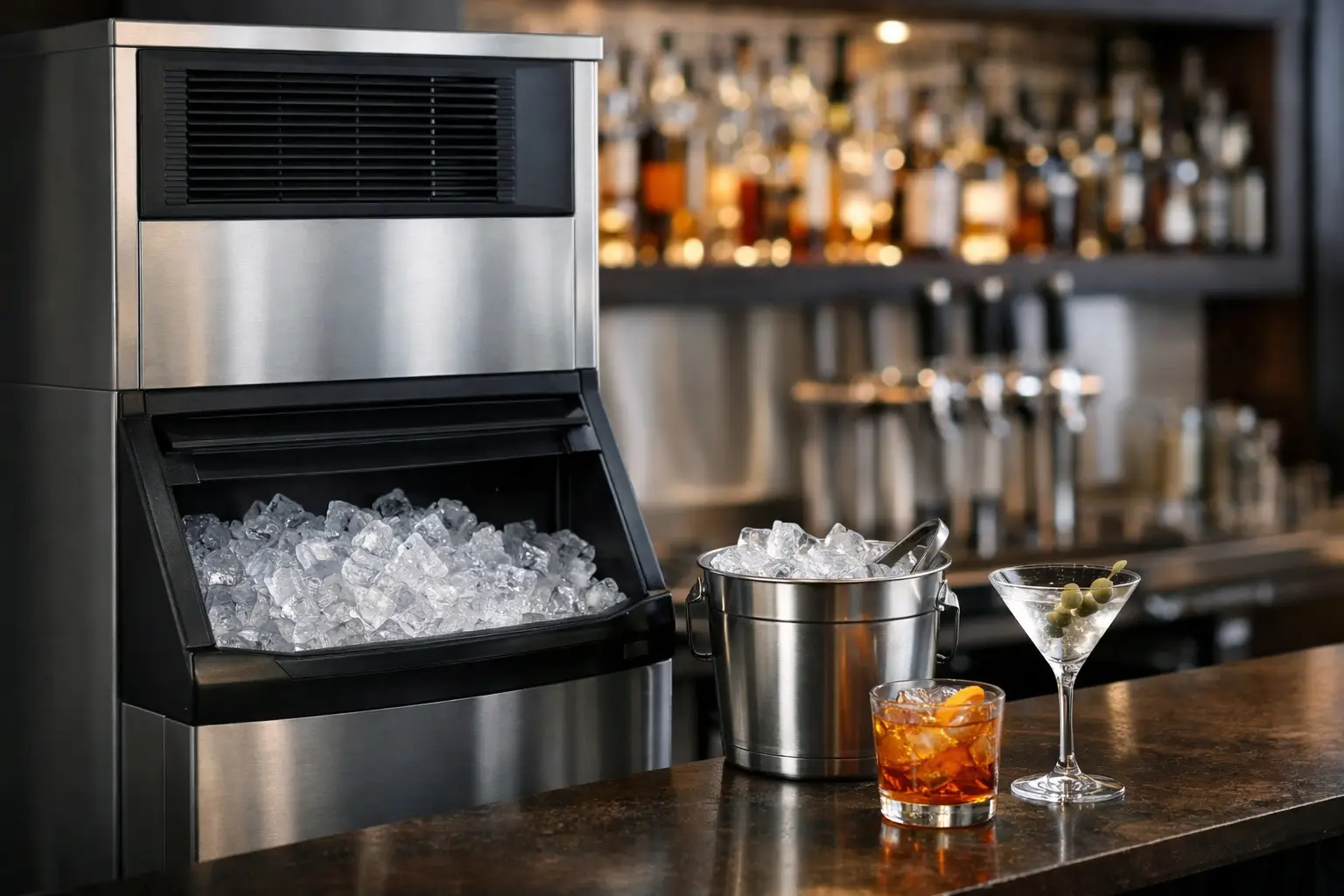
A Friday night bar can burn through its ice supply faster than expected. A run of shaken cocktails, a busy beer tap and a few buckets for bottled drinks can leave staff scooping the last cubes well before closing. Choosing the right commercial ice machine for bar service is not about buying the biggest unit available. It is about matching production, storage, ice style and site conditions to the way your venue actually trades.
For pubs, clubs, restaurants, hotel bars and event operators, ice is a working ingredient. When the machine cannot keep up, drink quality drops, service slows and staff start making do. A well-chosen unit protects speed at the bar and helps keep every pour consistent.
Start with your busiest service, not your average day
Ice machine capacity is usually stated as kilograms produced over 24 hours. That figure is useful, but it can be misleading if it is treated as the only buying decision. Your venue does not use ice evenly across a full day. It uses large volumes in a short, high-pressure window.
Start by looking at the busiest trading period. Consider how many drinks are sold per hour, how many require ice, whether you serve bottled products in ice buckets, and whether the kitchen, function room or gaming area will also draw from the same machine. A compact cocktail bar may need less total ice than a large pub, but it may need a higher proportion of premium, clear cubes ready at the same time.
As a practical guide, allow for more than the calculated drink volume. Ice melts in wells, spills during service and is used for chilling bottles, batching cocktails and emergency cooling. Building in a buffer is generally cheaper than losing sales because the bar runs dry at 9 pm.
Ambient temperature matters too. Published production ratings are often based on controlled conditions. A machine positioned near hot cooking equipment, in a warm storeroom or under poor ventilation may produce less than its stated daily capacity. In Australian summer conditions, that difference can be significant.
Choose the ice type your drinks program needs
Not all ice performs the same way in a glass. The best choice depends on your menu, service style and customer expectations.
Cube ice for general bar service
Full cubes and half cubes are reliable all-round choices for spirits, soft drinks, mixed drinks and general beverage service. They are familiar to staff, easy to scoop and suitable for most under-bench bins and ice wells. Full cubes melt relatively slowly, while smaller half cubes can pack into a glass more easily and chill drinks quickly.
For a pub, club or restaurant bar with a broad beverage menu, cube ice is often the most practical starting point. It provides consistency without making the operation overly specialised.
Gourmet or large cubes for premium pours
Larger, denser cubes are popular for whisky, premium spirits and cocktails where presentation matters. They melt more slowly and can give a drink a cleaner, more considered finish. The trade-off is that gourmet ice machines can have lower production output than a comparable cube machine, so they may not be the sole answer for a high-volume venue.
Many cocktail-led venues use a dedicated premium ice machine alongside a separate general-purpose unit. This avoids using expensive large cubes in every vodka soda during a rush.
Nugget and flake ice for specific uses
Nugget ice is softer, chewable and useful for certain cocktails, blended drinks and self-service beverage applications. Flake ice is better suited to seafood displays, food presentation and rapid chilling than standard bar drinks. Both have a place in hospitality, but neither is automatically the right choice for a typical bar setup.
Before ordering, think about what staff will scoop every night, what fits your glassware and what supports your menu. The most visually impressive ice is not always the most efficient one for service.
Size the bin as carefully as the machine
A high-output head machine paired with a small storage bin can still leave a venue short during peak trade. The machine may be capable of making enough ice across 24 hours, yet the bin may not hold enough ready-to-use stock for the evening rush.
Storage is especially important where the machine produces ice gradually during the day and the bar needs a large quantity immediately after opening. Assess where the bin will sit, who needs access to it and whether staff can safely scoop ice without crossing a busy walkway.
Under-bench ice machines are a popular option where bar space is tight. They combine production and storage in one footprint, keeping ice close to the point of service. They suit smaller bars, cafés and satellite beverage stations well. Larger modular machines with separate bins can make more sense for pubs, hotels, clubs and function venues with sustained demand.
If you operate multiple bars, do not assume one central machine is always the cheapest solution. Carrying ice through a crowded venue costs time and creates slip risks. Two appropriately sized machines can be more practical than one oversized unit at the other end of the building.
Installation conditions can make or break performance
An ice machine needs more than a power point and a water connection. It requires appropriate drainage, water supply, ventilation clearance and enough access for cleaning and servicing. Overlooking these basics can shorten equipment life and create avoidable call-outs.
Air-cooled machines are common because they are straightforward to install and do not consume water for cooling. However, they need clean airflow around the condenser. Boxing a unit into a tight cabinet or placing it beside a heat source can reduce output and increase energy use.
Water-cooled models may suit particular locations where ventilation is limited, but they can use more water and need to be assessed carefully against operating costs and local requirements. Remote condenser arrangements can also be worth considering for larger projects, particularly where heat and noise around the bar need to be kept low.
Water quality deserves attention. Mineral-heavy water can lead to scale build-up, affecting ice clarity, hygiene and production efficiency. A suitable water filter can help protect the machine and improve the quality of the finished ice. Filters need scheduled replacement – fitting one and forgetting it is not a maintenance plan.
For a new venue, ice machine requirements should be considered during kitchen and bar design, not after the benches and services are fixed. CKE Sydney can assist operators planning equipment around real workflow, including access, drainage and space for surrounding refrigeration or glasswash equipment.
Hygiene and maintenance are part of the purchase price
Ice is food, so the machine needs the same attention given to other food-contact equipment. A neglected ice bin can develop slime, mould, scale and unpleasant odours. That is not just a service issue. It can create a food safety problem and undermine customer confidence.
Daily staff routines should include using a clean scoop, returning it to a designated holder rather than leaving it buried in the ice, and wiping down external surfaces. The bin should be emptied and cleaned at regular intervals according to the manufacturer’s instructions and your venue’s food safety procedures.
Professional cleaning and descaling are also necessary. The schedule depends on water quality, usage and the machine type, but busy venues should not wait for visible build-up or poor ice quality before acting. Keep ventilation grilles clear, inspect water filters and make sure doors or bin lids close properly.
When comparing machines, look beyond the headline production figure. Consider access to the internal components, the availability of replacement parts, warranty support and whether routine cleaning is manageable for your team. A lower upfront price is poor value if the unit is difficult to maintain or regularly unavailable during service.
Buy for the whole operation, not just tonight’s demand
The right machine should suit your current menu while allowing for seasonal peaks, private functions and future growth. A venue adding cocktails, expanding outdoor trade or opening a second service point may outgrow a small machine quickly. On the other hand, overspecifying can waste valuable floor space, power and capital.
Compare equipment on usable production, bin capacity, ice type, footprint, energy and water needs, warranty and serviceability. If cash flow is a deciding factor, finance options can help preserve working capital for fitout, stock and staffing rather than forcing compromises on essential equipment.
A commercial ice machine is easiest to ignore when it is doing its job. That is exactly the point. Select a unit that keeps the wells full, gives staff the ice they need where they need it, and lets your bar concentrate on serving the next round.