
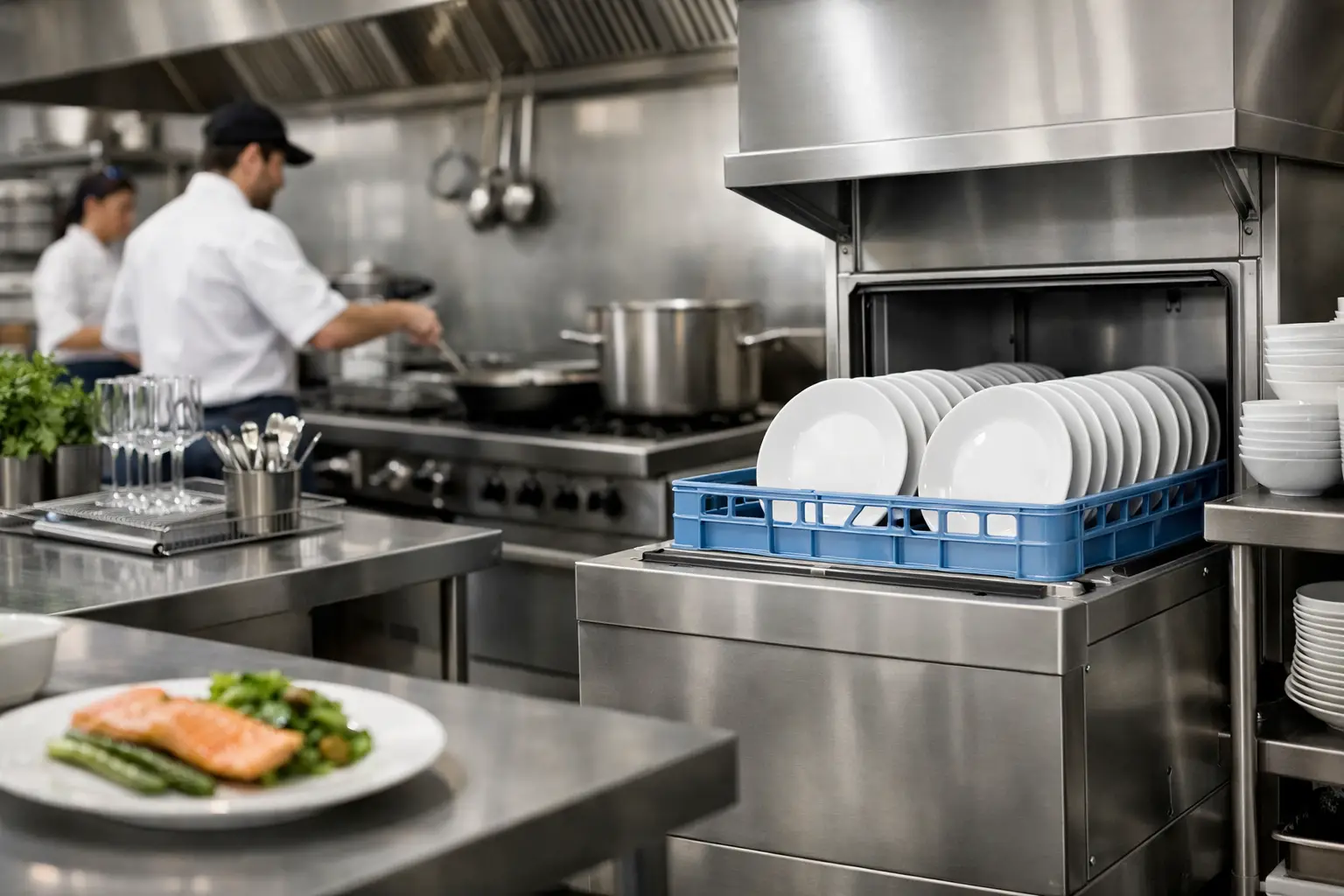
A dishwasher that cannot keep pace with a Saturday dinner rush quickly becomes more than a wash-up problem. It holds up glassware, drains staff time and leaves chefs waiting for clean pans when they should be plating food. Washtech dishwashers are a practical option for Australian cafés, restaurants, pubs, clubs, caterers and institutional kitchens that need commercial cleaning performance matched to the way they actually trade.
The right machine is not simply the biggest one that fits in the wash-up area. It needs to suit your peak service volume, the items being washed, available power and water services, and the room staff need to load, unload and stack clean ware safely. Getting those details right before purchase can reduce re-washing, avoid bottlenecks and make every service run more smoothly.
Start with Your Actual Wash-Up Demand
When choosing a commercial dishwasher, base the decision on the busiest part of your week, not the quietest lunch service. Count the racks that need to be processed during a peak hour, then allow for plates, cutlery, pans, utensils and glassware that arrive at different times. A small café may need a compact machine that handles steady turnover without taking up valuable bench space. A high-volume venue may need a faster pass-through or conveyor arrangement that keeps racks moving throughout service.
Also consider what is going through the machine. Crockery and cutlery are one job; pint glasses, wine glasses and coffee cups are another. Pots, gastronorm pans and baking trays may need a separate wash-up process depending on their size and soil load. Putting everything through one undersized dishwasher can create delays and affect wash quality.
A useful starting point is to map the service flow. Where do dirty items land? Who scrapes and sorts them? Where are racks loaded? Where do clean items drain and get put away? This simple exercise often shows whether the issue is machine capacity, poor layout, inadequate bench space, or all three.
Which Type of Washtech Dishwasher Suits Your Venue?
Undercounter dishwashers for compact sites
An undercounter dishwasher is often the sensible choice for smaller cafés, takeaway shops, bars and venues with limited back-of-house space. It can sit beneath a bench and provide commercial-grade washing without requiring a dedicated wash-up room.
This format works well where staff wash smaller batches regularly through the day. It is also a good fit for a venue replacing a domestic-style machine that was never designed for commercial demand. The trade-off is capacity. If the kitchen is processing racks continuously at peak times, staff can end up queuing at the machine.
Before selecting an undercounter unit, check the clearance around the door, the height available under the bench and the location of water, waste and power connections. A tight installation may look workable on a floor plan but become awkward once staff are carrying full racks during service.
Pass-through dishwashers for faster rack turnover
Pass-through dishwashers are designed for a more organised wash-up line. Racks are loaded at one end, pushed through the machine and moved to a clean draining bench at the other. This setup can significantly improve workflow for restaurants, pubs, clubs, school kitchens and function venues.
The machine itself matters, but the benches on either side matter just as much. A proper dirty-in and clean-out arrangement gives staff space to scrape, rack and air-dry items without creating a pile-up. If your wash-up area is being built or refurbished, it is worth planning the dishwasher, sinks, pre-rinse area, shelving and stainless benches as one working station.
Pass-through machines typically need more room and may require particular utility requirements, so confirm the site details before ordering. The higher upfront cost can be justified when it saves labour at every busy service and stops clean plates becoming the limiting factor in the dining room.
Glasswashers for bars and beverage service
A dedicated glasswasher is worth considering for busy bars, cafés and clubs. Glasses need a different approach from heavily soiled plates, and rapid turnaround matters when the bar is several deep. A glasswasher can help keep beverage service moving while the main dishwasher handles crockery and kitchen ware.
For best results, match the machine to the type of glasses your venue uses. Tall beer glasses, wine glasses and delicate stemware all affect basket choice and internal clearance. Water quality and correct chemical dosing also have a major impact on the finish. Cloudy glassware is often blamed on the machine when the real cause is scale, unsuitable chemicals or poor pre-rinsing.
Conveyor systems for high-volume operations
Large hotels, hospitals, aged-care facilities, major-event caterers and high-output institutional kitchens may need a conveyor-style solution. These systems are built for continuous volume and can be configured around a larger dishroom process.
This is not a purchase to make from a single capacity figure. The best result depends on the full setup: sorting space, pre-wash, rack handling, chemical dosing, extraction, drainage, clean storage and staff movement. For a new kitchen or a major refurbishment, equipment selection should be considered alongside the complete layout and fitout.
Check Site Services Before You Commit
A commercial dishwasher needs more than a spot on the floor. Confirm the electrical supply, water connection, drainage arrangement and any ventilation requirements early. Depending on the machine and installation, your site may need single-phase or three-phase power, and an electrician or plumber may need to complete work before commissioning.
Water quality deserves particular attention in many Australian locations. Hard water can leave scale inside the machine and marks on glassware, while inconsistent water pressure can affect operation. Filtration, softening or other water treatment may be appropriate depending on local conditions and the equipment specification. It adds to the initial setup cost, but it can protect wash results and help reduce avoidable maintenance issues.
Hot water supply is another practical consideration. Some commercial units incorporate heating, while others have specific requirements for incoming water. Do not assume an existing hot water system is suitable just because a previous dishwasher was connected there. Check the manufacturer specifications and have the site assessed if there is any doubt.
Wash Quality Starts Before the Cycle
Even the right commercial dishwasher cannot compensate for poor wash-up habits. Staff should scrape food waste into bins, remove straws and labels, and pre-rinse heavily soiled items where required. Overloading racks or stacking plates too closely prevents water from reaching every surface and leads to unnecessary re-washing.
Use the correct racks for the items being cleaned. Cups, cutlery, plates and glassware need to be held in a way that allows water to drain away. Glasses should not be packed together where they can chip, and cutlery should be separated appropriately for safe handling after the cycle.
Chemical selection and dosing should not be treated as an afterthought. Commercial dishwashing chemicals are designed to work with particular machines and water conditions. Too little detergent can leave food residue, while too much can waste product and affect results. Rinse aid is equally important for drying and presentation, especially for glassware used in front-of-house service.
Budget for the Whole Wash-Up Setup
The purchase price is only one part of the decision. Allow for installation, chemical dispensers, filters or water treatment, benches, sinks, racks, electrical work and ongoing servicing. A lower-priced unit can become expensive if it is too slow for the operation or requires staff to spend extra hours catching up after each rush.
On the other hand, paying for a high-capacity system that runs well below its intended volume may not make commercial sense for a small venue. The best value is equipment that meets peak demand with sensible room to grow, without forcing unnecessary fitout costs.
For operators managing cash flow during an opening, replacement or expansion, finance options can make the right equipment more accessible. It is also worth comparing warranty terms, spare-parts support and the availability of service assistance in your area. A dishwasher is used every day, often for long hours, so support after delivery matters.
CKE Sydney can help operators assess Washtech dishwashers alongside the benches, sinks, shelving and other commercial kitchen equipment needed to build a workable wash-up area. Whether you are replacing a tired unit or fitting out a complete venue, practical advice before purchase can prevent expensive changes later.
The best next step is to measure the wash-up space, record peak rack numbers for a few busy services and confirm the site utilities. Bring those details to the equipment conversation, and you will be much closer to a dishwasher setup that keeps clean ware moving when your venue needs it most.