
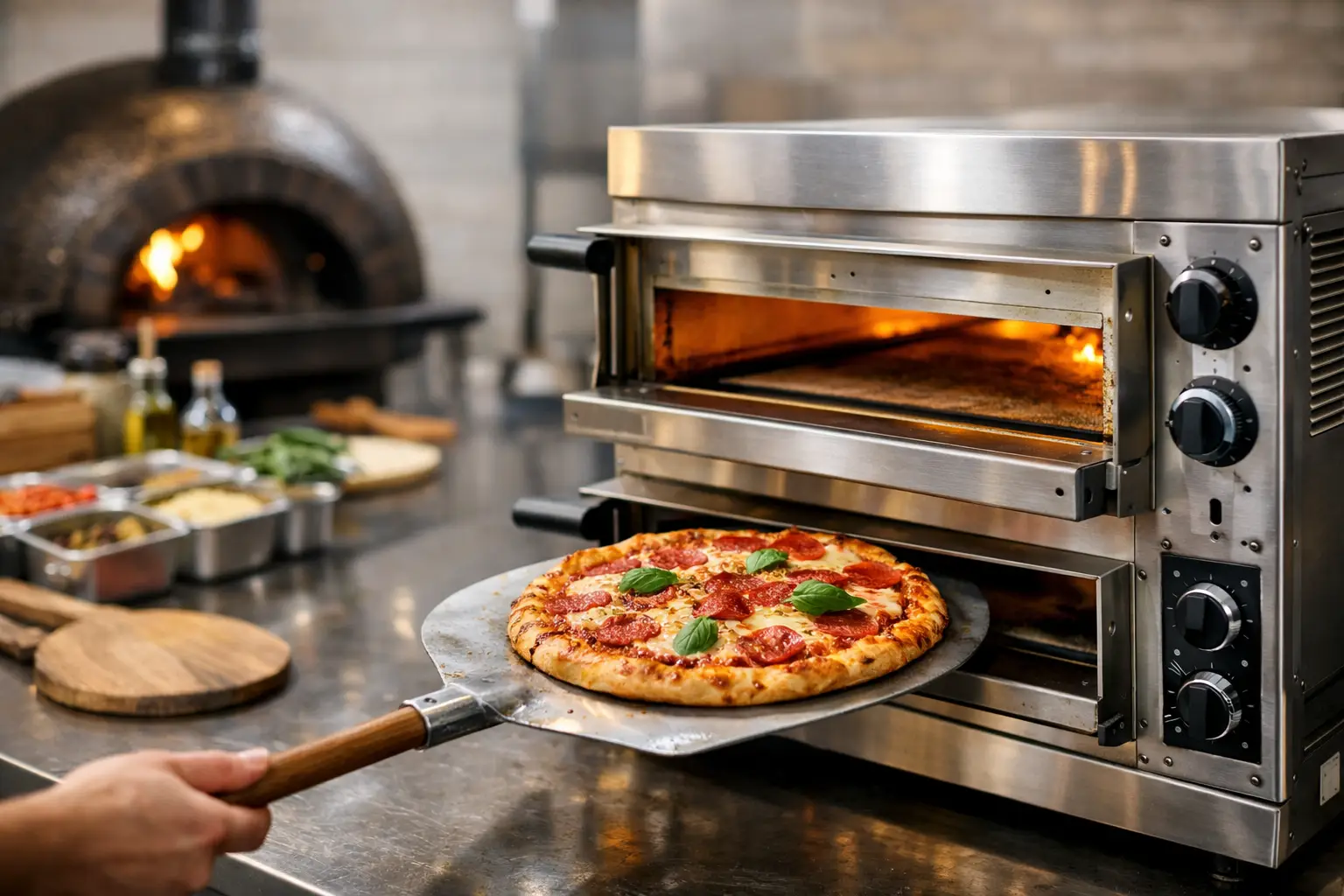
The lunch rush does not wait for an oven to recover. When pizzas become part of a café menu, the right commercial pizza oven for café service can turn a simple add-on into a reliable revenue line. The wrong one can leave staff juggling tickets, uneven bases and a queue at the counter.
For a café, the decision is rarely about buying the biggest oven available. It is about matching production to your busiest 30 minutes, fitting the unit into a workable kitchen, and choosing a heat source your site can support. A compact all-day café serving toasted sandwiches and a few pizzas has very different needs from a busy takeaway venue pushing 80 pizzas over lunch and dinner.
Start With Your Peak Pizza Volume
Daily sales are useful, but peak-hour demand is the figure that should drive your decision. If your café expects to sell 30 pizzas across a day but 18 of those orders arrive between 12 pm and 1 pm, a small oven with slow recovery will become the bottleneck.
Work backwards from the service standard you want to offer. Consider the average pizza size, expected cook time, how many pizzas must be cooked at once, and whether the oven will also handle garlic bread, baked pasta, roasted vegetables or other menu items. A 10-inch pizza menu has a different capacity requirement from 13-inch gourmet pizzas with longer bake times.
Allow for the real world as well. Staff need space to load, turn and remove pizzas safely. The oven needs time to recover after the door opens. On busy days, an oven should have enough headroom that one large order does not stop every other ticket.
Types of Commercial Pizza Oven for Café Use
There is no single best oven type. The best option depends on your menu, available utilities, site constraints and the speed of service your customers expect.
Electric deck ovens
Electric deck ovens are a practical choice for many cafés, especially where gas is unavailable or the site has limited scope for additional gas work. Their stone or refractory decks help produce a crisp base, and separate deck controls can provide useful flexibility when cooking different products.
They suit cafés that want a more traditional pizza result without committing to a large specialist pizza operation. The trade-off is that deck ovens need adequate bench or floor space, may require a dedicated electrical supply, and can take time to heat from cold. Check the electrical specifications early, not after the kitchen layout is locked in.
Gas deck ovens
Gas deck ovens can be a strong fit for venues with existing gas infrastructure and steady pizza demand. They are often valued for fast heat-up, operating economy and high-volume performance. For a café adding pizza as a serious daypart, gas can offer the recovery required for continuous service.
However, gas installation must be planned properly. Confirm the available gas supply, required clearances, ventilation arrangements and commissioning requirements before selecting a model. A lower purchase price does not help if the site needs significant gas or exhaust upgrades.
Conveyor pizza ovens
Conveyor ovens are built for consistency and speed. Pizzas travel through the cooking chamber on a belt, which reduces reliance on a skilled operator judging every bake. They can be particularly useful for takeaway-focused cafés, franchises, food courts and venues where several team members share cooking duties.
The result is repeatable and service can move quickly, but conveyor ovens take up more linear space than many operators expect. They may also be less suited to a hand-finished, high-temperature artisan style pizza. Measure the full unit, including loading and unloading space, rather than only the oven body.
Countertop pizza ovens
A commercial countertop oven can be a sensible entry point for a smaller café, kiosk, bar or venue with a limited menu. It can support pizza, flatbreads and reheating without the footprint of a full deck oven.
Capacity is the limitation. Countertop equipment works well when pizza is a complementary offer, not when it is the main driver of service. If weekend trade is already testing the unit, upgrading early is usually more cost-effective than asking a small oven to do a large oven’s job every Friday and Saturday.
Choose Heat Performance, Not Just a Pizza Count
Published pizza capacity is useful, but it is not the complete story. Ask how long the oven takes to recover after a full load, what temperature range it reaches, and whether the cooking surface delivers even heat from front to back.
A pizza oven that holds a stable temperature protects quality and reduces waste. Inconsistent heat can mean burnt toppings with pale bases, undercooked centres, or staff repeatedly returning pizzas for another minute. That extra minute adds up quickly when orders are waiting.
For cafés serving fresh dough, a hotter deck and faster bake may be needed to achieve a crisp crust while keeping toppings fresh. For pre-prepared bases, thicker pizzas or loaded takeaway styles, a slightly lower and longer bake may give more reliable results. Your dough recipe and menu style should influence the oven choice, not the other way around.
Check the Kitchen Before You Order
A commercial oven is only as useful as the space around it. Before purchasing, confirm the available width, depth and height, then check access from delivery point to final position. Tight doorways, stairs, narrow corridors and shopfront access can affect delivery and installation planning.
You also need to account for ventilation, heat load, electrical or gas connections, and staff workflow. An oven placed too far from the pizza bench creates unnecessary movement. One placed beside refrigeration without enough clearance can add heat load where you do not want it.
A practical pizza station generally keeps dough preparation, toppings, sauce, cold storage, the oven, cutting and takeaway packaging within a short working zone. This is where a well-planned fitout can save more time every service than a small difference in oven price.
Before committing, have these details ready:
- your busiest expected pizza volume per hour
- pizza diameter, dough style and target bake time
- available power supply or gas connection
- ventilation and local compliance requirements
- clear measurements for the kitchen and delivery path
Think About the Full Cost of Ownership
The purchase price matters, particularly for a new café or refurbishment project, but it should sit alongside installation, energy use, maintenance and downtime risk. A cheaper unit that cannot keep up may cost more through lost sales, remakes and staff pressure.
Look for commercial-grade construction, clear warranty support and readily available servicing options. Consider how easy the oven is to clean, whether replacement parts are accessible, and if everyday controls are straightforward for your team. A busy café needs equipment that works consistently across early starters, casual staff and weekend shifts.
Finance can also make it easier to choose equipment that fits the operation rather than settling for undersized capacity. For larger projects, it is worth planning pizza equipment alongside refrigeration, preparation benches, display cabinets and wash-up requirements so utility connections and workflow are considered together.
Build a Menu That Matches the Oven
The oven should support a menu your team can execute quickly. A focused selection of pizzas with shared ingredients is often easier to manage than a large menu with too many toppings, sauces and special requests. It keeps prep controlled, reduces food waste and gives staff a repeatable process during peak periods.
Test your actual menu before launch. Bake each pizza at service temperature, with the topping weights you intend to use and the packaging you will send out the door. A pizza that looks right on a plate may soften in a box after five minutes. Small adjustments to sauce volume, topping load or bake time can make a major difference to customer experience.
If you are planning a new café kitchen, expanding into takeaway, or replacing an oven that is holding service back, CKE Sydney can help you compare practical equipment options against your output, space and budget. Bring your menu plan and site measurements to the conversation – the right oven is the one that keeps your café moving when the orders arrive together.