
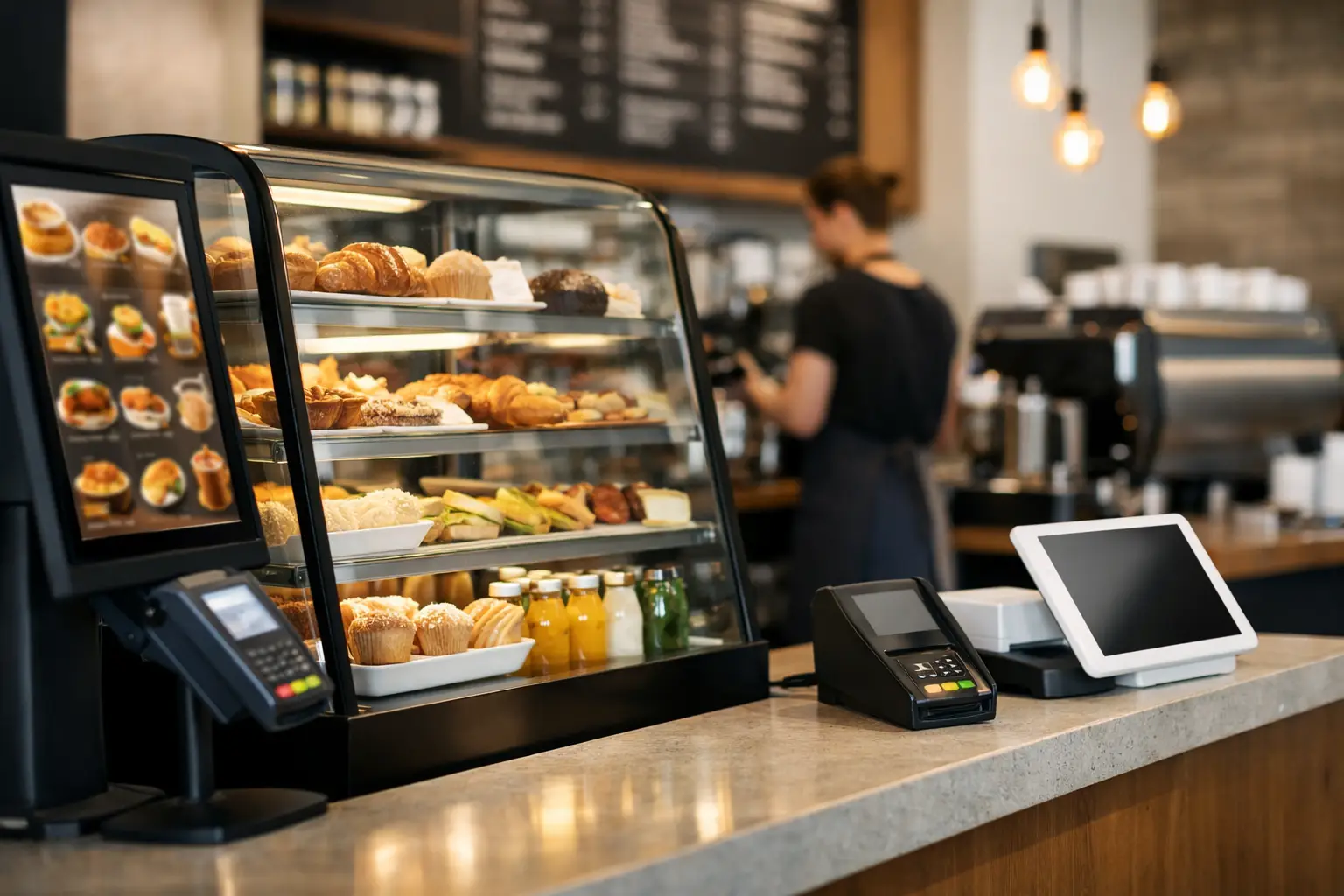
A display cabinet is not just somewhere to put cakes. It is a selling space, a food-safety asset and often the first thing a customer sees after they order coffee. The best café display solutions make products look worth adding to the order while keeping them at the right temperature through a busy breakfast rush, long lunch service and afternoon trade.
For café owners, the right choice comes down to more than cabinet size or purchase price. You need to consider what you sell, how quickly it moves, where the cabinet sits and how staff will restock and clean it. A beautiful cabinet that is too small, runs too warm or blocks the service flow can cost more in lost sales and waste than it saves upfront.
Start with the food you need to sell
The simplest way to narrow your options is to separate chilled food, ambient products and heated items. Each category has different holding requirements, and trying to make one cabinet do every job is often where cafés run into trouble.
Refrigerated display cabinets suit fresh cream cakes, cheesecakes, salads, wraps, sandwiches, yoghurt cups, cold drinks and other perishable grab-and-go lines. They help customers see the range without staff continually opening under-bench fridges, and they can support faster service when stock is arranged clearly.
Ambient displays are better for muffins, slices, cookies, croissants, packaged snacks and other products that do not require temperature control. A clear countertop cabinet can be a cost-effective choice for a small coffee bar, while a larger floor cabinet may make sense for a bakery café with a broad daily range.
Heated displays are designed for pies, sausage rolls, toasties, quiches, pastries and hot savoury items. They are useful when a café has steady takeaway trade, but holding time matters. Food that sits too long can dry out, lose its finish and become harder to sell, even when the cabinet is maintaining temperature correctly.
Many successful venues use a combination: a refrigerated cake cabinet near the till, an ambient unit for baked goods and a heated cabinet for quick lunch items. This gives each product the right environment and makes the offer easier for customers to understand at a glance.
Best café display solutions by service style
Countertop displays for compact coffee bars
Countertop cabinets work well where every centimetre of bench space has to earn its keep. They put muffins, cakes, sandwiches or hot snacks directly in the customer’s line of sight, making them a strong option for takeaway-focused cafés, kiosks and smaller venues.
The trade-off is capacity. Before buying, measure the usable bench depth, allow room for power access and check that the unit will not crowd the POS, coffee grinder or pickup area. Also think about door access. A rear-service cabinet may be neater for staff-controlled sales, while a front-opening cabinet can be practical for self-service packaged items.
Refrigerated cake cabinets for visual impact
A refrigerated cake display cabinet is often the hero piece in a café. Curved glass, square glass or frameless styles can all work, but the right format depends on your fitout and products. Curved glass creates a traditional pâtisserie look, while square glass can suit clean, modern counters and can make it easier to line up multiple units.
Capacity should match realistic daily production, not the biggest range you hope to offer. A cabinet that is half empty by mid-afternoon can make the whole offer look tired. On the other hand, an undersized cabinet forces staff to restock constantly and limits the variety customers can see.
Check shelf configuration and lighting before making a decision. Adjustable shelves give you more flexibility for tall cakes, takeaway salad bowls and smaller dessert portions. LED lighting can improve presentation, but it should not create glare on the glass or make product colours look unnatural.
Heated displays for fast lunch trade
For cafés near offices, schools, transport hubs or hospitals, a heated display can turn a quick coffee stop into a higher-value lunch sale. The best results come from stocking a focused range and rotating it frequently rather than packing every shelf with stock at opening time.
Look for even heat distribution, easy-to-read controls and practical access for staff. A unit with poor access can slow service when customers are lining up. Depending on the menu, humidity control may also be worth considering, particularly for pastries and products that can dry out under heat.
Floor displays for bakery and high-volume venues
Freestanding displays are suited to cafés with room to create a dedicated cake, dessert or grab-and-go zone. They offer greater capacity and can reduce pressure on the main service counter. This is useful in venues with separate ordering and collection points, or where customers browse before joining the queue.
Their larger footprint means planning is essential. Leave enough clearance for doors, cleaning and customer movement. A floor cabinet placed in the wrong spot can become a bottleneck during peak service or make it difficult for staff to replenish stock safely.
Temperature, airflow and food safety are not extras
A refrigerated cabinet needs to do more than feel cold when the door is opened. Its operating temperature must be suitable for the products you are displaying, and it needs enough airflow around the unit to perform as intended. Placing a cabinet beside a hot coffee machine, cooking equipment or direct afternoon sun can put extra load on refrigeration and affect product quality.
Ask where the condenser is located, what ventilation clearance is required and whether the cabinet is designed for your expected ambient conditions. Sydney summers can expose weaknesses quickly, especially in a glass-fronted shop with frequent door openings and high customer traffic.
For heated displays, confirm the holding temperature range and use it as part of a proper food-safety process. Temperature control does not replace sensible batch sizes, labelling, rotation and disposal procedures. Your team should know what has been loaded, when it went in and when it needs to be replaced.
Choose a cabinet your team can actually maintain
Glass, crumbs, fingerprints and spilled fillings are part of café life. A cabinet that looks sharp on delivery day but is awkward to clean can soon work against your presentation. Look for removable shelves, accessible corners, easy-to-clean door tracks and a layout that allows staff to wipe surfaces without dismantling half the unit.
Access to components matters too. Refrigeration equipment will need routine attention over its working life, so consider how easily a technician can reach service areas. Buying a reputable commercial unit with warranty support can be better value than choosing a lower-priced cabinet that is difficult to repair or source parts for.
Energy use is another practical consideration. Larger glazed cabinets, heated displays and equipment operating for long hours all add to running costs. There is no single best choice here: a more efficient unit may cost more initially, while a lower-cost cabinet may be perfectly suitable for a venue with limited trading hours. Compare the full operating picture, not just the ticket price.
Plan display equipment into the café workflow
Display cabinets work best when they are part of the service plan, not an afterthought added once the counter is built. Think through the path from storage to preparation, display, sale and replenishment. If every restock requires staff to cross the main customer queue or open a crowded under-bench fridge, peak periods will expose the problem.
For a new café or refurbishment, cabinet dimensions should be checked alongside counter height, power points, refrigeration ventilation, joinery openings and customer sightlines. CKE Sydney can assist operators sourcing individual food display cabinets or planning a broader commercial kitchen and front-of-house equipment package.
It also pays to consider future menu changes. A venue starting with cakes and muffins may later add fresh sandwiches, bottled drinks or hot savoury lines. Choosing equipment with flexible shelving, sensible capacity and a layout that leaves room for another unit can prevent an expensive reshuffle six months later.
The right display should make your products easier to choose, easier to serve and easier to keep at their best. Measure the space, be honest about your menu and daily volume, and select the cabinet that helps staff sell confidently through the busiest part of the day.