
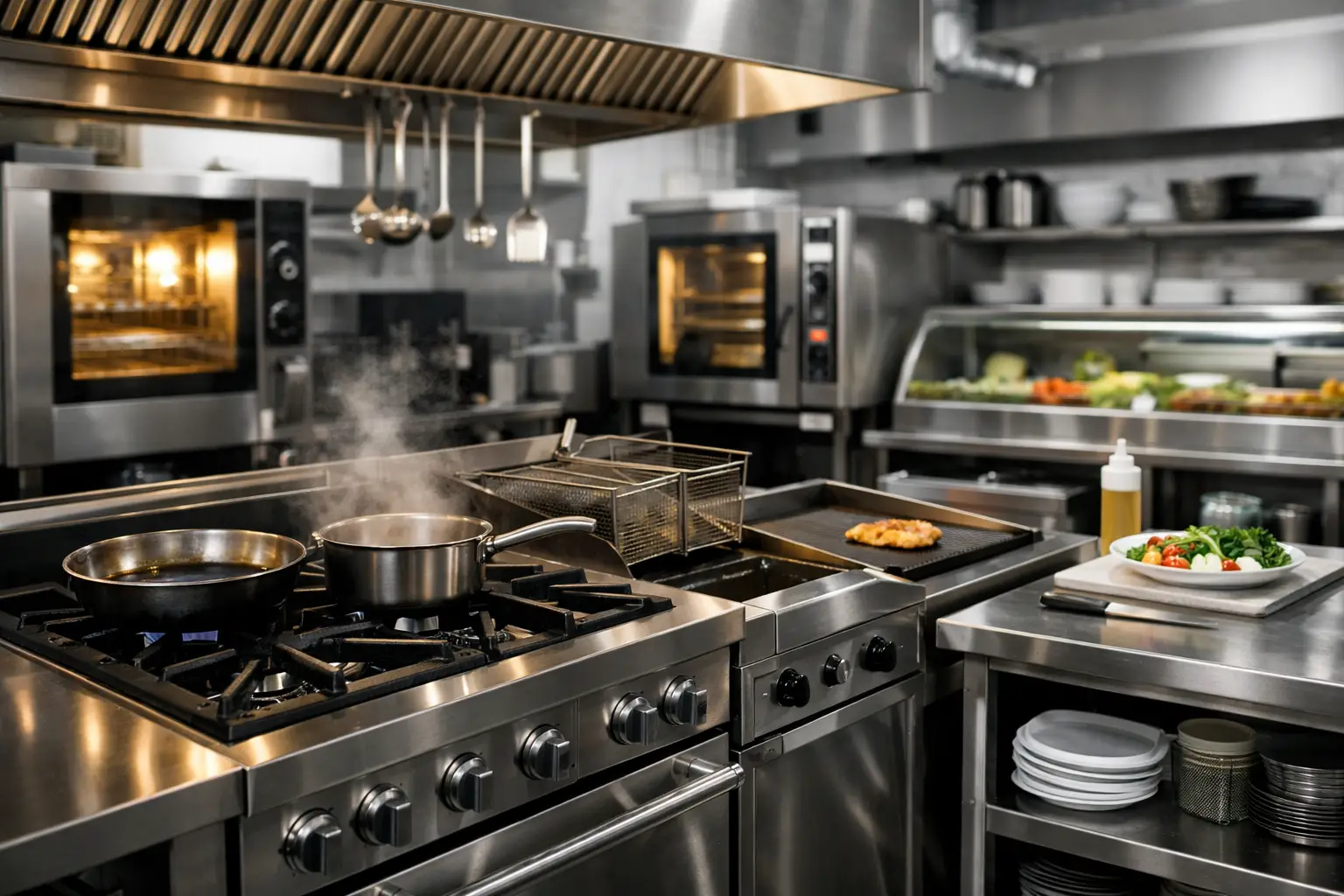
A Saturday lunch rush exposes every weak point in a kitchen. The fryer cannot recover quickly enough, bench space disappears under prep containers, the underbench fridge is overfilled and plates stack up beside the dishwasher. Choosing the right kitchen equipment is not about filling a room with appliances. It is about giving your team the capacity, workflow and reliability to serve well when the orders keep coming.
For a new café, restaurant, takeaway shop, bakery or institutional kitchen, the best buying decision starts with the operation you need to run – not the biggest unit on the showroom floor. Menu, trading hours, available services, staff numbers and expected covers should all shape the equipment plan.
Commercial kitchen equipment starts with the menu
Your menu determines the equipment categories that matter most. A burger takeaway may need a hard-working char grill, flat plate, fryer and refrigerated prep bench. A modern Australian café could place more value on a combi oven, display cabinet, underbench refrigeration and a reliable glasswasher. A bakery has very different priorities again, with mixers, dough-processing equipment, baking ovens, proving capacity and cooling space all affecting output.
Start by looking at your busiest 30 minutes, not your average day. Ask what products are being cooked, held, chilled, plated and washed during that period. Then calculate the batch sizes and recovery times required. A fryer may look adequate on paper, but if it cannot keep temperature after several baskets of chips, service slows and food quality drops. Likewise, a small fridge can become a daily problem if it leaves no room for prepared stock, milk, garnishes or backup ingredients.
It also pays to separate must-have production equipment from items that can be added as trade grows. A reliable cooking line, refrigeration and wash-up system are usually non-negotiable. A second display cabinet, specialised bench-top appliance or extra freezer may be a sensible later purchase, depending on cash flow and space.
Build your kitchen equipment around work stations
A commercial kitchen works best when food moves in one direction: delivery and storage, preparation, cooking, pass or display, then wash-up. Equipment should support that flow rather than force staff to cross paths with hot pans, dirty crockery or incoming stock.
Cooking equipment for your service style
Gas cooking ranges, wok burners, fryers, griddles, char grills and combi ovens all have a place, but their value depends on how you cook. High-output wok burners suit fast stir-fry production, while a combi oven can bake, roast, steam and regenerate food with consistency. For venues handling varied functions or changing menus, that flexibility can reduce the need for several separate appliances.
Benchtop equipment can be a practical option where floor space is tight or production is modest. Salamanders, contact grills, induction units, bain-maries and smaller fryers can add capability without committing to a large cooking suite. The trade-off is capacity. Benchtop units are useful support equipment, but they may not be enough for sustained high-volume service.
Check the energy source, ventilation requirements and clearances before purchasing. A gas appliance is not automatically the right choice if gas supply, extraction or installation costs make the project harder. Electric equipment can be a strong fit for some sites, particularly where the building services and operating model support it.
Refrigeration that protects stock and service
Refrigeration is one of the least glamorous categories and one of the most important. Upright fridges and freezers provide bulk storage, while underbench fridges, refrigerated prep benches, pizza prep units and display cabinets keep ingredients close to the point of use.
Think about access as much as litres. A large upright fridge at the other end of the kitchen does not help a busy chef who needs portioned proteins and sauces immediately at the line. Similarly, front-of-house display refrigeration needs to present products clearly while maintaining stable temperatures through frequent door openings.
Allow room for stock rotation, food containers and airflow. Overpacking a fridge makes it harder to find product and can affect performance. For operators replacing older refrigeration, compare the ongoing energy use, condition and warranty alongside the upfront price.
Preparation, display and stainless-steel infrastructure
Stainless-steel benches, sinks, shelving and workstations are the framework of a productive kitchen. They are often left until late in a fitout, yet poor bench placement creates wasted steps all day. Provide landing space beside ovens, fryers, fridges and dishwashers. Include enough room for receiving deliveries, preparing raw ingredients, assembling orders and cooling finished products safely.
For cafés, bakeries and takeaway venues, food display cabinets can directly support sales as well as storage. The right cabinet needs to suit the product: hot food, chilled cakes, sandwiches, drinks or ambient bakery items all have different display needs. Capacity matters, but so do sightlines, access for staff and the location of power points.
Wash-up equipment that keeps the kitchen moving
When wash-up falls behind, the whole operation feels it. Glasswashers suit bars and cafés with a steady flow of drinkware, while undercounter dishwashers, passthrough machines and larger rack conveyor systems suit increasing plate volumes. The right machine depends on racks per hour, peak service periods, available space and how quickly clean items need to return to the floor.
Do not overlook the full wash-up zone. You may need dirty landing benches, pre-rinse facilities, clean draining space, shelving and a practical path for staff carrying heavy racks. A dishwasher with impressive specifications will still underperform in a cramped, poorly planned corner.
New or quality pre-owned equipment?
New commercial equipment offers current specifications, manufacturer warranty coverage and confidence around condition. It is often the best fit for core equipment that will run every day, such as refrigeration, dishwashers and high-use cooking appliances.
Quality pre-owned kitchen equipment can make excellent commercial sense, particularly for a start-up venue, refurbishment or secondary production area. The saving can free up budget for extraction, stainless-steel work, installation or stock. However, condition must be assessed properly. Ask about age, service history, electrical or gas requirements, replacement parts and whether the equipment suits your projected workload.
The lowest purchase price is not always the best value. A cheap unit that needs regular repairs, uses excessive power or cannot meet peak demand quickly becomes expensive. Buy according to the role the item will play in your operation and the downtime your business can tolerate.
Check space, services and compliance before ordering
Measure the site carefully, including doorways, corridors, lifts, turns and the final equipment position. A larger oven or fridge may fit the kitchen footprint but not make it through the building. Confirm dimensions with doors open, ventilation gaps and room for servicing.
You also need to confirm available power, gas, water, drainage and extraction before finalising equipment. These details influence which models are suitable and can substantially affect installation costs. In leased premises, landlord requirements and building approvals may also apply.
For larger projects, a properly considered kitchen design helps avoid expensive changes after equipment arrives. It can coordinate cooking, cold storage, preparation, wash-up and front-of-house requirements into a workable layout. This is especially valuable where the kitchen is being built from scratch, expanded or converted from another use.
Buy for value over the working life
A commercial kitchen is a revenue-producing workspace, so price matters, but it should not be viewed in isolation. Compare capacity, warranty, brand support, running costs, ease of cleaning and expected service life. Also consider whether the equipment will still suit the business if trade grows over the next one to three years.
For many operators, finance can preserve working capital for wages, fitout costs and opening stock rather than tying all available funds up in equipment. It is worth weighing the repayment structure against the benefit of buying equipment that properly supports service from day one.
CKE Sydney can help operators source individual units or plan a complete kitchen across cooking, refrigeration, wash-up, preparation, display and stainless-steel infrastructure. Whether the job is a single replacement fryer or a full venue fitout, practical advice before purchase can prevent costly mismatches later.
The right equipment plan should make the next busy service feel manageable: food moves cleanly through the kitchen, staff have room to work, stock stays protected and customers receive the same result every time. Start with the pressure points in your own service, then choose equipment that solves them.