
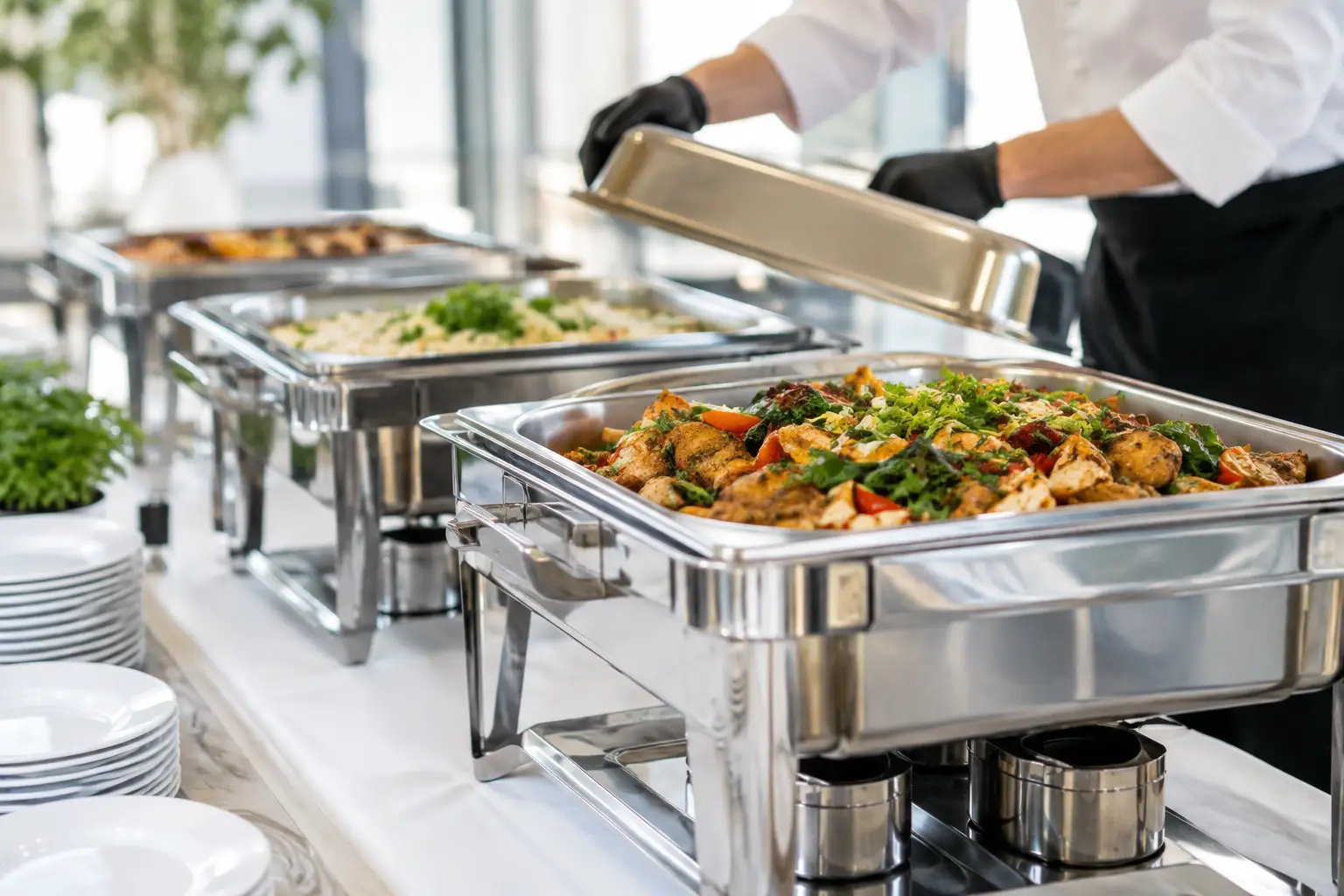
A busy Friday service quickly exposes weak points in a kitchen. The fryer cannot keep up, cold storage is overpacked, the dishwasher falls behind, and staff lose time walking between prep and cooking. The right catering equipment is not simply a list of appliances. It is the practical foundation that lets your team produce consistent food, work safely and keep customers moving through the door.
For a café, takeaway shop, restaurant, club, bakery or large-scale catering operation, the best buying decision starts with how your kitchen actually works at peak trade. Price matters, but so do capacity, recovery time, cleaning requirements, available services and the space needed around each machine for staff to do their job properly.
Start with your menu and service plan
Before choosing brands, models or bench sizes, look at what you sell and when you sell it. A breakfast café with a strong takeaway trade has different priorities from a pub kitchen producing schnitzels and steaks all night. A caterer preparing food off-site may need more refrigerated storage, transport-friendly benches and high-output combi cooking, while an aged-care kitchen needs dependable equipment that supports planned meal production and safe holding.
Think about your busiest 30 to 60 minutes, not your quietest shift. How many meals need to leave the pass? Which items are cooked to order? What can be prepared in advance? Where does food wait before service? These answers help determine whether you need a larger gas range, a second fryer, a combi oven, a heated bain-marie or extra underbench refrigeration.
It also pays to separate essential equipment from useful extras. If hot chips are a major sales line, a reliable commercial fryer is essential. If they are an occasional side, a smaller unit may be the smarter use of space and budget. Buying too small creates bottlenecks. Buying oversized equipment can tie up cash, increase energy use and take valuable floor space from prep or wash-up.
Match cooking equipment to output
Cooking equipment needs to recover quickly between batches and suit the style of food leaving your kitchen. Gas cooking ranges remain a practical choice for many venues because chefs value visible heat control and strong output. Wok burners are built for fast, high-heat cooking, while chargrills, griddles and salamanders suit specific menu requirements rather than every kitchen by default.
Combi ovens can earn their footprint in venues producing varied menus or large volumes. They can roast, steam, bake and regenerate food with consistent results, which is particularly useful for hotels, clubs, function spaces and institutional kitchens. However, a combi oven needs the right water, drainage, ventilation and cleaning routine. It is an excellent workhorse when used properly, not a shortcut around kitchen planning.
For bakeries and cafés, consider the whole production chain. A quality oven matters, but so do mixers, dough preparation equipment, proofing capacity, cooling space and display. There is little value in increasing baking output if there is nowhere to store ingredients or present finished products safely.
Catering equipment should follow the workflow
A commercial kitchen works best when goods move in one direction: receiving, storage, preparation, cooking, service and wash-up. Catering equipment should support that path instead of forcing staff to cross a busy kitchen with raw food, hot trays or dirty plates.
Refrigeration is often where capacity planning goes wrong. Upright fridges and freezers suit general storage, while underbench units keep ingredients close to the cooking line. Prep fridges can combine chilled storage with a practical work surface, making them a sensible option for pizza, sandwich and salad operations. The right choice depends on what must be within reach during service and what can be stored elsewhere.
Do not overlook food display. Refrigerated display cabinets, heated showcases and benchtop units can protect food quality while encouraging sales. In a bakery, deli or café, display equipment is part of the customer experience as well as food safety. Choose units with enough capacity for your rush, clear visibility of products and access that suits the way staff replenish stock.
Preparation space matters just as much as machinery. Stainless-steel benches, shelving, sinks and workstations should be selected around the tasks carried out there. A bench beside a fryer may need room for trays and draining. A prep area needs adequate space for chopping, containers and small appliances. A tight kitchen can still work well, but only when every surface and movement has been considered.
Size for peak periods, not average trade
A kitchen that handles 40 meals an hour may struggle badly at 70 meals an hour, even though the difference does not look dramatic on paper. Peak periods put pressure on cooking recovery, refrigerator access, plate storage, extraction and dishwashing all at once.
For dishwashers, look beyond rack size. Consider the number of covers, glassware volume, wash cycle time and where clean items will land. A compact underbench dishwasher can be a strong fit for a small café. A busy restaurant, pub or function venue may need a passthrough or conveyor-style solution to prevent a pile-up during and after service.
The same principle applies to refrigeration. Overfilled fridges do not cool efficiently, and staff cannot find what they need. Allow room for airflow, stock rotation and delivery days. If your venue regularly holds prepared food, sauces, desserts or bulk ingredients, additional refrigeration may be more valuable than another piece of cooking equipment.
New or quality pre-owned: choose based on the job
New equipment offers current specifications, manufacturer warranties and a known service history from day one. It is often the right choice for core equipment that will operate heavily every day, particularly where energy efficiency, programming features or compliance requirements are important.
Quality pre-owned equipment can be a sensible option when fitting out on a tighter budget, replacing a non-critical item or adding capacity for seasonal demand. The key is condition, suitability and support. Check dimensions, electrical or gas requirements, capacity and whether the equipment fits your kitchen layout before making a decision. A low purchase price is not good value if the machine cannot be serviced easily, does not meet your output needs or requires expensive changes to install.
For many operators, the most practical approach is a mix. Invest in new high-use refrigeration, cooking or wash-up equipment, then consider quality pre-owned benches, shelving or selected secondary equipment where it makes commercial sense.
Allow for services, access and compliance
The equipment itself is only part of the purchase. Measure doorways, corridors, lifts, loading access and the final kitchen position. A unit that fits on a floor plan may not fit through the back door. Check power supply, gas availability, water, drainage, extraction and clearance requirements before delivery is booked.
Ventilation deserves particular attention. High-heat equipment may require suitable exhaust systems, and refrigeration needs room to reject heat. Poor planning can make a kitchen uncomfortably hot, increase running costs and shorten equipment life.
If you are building, refurbishing or expanding, kitchen design support can prevent expensive changes later. A considered layout puts cooking, cold storage, prep, wash-up and service areas in the right order from the beginning. It also helps identify where custom stainless-steel fabrication or specialised equipment will make daily work easier.
Buy for value over the working life
The cheapest unit is not always the lowest-cost option. Consider energy and water use, expected servicing, cleaning time, spare parts availability and how much downtime would cost during trade. A reliable branded machine with a warranty can be a better business decision than a cheaper alternative that slows your operation or creates frequent repair calls.
Cash flow also matters, especially for new venues and major refurbishments. Staging purchases, selecting the right mix of equipment and considering finance options can help protect working capital for stock, wages and opening costs. The goal is to buy equipment that supports revenue from the first service without overcommitting your budget on features you will not use.
CKE Sydney can assist with individual replacement purchases through to complete kitchen design and fitout projects, with new and quality pre-owned options available for different budgets and operational needs. Clear advice before you order is usually far cheaper than changing a layout or replacing an undersized unit after opening.
The best time to review your kitchen is before equipment fails or service starts slipping. Map the pressure points, measure the available space and choose equipment that gives your staff room to work well when the orders are coming in.