
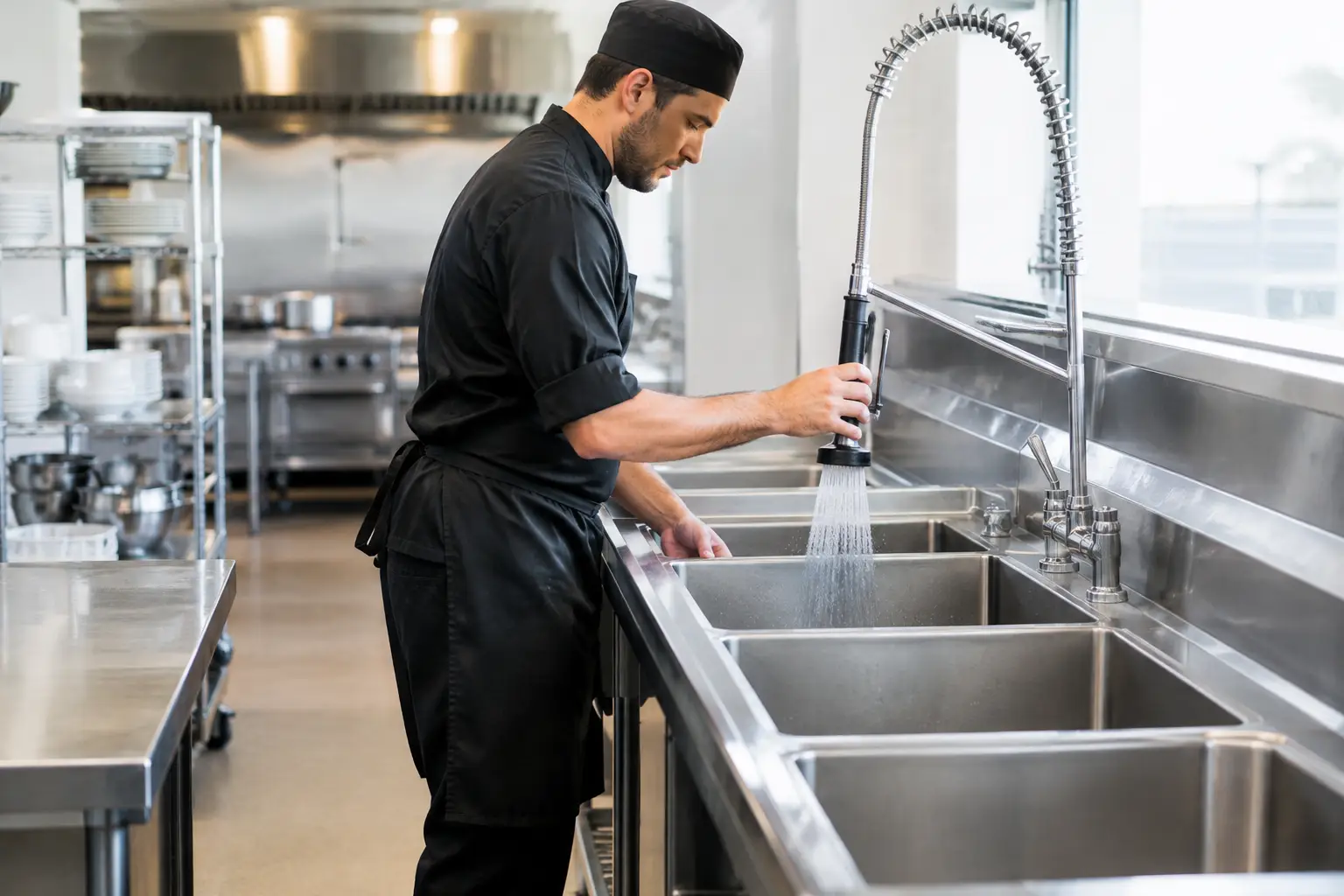
A sink can look like a simple stainless-steel purchase until service starts, dishes pile up and staff are crossing paths in a cramped wash-up area. The right commercial sinks keep prep, handwashing and pot washing moving without creating a hygiene or workflow problem. The wrong setup costs time every shift and can be expensive to change once plumbing, benches and flooring are in place.
For restaurants, cafés, takeaways, pubs, caterers and institutional kitchens, sink selection should start with the work being done around it. Bowl numbers matter, but so do bowl depth, drainboard position, tap clearance, waste connections and where dirty items enter the kitchen. A good sink layout supports the way your team actually works, not just the space available on a floor plan.
Start with the job each sink needs to do
A commercial kitchen generally needs separate areas for handwashing, food preparation and wash-up. Combining every task at one sink may save space initially, but it can slow the team down and create avoidable food-safety concerns. Your final requirements will depend on your menu, equipment and local authority expectations, so confirm the applicable food standards and council requirements before locking in a fitout.
A dedicated hand basin is usually a small but essential inclusion. It should be positioned where staff can reach it easily from food preparation and cooking areas, rather than hidden behind benches or blocked by doors. Hand basins are not a substitute for a food-prep or pot-wash sink. Keeping this function separate makes it easier for staff to follow good hygiene practices during a busy shift.
Food preparation sinks are suited to washing produce, thawing food safely where permitted by your procedures, and handling prep tasks away from soiled crockery. A café with limited fresh prep may only need a straightforward single-bowl arrangement. A high-volume restaurant, school kitchen or aged-care facility may need more bench space, a larger bowl and a practical drainage area for washed produce.
Pot-wash sinks take the hardest treatment. Large saucepans, gastronorm pans, baking trays and utensils need enough bowl width and depth to be fully washed without soaking staff or surrounding benches. If your kitchen uses a commercial dishwasher, the sink still has a major role in scraping, rinsing and managing oversized items that cannot go through the machine.
Choosing between one, two and three bowls
The number of bowls should match the volume and sequence of your wash-up work. More bowls are not automatically better if they take valuable space from a dishwasher, clean landing bench or preparation area.
A single-bowl sink works well for low-volume prep, bar use, small kiosks and compact coffee operations. It is also useful as an auxiliary sink where the main wash-up station is elsewhere. The limitation is obvious during peak periods: one person washing equipment can block another person who needs the sink for prep or rinsing.
A double-bowl sink is a common choice for smaller commercial kitchens because it gives staff a clear wash-and-rinse sequence. It can suit cafés, takeaways and venues with moderate wash-up, especially when paired with drainboards or nearby benches. Consider the size of the bowls carefully. Two shallow bowls may be less useful than one deeper bowl and one standard bowl if your team regularly washes pots.
Three-bowl commercial sinks are often selected where manual washing is a significant part of the operation or where a defined wash, rinse and sanitise process is required. They are practical for caterers, bakeries, community kitchens and venues that handle a high volume of utensils. However, they demand more room, more plumbing consideration and a sensible clean-to-dirty workflow. A three-bowl unit squeezed into a tight corner can be less effective than a well-planned double bowl beside a dishwasher.
Before ordering, measure your biggest everyday item, not just a dinner plate. Stock pots, oven trays, mixer bowls and baking tins quickly reveal whether a bowl is genuinely fit for purpose.
Bowl depth, drainboards and bench direction
Bowl depth affects both capacity and comfort. Deeper bowls reduce splashing and make it easier to soak larger cookware, but an excessively deep bowl can be uncomfortable for shorter staff during long wash-up periods. For many kitchens, a practical middle ground delivers enough capacity without forcing staff to work in an awkward position.
Drainboards are equally worth planning. A left-hand or right-hand drainboard must suit the direction dishes travel through the area. In a typical wash-up line, dirty items arrive at the scraping or pre-rinse point, move through the sink or dishwasher, then land on a clean draining bench. Reversing this flow creates unnecessary reaching and increases the chance of clean and dirty items crossing over.
Think about landing space on both sides of the sink. A generous drainboard is useful, but it does not replace a stable bench for racks, tubs and dry storage. Busy venues often need a separate clean bench after the dishwasher, particularly where staff are stacking crockery or sorting glassware during service.
Stainless steel grade and construction matter
Commercial sinks are expected to handle heat, moisture, cleaning chemicals and regular impact. Stainless steel is the standard choice because it is hygienic, hard-wearing and straightforward to clean. Quality construction matters more than a shiny finish on delivery day.
Look at the thickness of the stainless steel, the strength of the legs and undershelves, the quality of welding and whether the unit has adjustable feet for levelling on an uneven floor. A sink that flexes under a full stock pot or rocks on the floor becomes a daily frustration. Sound-deadening treatment can also be worthwhile in open kitchens, cafés and bars where constant clatter affects staff and customers.
Welded bowls are generally easier to keep clean than poorly finished joins where food particles and grime can collect. Rounded internal corners also make wash-down faster. For replacement projects, check the height of splashbacks, the location of taps and the waste outlet position before choosing a new unit. A sink can be the right size on paper but still require unexpected plumbing changes.
Plan taps, wastes and plumbing before delivery
Commercial sinks are often held up by details that were missed early: the wrong tap hole configuration, insufficient clearance for a wall-mounted mixer, or a waste outlet that does not align with existing services. Confirm whether your chosen sink is supplied with tap holes, waste fittings, plugs and overflow components, as inclusions vary by model.
A pre-rinse unit can improve speed in a high-volume dishwashing area, while a standard swivel spout may be all a small café needs. Pot fillers and spray taps should be chosen for the task, not simply because they look impressive. High-pressure sprays can make fast work of plates and pans, but they need enough room to operate without spraying floors, nearby equipment or staff.
Your plumber should be involved before the final order is placed, particularly in new builds and refurbishments. They can check water pressure, hot-water capacity, waste sizing, grease-management requirements and the best position for isolation valves. This is also the time to confirm whether a floor waste, splashback or wall protection is needed around the station.
Make the wash-up area work as a system
A sink performs best as part of a complete work area. For many venues, that means pairing it with a dishwasher inlet bench, outlet bench, pot racks, waste bins, shelving and a nearby hand basin. In a compact takeaway shop, it may mean selecting a sink bench that combines bowls, drainboards and storage underneath without restricting access to refrigeration or cooking equipment.
Allow enough aisle space for two staff to pass safely, especially near dishwashers and doors. Keep electrical equipment away from areas that receive regular spray, and avoid placing clean storage directly above a heavy wash-up station. Small layout decisions have a direct effect on speed, safety and cleaning time.
For a full kitchen fitout, it is often more cost-effective to plan sinks alongside stainless-steel benches, dishwashing equipment and plumbing requirements rather than treating each item as a separate purchase. CKE Sydney can assist with equipment selection and practical kitchen fitout planning, whether you are replacing one worn-out sink or setting up a complete operation.
Buying new or quality pre-owned
New commercial sinks offer a clean starting point, warranty support and a broad choice of sizes and configurations. They are usually the best option when a project has specific dimensions, compliance requirements or a tight installation schedule.
Quality pre-owned stainless equipment can offer strong value for operators working to a budget, particularly for standard sink benches and shelving. Inspect the condition of bowls, welds, legs, undershelves and drainboard surfaces. Check for corrosion, deep dents, unstable legs and previous modifications that may complicate installation. Savings are useful only if the equipment suits the site and will stand up to the workload.
The best buying decision is rarely about choosing the biggest sink or the lowest upfront price. It is about selecting a configuration that fits your service volume, staff movements, plumbing and cleaning routine. Measure carefully, confirm the inclusions and ask for advice before delivery is booked. A properly planned sink station gives your team one less thing to fight with when the kitchen is flat out.