
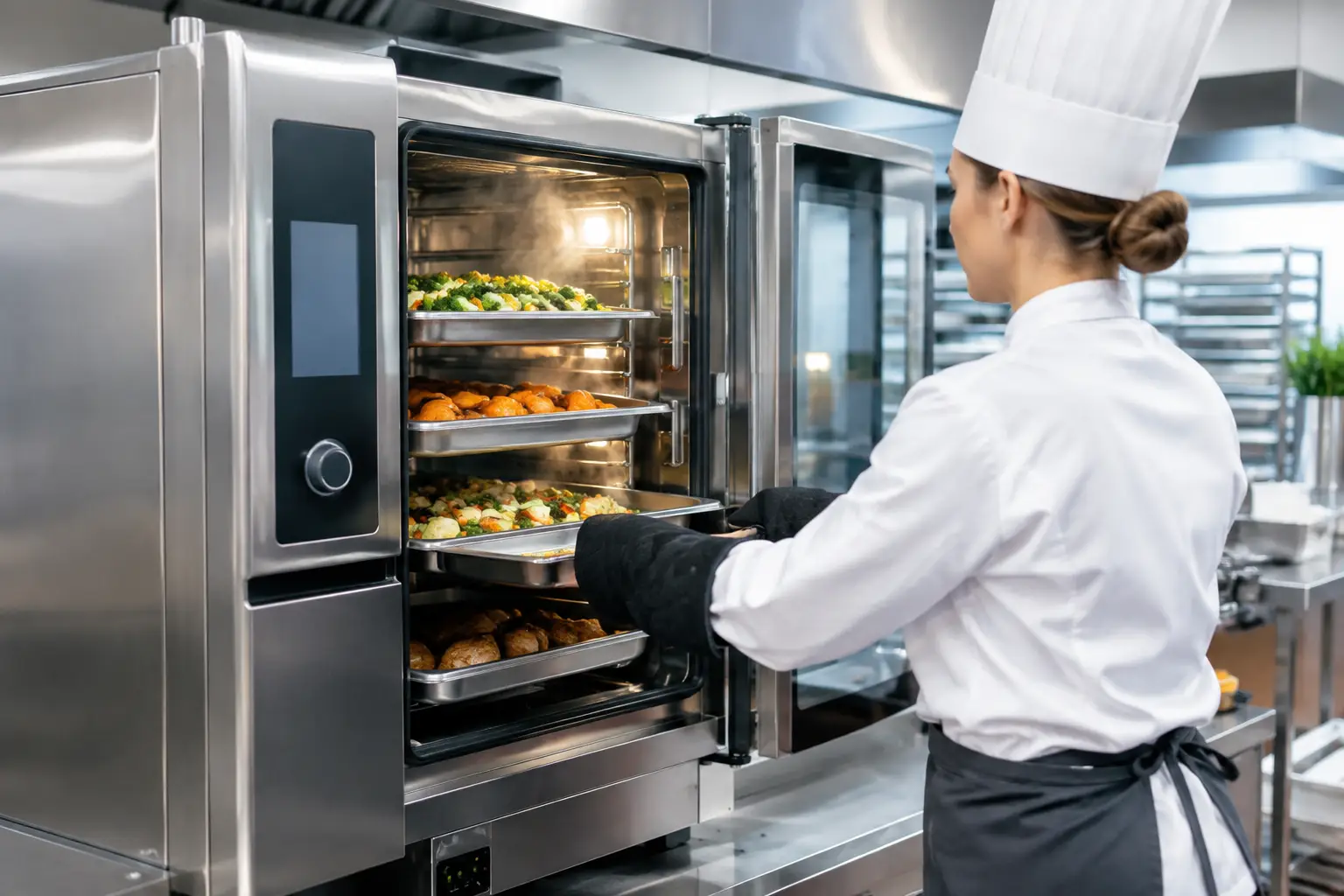
A dry chicken breast sent back during a packed lunch rush is more than a food-quality problem. It costs time, stock and customer confidence. Commercial steam ovens give busy kitchens a practical way to cook with more moisture, consistency and control, particularly when the menu relies on vegetables, seafood, poultry, rice, dumplings or batch-produced meals.
For restaurants, cafés, pubs, clubs, caterers and institutional kitchens, the right oven can reduce the pressure on stovetops and help staff produce the same result across multiple trays. But a steam oven is not automatically the right answer for every venue. Capacity, utilities, service access and the type of food you actually sell all matter before you commit.
What commercial steam ovens do well
A dedicated steam oven cooks food with heated steam rather than dry air alone. That controlled moisture helps protect yield and texture. Vegetables can hold their colour and bite, fish is less likely to dry out, and proteins can remain tender when cooking in quantity.
This makes steam cooking useful where prep needs to be repeatable. A hospital kitchen producing dietary meals, a function venue cooking vegetables for 200 covers, or a café preparing poached eggs and breakfast components can all benefit from predictable batch results. Steam also transfers heat efficiently, so many products cook faster than they would in a conventional dry oven.
The strongest operational benefit is often not speed by itself. It is the ability to load several trays of compatible food and know the result will be consistent from the front of the oven to the back. That consistency is valuable when different staff members work across breakfast, lunch and evening shifts.
Steam ovens also suit cook-chill and regeneration work. If your kitchen prepares food in advance, then reheats it for service, moisture control can help bring meals back to serving condition without the dry edges often caused by standard reheating methods.
Steam oven or combi oven?
This is the first decision worth getting right. A steam oven is designed primarily for steaming, while a combi oven combines steam, convection heat and combination cooking. For many commercial kitchens, a combi oven offers greater menu flexibility because it can roast, bake, steam, regenerate and cook with controlled humidity in one cabinet.
A dedicated steam oven can still be the smarter purchase when steaming is a major, defined task. Think Asian restaurants producing dumplings and seafood, high-volume institutional kitchens, or venues that already have reliable dry-heat ovens but need extra steaming capacity. It can be a straightforward, efficient addition without paying for functions your team will rarely use.
If bench space and capital budget are tight, consider whether a combi model could replace more than one piece of equipment. If the kitchen already has a strong oven line and needs to move large volumes of greens, rice, shellfish or delicate proteins, a purpose-built steam oven may make more sense. The answer depends on workflow, not just the appliance price.
Choosing the right size for your kitchen
Capacity is usually measured by the number and format of gastronorm trays the oven accepts. A smaller unit may suit a café, small restaurant or satellite kitchen, while a multi-tray floor model is better suited to catering, aged care, hotels, schools and venues producing high cover counts.
Do not choose capacity based only on your quietest service. Look at the busiest 60 to 90 minutes of a typical week, the largest function you cater for, and how much batch prep is required before service. An oven that is full before the pass opens can quickly become a bottleneck.
At the same time, buying oversized equipment can waste floor area, energy and upfront budget. In a compact kitchen, access around the door and room for tray handling are just as important as the oven footprint. Staff need safe space to load hot trays, move trolleys and clean around the unit.
Before ordering, measure the proposed location carefully. Check doorway widths, delivery access, ceiling clearances, drain location and the route from prep to service. For a new venue or refurbishment, equipment selection should be considered alongside kitchen design rather than squeezed into a finished plan.
Utilities and installation checks that save trouble
Steam equipment needs more planning than a standard bench-top appliance. Depending on the model, installation may require suitable electrical supply, water connection, drainage and extraction or ventilation arrangements. Requirements vary by manufacturer and local site conditions, so confirm specifications before purchase and engage qualified trades for installation.
Water quality deserves particular attention. Steam generators and internal components can suffer from scale buildup where water is hard or untreated. A suitable filtration or water-treatment system can protect the equipment, support better cooking performance and reduce avoidable service issues. It is a small part of the project that should not be treated as an afterthought.
Also ask how the oven drains condensate and whether the kitchen floor and plumbing layout can handle it. A low-cost unit becomes expensive if plumbing alterations, electrical upgrades or ventilation work were not allowed for in the budget.
Features that matter in daily service
The feature list can get long quickly, but operators usually benefit most from controls that make service easier and cleaning more manageable. Programmable cooking cycles are useful when several staff need to produce the same item to the same standard. Probe cooking can help with larger proteins and controlled regeneration. Automatic wash systems can save significant labour at the end of a long shift.
Consider the door configuration as well. A right- or left-hinged door affects traffic flow, especially in narrow production areas. Larger floor units may need a compatible trolley or rack system to move trays safely. For kitchens preparing allergen-sensitive or special-diet meals, straightforward controls and clearly separated production procedures are often more useful than complicated functions nobody is trained to use.
Energy and water use should be assessed over the life of the machine, not simply at purchase. A cheaper oven may look attractive on day one, but frequent cleaning cycles, poor insulation, slow heat recovery or high maintenance needs can affect operating costs for years.
Plan for cleaning, service and downtime
A commercial oven works hard, and steam places extra demand on seals, drains, fans, probes and water-related components. Daily cleaning is essential. Food residue, grease and mineral deposits do not just look poor – they can affect hygiene, cooking results and the life of the equipment.
Build cleaning into the closing routine and use the approved products for the machine. Staff should know how to inspect door gaskets, clear filters where applicable and report unusual leaks, error messages or changes in steam performance early. Waiting until the oven stops during a Saturday service is rarely the economical option.
When comparing models, ask practical after-sales questions. Are common parts available in Australia? Is there a local service network? What does the warranty cover? Can your team obtain support if the oven needs attention during a busy trading period? These details matter as much as the advertised tray count.
Budgeting for the full purchase
The purchase price is only one part of the decision. Allow for delivery, installation, water treatment, drainage, electrical work, ventilation changes, accessories, cleaning chemicals and staff training. If you are replacing old equipment, consider whether the new unit will reduce labour or replace separate steaming and reheating steps.
Pre-owned commercial equipment can be worth considering where budget is limited, provided its condition, service history and suitability are properly checked. For new equipment, warranties, finance options and access to practical equipment advice can make it easier to select a model that suits the venue rather than simply choosing the lowest upfront price. CKE Sydney can assist operators sourcing individual cooking equipment or planning a broader kitchen fitout.
Make the oven fit the menu
The best commercial steam oven is the one that earns its space every day. Start with your menu, peak-volume production and available services, then match the oven to those realities. A well-chosen unit can protect food quality, improve batch consistency and give your team more control when the kitchen is under pressure.
Before you buy, write down the five items you would cook in it most often and the number of portions required at peak. That simple check usually makes the right capacity and oven type much clearer.