
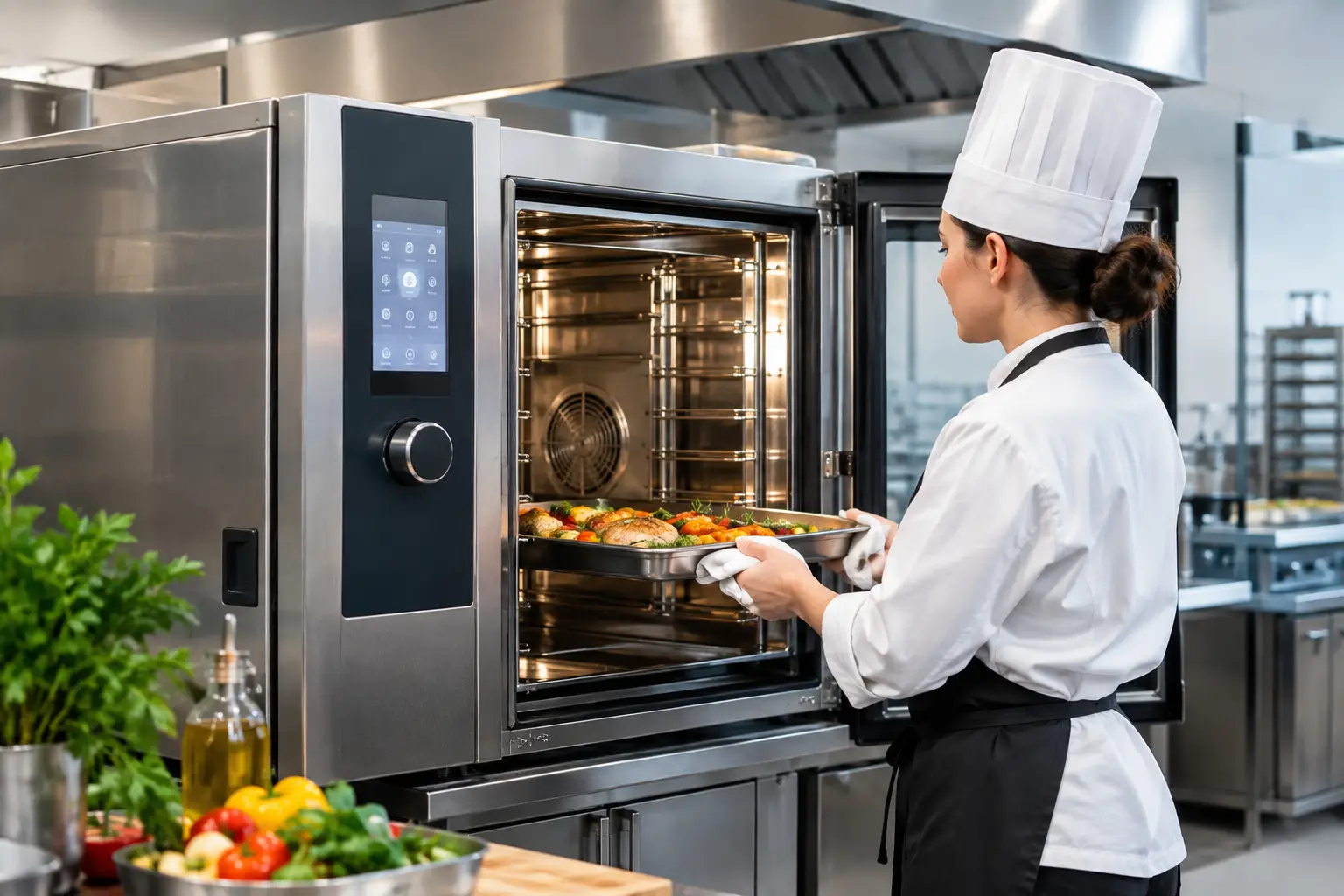
A combi oven can replace several cooking jobs at once: roasting in dry heat, steaming vegetables, baking, regenerating plated meals and cooking with controlled humidity. For a busy venue, that flexibility is valuable. But are combi ovens energy efficient? Usually, yes – particularly when they replace separate appliances and are properly matched to the kitchen’s production volume. They are not a guaranteed power-saving shortcut, though. Capacity, fuel type, cooking habits and maintenance will decide whether the savings show up on your bills.
Why combi ovens can use less energy
A combi oven combines convection heat with steam, or uses both together. Steam transfers heat into food far more effectively than dry air, so products can often cook at lower temperatures and in less time. When the oven is working in combination mode, moisture also reduces surface drying and shrinkage, which can improve yield on meats, poultry and baked items.
The energy case is often strongest when a combi replaces multiple pieces of equipment. Instead of running a convection oven, steamer and holding cabinet for separate tasks, one unit may handle a large part of the production schedule. That can mean less equipment heating the kitchen, fewer idle appliances and less load on ventilation and air conditioning.
Modern commercial combi ovens also commonly include insulated cooking chambers, tighter door seals, programmable recipes, automatic cleaning cycles and standby functions. These features help, but they only deliver value when staff use them properly. An oven left hot between short jobs is still consuming energy, regardless of how efficient its design may be.
There is another saving that matters to foodservice operators: water. A well-managed combi can steam or cook combination dishes with controlled water use rather than relying on boiling pots or an older-style steamer. Water savings vary widely by model and program, especially where a unit uses automatic wash cycles, so it is worth checking the manufacturer’s specifications rather than assuming every combi performs the same way.
Are combi ovens energy efficient for your menu?
The better question is not whether a combi oven is efficient in isolation. It is whether it produces your menu efficiently at the volumes you actually serve.
For a café preparing breakfast, cabinet food and lunch service, a compact combi can bake pastries, roast vegetables, cook chicken, steam eggs and reheat prepared items without several appliances running at once. For a pub, club or function venue, a larger rack combi can be particularly effective for batch roasting, banquet work and regeneration. Aged-care kitchens and institutional sites can also benefit from repeatable recipes, portion control and gentler cooking that helps retain moisture.
However, a combi is not automatically the best answer for every job. A takeaway shop producing a narrow menu of fried food may gain more from an efficient fryer and strong extraction than from a large oven that rarely reaches capacity. Likewise, a high-output bakery may need dedicated baking equipment where crust, airflow and deck characteristics are central to the product.
A combi oven delivers its best energy performance when its capacity is used. Running a 10-tray unit for one small tray of food several times a day can waste more energy than using a smaller appliance suited to the task. Conversely, buying too small can force staff to run repeated cycles through peak service. The right size is a commercial decision, not just a space decision.
Think in meals produced, not just kilowatts
The power rating on an appliance label is useful, but it does not tell the full story. A higher-rated combi may still use less energy per meal than several smaller appliances operating across a service period. Look at how many portions, trays or kilograms of product the oven can produce in a shift, including preheating, cooking, recovery time and cleaning.
For example, a combi that cooks a full load of roast proteins and vegetables in one programmed cycle may use energy very effectively per portion. The same oven used for a few scattered items while its door is constantly opened will not perform nearly as well. How the team works around the equipment matters as much as the equipment itself.
Electric versus gas combi ovens
Both electric and gas combi ovens can be efficient choices, but the best option depends on site services, energy tariffs, ventilation and kitchen layout.
Electric combis offer accurate control and can be simpler to position in some kitchen designs. They are a common choice where a venue has suitable electrical capacity and wants consistent programmable operation. Depending on the local electricity plan, running costs can be higher than gas, so check the likely daily load rather than focusing only on purchase price.
Gas combi ovens can provide strong heating performance and may be economical to run where gas pricing is favourable. They do require appropriate gas connection, commissioning and ventilation considerations. Gas prices and supply arrangements are changing across Australia, particularly for new developments, so confirm what is available at your premises before building the kitchen around a gas unit.
In either case, the oven must be installed correctly. Undersized electrical supply, poor water treatment, inadequate drainage or ventilation issues can affect performance, reliability and operating cost from day one.
Where energy savings are often lost
The most common cause of poor combi efficiency is not the oven itself. It is the way it is operated. Preheating too early, holding at cooking temperature through quiet periods and running partial loads all add unnecessary consumption. So does using the combi as a general-purpose warming cupboard when a dedicated holding solution would suit the job better.
Door seals deserve attention. A damaged or dirty gasket lets heat and steam escape, lengthens cooking times and puts more strain on the unit. Staff should avoid opening the door repeatedly to check food when probes, timers and programmed recipes can provide a more reliable result.
Scale is another costly issue. Steam-generation components can suffer where water quality is poor, reducing efficiency and leading to service interruptions. The correct filtration or water treatment setup, along with the manufacturer’s recommended cleaning routine, protects the oven and helps it operate as intended. Automatic cleaning is convenient, but it still uses water, energy and chemicals, so select the correct cleaning level for the actual soil load.
Practical ways to get more from a combi oven
A few operating disciplines can make a noticeable difference over a year. Build production around fuller loads where food safety and service timing allow. Batch roast vegetables, proteins or bakery items rather than firing multiple small cycles. Use probes and saved programs to prevent overcooking, and set realistic preheat times instead of switching the oven on at the start of the day by habit.
Train the kitchen team on when to use dry heat, steam and combination cooking. Combination mode is useful, but it is not always necessary. A tray of frozen pastries, for example, may need dry convection rather than added humidity. Correct programs protect product quality while avoiding longer cycles than required.
It also pays to schedule cleaning at the end of a productive run rather than cleaning prematurely and then reheating the oven for another service. Keep vents clear, inspect door seals, maintain filters and arrange servicing before a minor fault becomes a breakdown during a busy weekend.
What to check before you buy
Before selecting a combi oven, map your busiest service, not just an average weekday. Count the trays, portions and product types that need cooking at the same time. Consider whether you need a bench unit, a floor model or a roll-in system, and allow for door swing, drainage, water filtration, extraction and access for servicing.
Ask for the appliance’s electrical or gas requirements, water consumption, cleaning requirements and recommended installation clearances. Check whether the programmed functions suit your menu and whether the supplier can provide practical advice on sizing. For a new fitout, the combi should be planned alongside refrigeration, prep space, wash-up and ventilation – not chosen as a standalone purchase after the kitchen is already drawn.
CKE Sydney can help operators compare new and quality pre-owned commercial equipment against the way their kitchen actually works, from a single replacement oven through to a complete fitout.
A combi oven earns its place when it reduces duplicated cooking equipment, improves batch production and gives your team repeatable results. Choose the right capacity, keep it maintained and use its programs with purpose, and the savings can be measured in more than energy alone.