
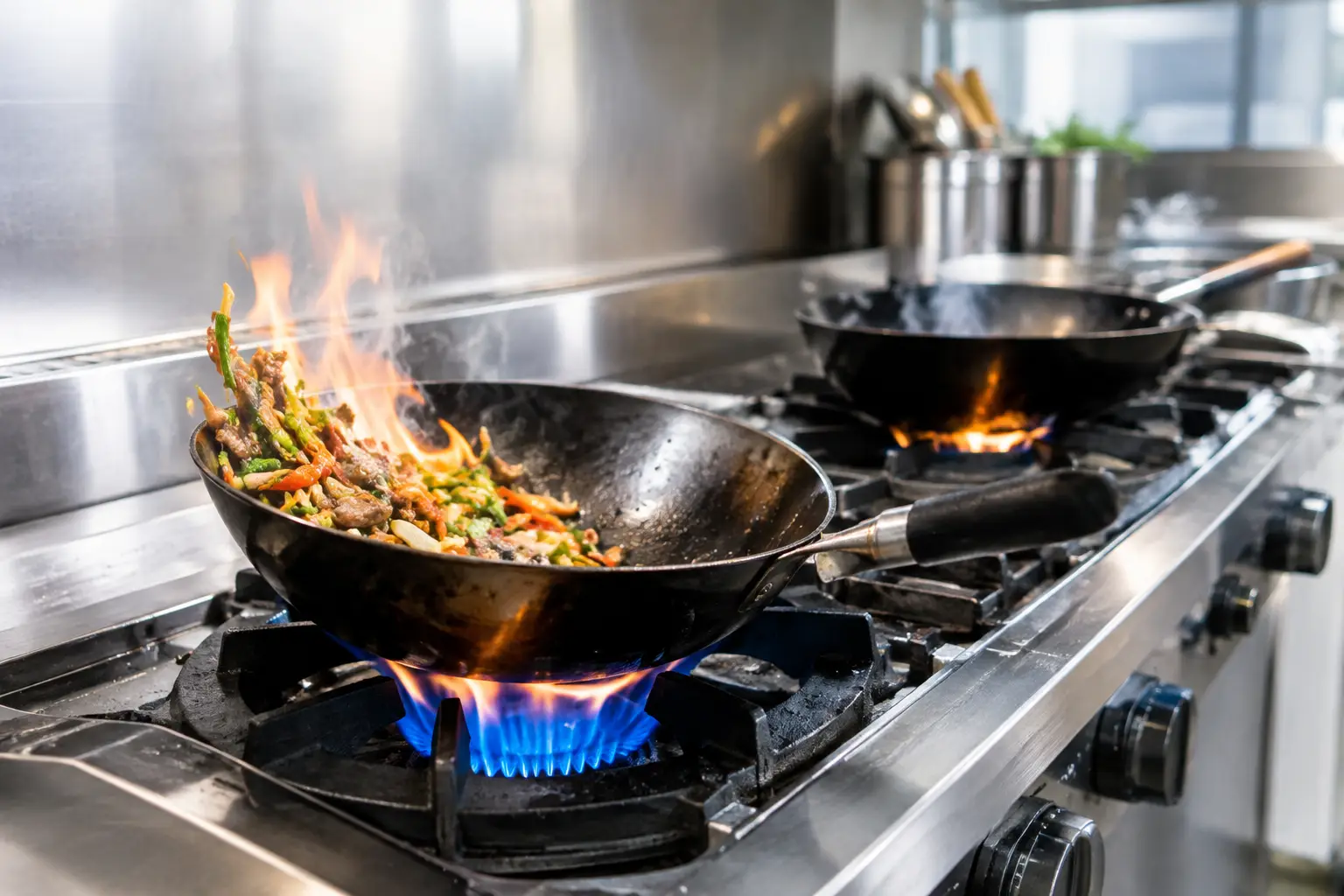
A wok burner can be the fastest station in your kitchen or the source of constant bottlenecks. The difference usually comes down to selecting wok burners that suit your actual service volume, menu and site services – not simply choosing the unit with the biggest flame.
For restaurants, takeaway shops, pubs, clubs and caterers, wok cooking demands serious heat, quick recovery and a layout that lets cooks move without getting in each other’s way. A well-chosen commercial wok burner gives your team the heat control needed for stir-fries, fried rice, noodles, sauces and high-volume Asian menus. It also needs to stand up to long shifts, regular cleaning and the occasional hard knock of a busy service.
Start with the menu and service volume
Before comparing burner sizes or prices, look at what will come off the wok station during your busiest 30 minutes. A small café adding one or two wok dishes to a menu has very different requirements from a Chinese restaurant producing dozens of meals each hour.
If wok cooking is a secondary menu item, a single-bowl unit may be enough. It gives the chef a dedicated high-heat station without taking over the whole cookline. For a busy takeaway venue, two or more burners allow one cook to handle separate orders, or let multiple cooks work during the rush. Larger operations may need a purpose-built wok range with several bowls, integrated splashbacks and a matching extraction canopy planned as part of the kitchen fitout.
Think about the type of dishes, too. Fried rice and noodle dishes often need fast, repeatable output. Stir-fried seafood and vegetables may benefit from more precise flame control. A menu built around heavy wok hei needs strong heat and a burner that recovers quickly when a cold batch of ingredients hits the pan.
Buying more capacity than the team can use is not always good value. Extra burners consume floor space, require more gas capacity and add to cleaning. On the other hand, an undersized wok station can hold back the whole pass at peak times. The right answer depends on production, staff numbers and available bench space.
What to check when comparing wok burners
Commercial wok burners are not all built the same. The burner itself matters, but so do the bowl, frame, controls, plumbing and service access.
Heat output and flame control
Higher heat output is useful when the menu calls for rapid searing and large batches, but raw power is only part of the decision. The cook needs a flame that responds properly when adjusted. Poor control makes it harder to handle delicate ingredients and can waste gas during quieter periods.
Ask about the burner’s output, the recommended wok size and whether the unit is designed for natural gas or LPG. Do not assume your existing gas supply can support an additional high-output unit. A licensed gasfitter should confirm the available gas capacity, pipe sizing, isolation requirements and connection details before installation.
Bowl size and wok fit
The wok bowl should support the wok securely while allowing the cook to toss food comfortably. A bowl that is too deep, too shallow or poorly matched to the wok diameter will slow the chef down and make the station less safe to use.
Consider the wok sizes your kitchen already uses. Standardising wok diameter across the business can simplify training, replacement purchasing and workflow. If chefs have a strong preference for a particular bowl profile, involve them early. Their feedback is more useful than discovering a poor fit after the equipment is installed.
Construction and cleanability
A commercial wok station needs durable stainless-steel construction, solid supports and components that can handle heat, oil and daily cleaning. Look closely at welds, splashback height, drip areas and how easily staff can reach the surfaces around the burner.
Grease and food debris build up quickly around high-heat equipment. A design with practical drainage, accessible components and smooth surfaces can save time at close-down. This is not a minor detail: difficult cleaning can affect hygiene standards, create odours and shorten equipment life.
Water taps and cooling arrangements
Many wok stations include water taps for filling, rinsing and keeping the work area moving. Some designs also use water cooling around the bowl or deck. These features can be highly practical in a busy Asian kitchen, but they add plumbing requirements and ongoing maintenance considerations.
Check where water and waste connections will sit, whether the available pressure is suitable and how the unit will be isolated for servicing. Water should support the cooking process, not create puddles, splash hazards or a difficult-to-clean corner behind the equipment.
Plan the wok station as part of the cookline
A wok burner works best when it is planned with the stations around it. The chef needs ingredients within easy reach, a landing area for cooked dishes and a clear path to the pass. If every sauce bottle, prep tray and pan has to be carried across the kitchen, speed disappears quickly.
For many venues, the practical arrangement is refrigerated or ambient ingredient storage nearby, a preparation bench within reach, then the wok station and pass. Allow room for a cook to turn safely with a hot wok, and avoid placing a major traffic route directly behind the station.
Extraction is equally important. Wok cooking generates intense heat, steam, grease and smoke. Your canopy, ducting and make-up air arrangements must be designed for the equipment and cooking style, not treated as an afterthought. A powerful burner under inadequate ventilation can make the kitchen uncomfortable, affect surrounding equipment and create compliance problems.
When establishing a new venue or refurbishing an existing kitchen, it makes sense to review cooking equipment, exhaust, gas, water, drainage and workflow together. Moving a burner after gas and canopy work is complete is far more expensive than getting the layout right at the planning stage.
Safety and installation are not optional extras
Commercial gas equipment should be installed and commissioned by qualified professionals. Confirm the unit is suitable for Australian commercial use and that the installation meets relevant local requirements, manufacturer instructions and site conditions.
Staff training also matters. Cooks should know how to ignite and shut down the burner correctly, where the gas isolation point is, what to do if they smell gas and how to manage oil flare-ups safely. Keep combustible packaging, tea towels and loose plastic containers away from the wok station. It sounds obvious, but busy kitchens create shortcuts unless the workspace is set up properly.
Include the wok burner in scheduled preventative maintenance. Burner jets, pilots, ignition systems, taps and hoses need inspection over time. A yellow or uneven flame, delayed ignition, soot marks or unusually high gas use are signs to arrange service rather than waiting for a breakdown during Friday night trade.
New or pre-owned: choose on operating risk
New wok burners offer a clean starting point, current specifications and manufacturer warranty support. They are often the straightforward choice for a new fitout, a franchise rollout or a venue where consistent equipment presentation matters.
Quality pre-owned equipment can make commercial sense when budget is tight, particularly for a replacement unit or a smaller operation building capacity gradually. The key is condition. Check the frame, bowls, burner assembly, controls, taps and signs of heat damage or corrosion. Confirm what has been inspected, what warranty is available and whether parts can be sourced if needed.
The cheapest purchase price is not always the lowest-cost decision. A bargain unit that needs frequent repairs, uses excessive gas or cannot be properly cleaned may cost more in lost labour and disrupted service. Compare the full picture: purchase price, installation, expected maintenance, warranty, energy use and likely service life.
Get the details right before you order
Measure the available space carefully, including clearances, access routes and the path from delivery point to kitchen. Check doorway widths, corners, lifts and whether the unit needs to be manoeuvred through a rear loading area. Confirm gas type, plumbing needs, canopy position and whether existing services need upgrading.
It also helps to provide your supplier with a basic kitchen plan, photos of the current cookline and details of the dishes you expect to produce. CKE Sydney can assist operators with individual equipment purchases as well as wider commercial kitchen design and fitout requirements, which is useful when the burner is only one part of a larger upgrade.
The best wok station is not necessarily the largest or most expensive one. It is the one that gives your cooks dependable heat, safe working space and enough capacity to keep orders moving when the docket rail fills up.