
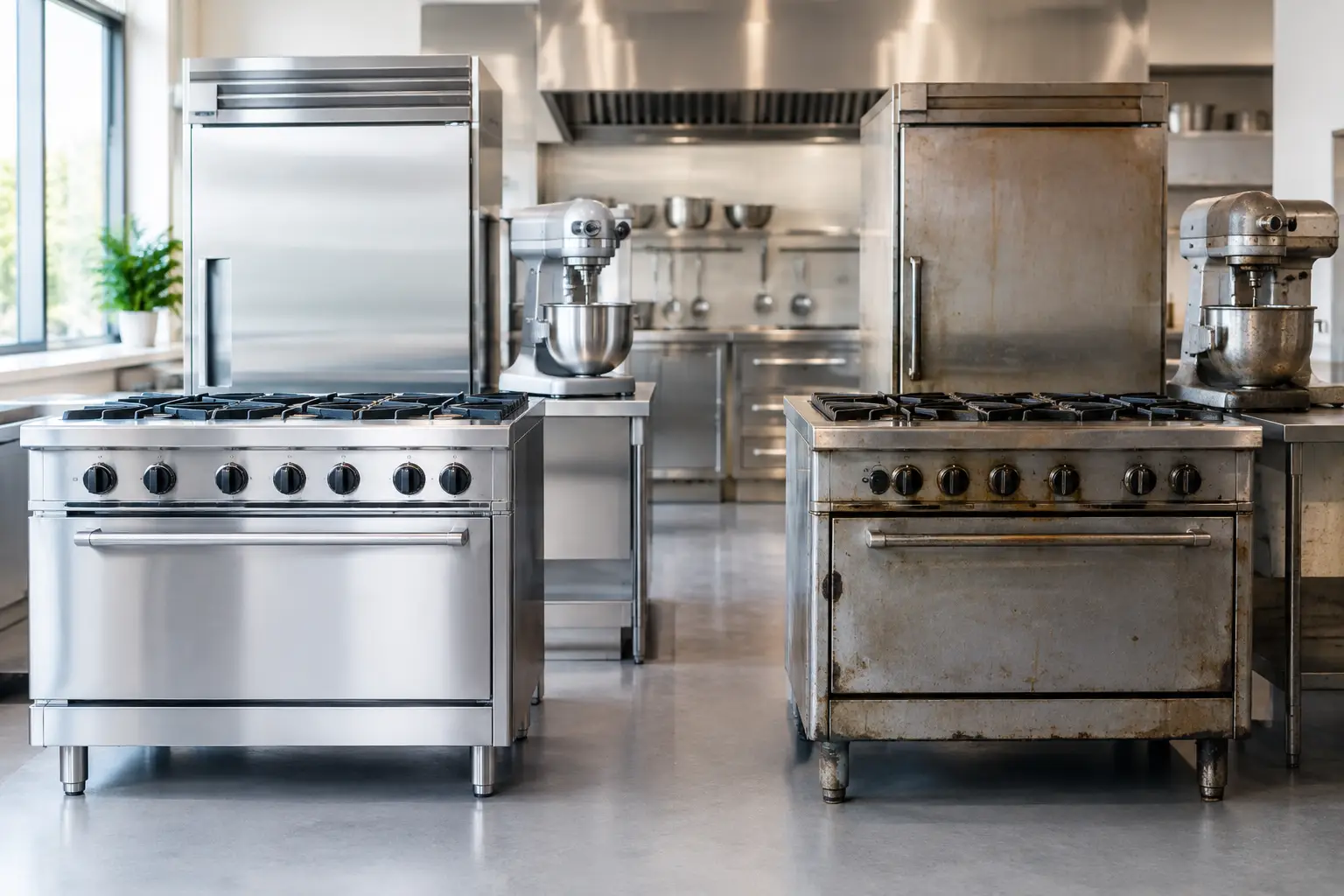
A combi oven failing during Saturday service, a fridge struggling through a Sydney summer, or a dishwasher holding up the whole wash-up area can cost far more than the purchase price. That is why the choice between new versus used kitchen equipment should start with how your venue actually operates, not simply which ticket price looks lower.
For a new café, restaurant, takeaway shop, bakery or institutional kitchen, pre-owned equipment can stretch the fitout budget further. For an established venue replacing a critical machine, new equipment may provide the certainty, warranty and specification you need. The right answer is often a mix of both.
New Versus Used Kitchen Equipment: Start With the Job
Before comparing prices, define what the equipment must do every day. Consider your expected covers, menu, peak periods, available gas and electrical services, ventilation, floor space and staff capability. A lightly used 10-tray combi oven is not a bargain if your production requires 20 trays at a time. Equally, a brand-new heavy-duty range can be unnecessary for a small café kitchen with a tight, simple menu.
Equipment that keeps food safe, prevents production stoppages or drives revenue deserves closer scrutiny. Refrigeration, dishwashers, ice machines, combi ovens and high-output fryers sit near the top of that list. A workbench, shelving unit or display cabinet may offer more room for value-led pre-owned buying, provided its condition and dimensions suit the site.
It also pays to think beyond opening day. Ask whether the equipment can handle a busier lunch trade, catering work or a menu change in 12 months. Buying too small can mean replacing an item earlier than planned, while buying far beyond your actual needs ties up cash that could go towards staffing, stock or marketing.
When New Equipment Is the Better Buy
New commercial kitchen equipment suits operators who need a known specification, current features and warranty support. You know the unit’s history because there is none. For new venues, that certainty can make installation, certification and staff training easier to manage.
Modern equipment can also reduce ongoing costs. New refrigeration may offer better temperature control and energy efficiency than an older unit. Current combi ovens can improve consistency and reduce labour across roasting, steaming, regeneration and baking. New dishwashers may use water and chemicals more efficiently, depending on the model and operating conditions.
Warranty matters most when downtime is expensive. If a primary underbench dishwasher or cool room refrigeration system is essential to daily service, the protection of a manufacturer-backed warranty may justify the higher upfront spend. This is particularly relevant for hotels, clubs, aged-care kitchens and high-volume caterers where a breakdown affects large numbers of meals.
New equipment is also a strong option where compliance, capacity or integration is non-negotiable. A purpose-built kitchen fitout may require specific gas ratings, clearances, electrical loads, water connections or extraction arrangements. Starting with equipment that matches the kitchen plan can prevent costly alterations once trades are on site.
The trade-off is simple: new units usually cost more initially. However, a lower repair risk, warranty coverage and longer expected service life can make the total cost easier to budget for. Finance options can also help eligible businesses preserve working capital rather than paying the full amount upfront.
Where Used Equipment Can Deliver Real Value
Quality pre-owned commercial kitchen equipment can be a practical way to equip a venue without draining the fitout budget. Many operators upgrade, relocate or change concepts before an appliance has reached the end of its useful life. That creates opportunities to buy branded, commercial-grade equipment at a lower price than an equivalent new model.
Used equipment is especially useful when you need to build out a kitchen across multiple categories. Savings on a pre-owned oven, stainless-steel workbench, display cabinet or preparation machine may free up budget for essential new refrigeration, ventilation work or a better dishwasher.
For pop-ups, event caterers, temporary production kitchens and first-time operators, used equipment can also reduce the financial risk of getting started. If the menu is still being proven, it may be smarter to buy a suitable pre-owned fryer or bench-top appliance than commit to the most expensive model available.
That said, used should never mean unknown. Check the equipment’s overall condition, operating controls, door seals, burners, internal components, shelving, refrigeration performance and any visible corrosion or damage. Confirm the make, model, dimensions, power or gas requirements, and whether the unit is appropriate for commercial use in your setting.
Ask practical questions before purchase. Has the unit been tested? Is it supplied with accessories? What work has been carried out before sale? Is a warranty included? Can parts and service support still be obtained for that model? These details matter more than a low sticker price.
The Costs That Do Not Appear on the Price Tag
A commercial equipment purchase is not just the unit itself. Delivery, access, installation, commissioning, electrical work, plumbing, gas fitting, exhaust canopy requirements and removal of old equipment can all change the real cost.
A used gas range may look like a sharp buy until you discover it needs different gas connections, new regulators or a change to the cookline layout. A cheap upright fridge can become expensive if it does not fit through the doorway or cannot maintain safe temperatures in a hot kitchen. Measure the access path as carefully as the allocated kitchen space, including doorways, turns, lifts and loading areas.
Energy and water use should also be part of the decision. An older appliance that runs constantly may cost more over time than a newer, more efficient unit. This does not mean every older machine is uneconomical. Well-maintained commercial equipment can perform strongly for years. It means you should compare likely operating costs against the initial saving.
For used items, allow a contingency in the budget for servicing, replacement seals, filters, hoses, baskets, racks or small repairs. For new items, check what installation and commissioning requirements apply to protect the warranty. In both cases, equipment that is correctly installed and maintained will last longer and perform better.
A Practical Buying Mix for Most Commercial Kitchens
Many successful fitouts combine new and used equipment rather than choosing one side across the entire kitchen. The best split depends on risk, usage and budget.
A common approach is to buy new for high-risk or highly technical equipment, such as refrigeration, dishwashers, ice machines, combi ovens or heavily used cooking appliances. Then consider quality pre-owned options for stainless-steel benches, shelving, sinks, display furniture, selected bakery machinery or secondary cooking equipment.
There are exceptions. A proven used oven from a reputable source may be a better operational choice than a low-cost new unit with limited support. Conversely, a new refrigerated display cabinet could be the right call if presentation, energy use and temperature reliability directly affect your sales and product quality.
The key is to avoid buying based on category alone. Assess the particular unit, brand, condition, warranty, support and role it will play in your kitchen.
Plan the Kitchen Before Ordering Equipment
The most expensive purchasing mistakes usually begin with an incomplete plan. Equipment must work as a system: goods in, storage, preparation, cooking, pass, wash-up and rubbish management all need a logical flow. A great appliance in the wrong location creates congestion, extra steps and avoidable stress during service.
For a new venue or major refurbishment, map out equipment dimensions, service points and clearances before placing orders. Think about who uses each item, where hot food travels, where staff will place trays and where clean and dirty items cross paths. This is where specialist advice and a full kitchen design can prevent rework.
CKE Sydney can help operators compare new and quality pre-owned options across cooking, refrigeration, wash-up, preparation and stainless-steel equipment, while also supporting broader kitchen design and fitout requirements. That makes it easier to match the purchase to the job instead of forcing the job around whatever is available.
Make the Decision With Service in Mind
The best equipment buy is the one that supports reliable service on your busiest day. New equipment often gives you certainty, warranty and current performance. Used equipment can provide excellent value when it has been properly assessed and suits the workload.
Do not spend every dollar on the cheapest upfront option, and do not assume the most expensive option is automatically right. Put your money where failure would hurt most, check the full installed cost, and choose equipment your team can rely on when the orders start coming through.