
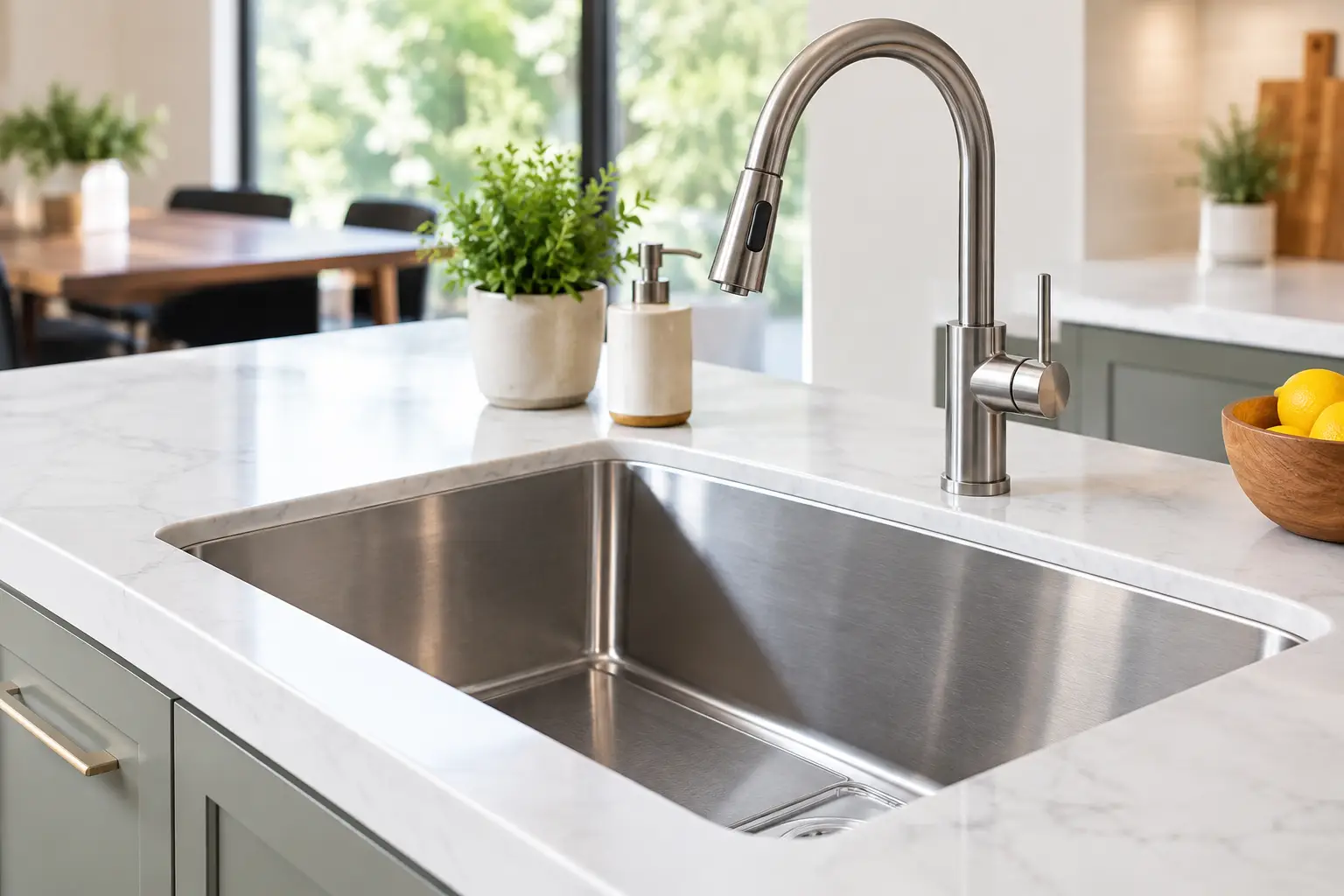
A kitchen sink that is too small becomes obvious halfway through a busy service: pots stack up, staff wait for bench space and the wash-up area starts holding back the whole kitchen. Working out what size kitchen sink to buy is not just a matter of finding a unit that fits the wall. It is about matching bowl capacity, drainers, splashbacks and bench layout to the volume and type of work your venue actually does.
For a small café, a compact single-bowl sink may be the sensible use of space. For a restaurant, pub, catering kitchen or aged-care facility, undersizing the pot-wash sink can cost time every shift. The right answer depends on your menu, trading volume, equipment, cleaning process and available floor plan.
What Size Kitchen Sink Is Right for Commercial Use?
Start by separating the jobs that happen around a sink. Food preparation, hand washing, utensil washing and pot washing should not all compete for one bowl. Commercial kitchens need a layout that supports safe food handling and keeps clean and dirty tasks moving in one direction.
A sink’s overall size includes more than the bowl. Allow for drainers, tap clearance, splashbacks, legs, waste connections and the room staff need to stand and work comfortably. A large sink against a narrow walkway can create as many problems as a small sink in a high-volume wash-up section.
As a practical starting point, many small food businesses use a single bowl around 450 mm to 600 mm wide for general washing tasks, paired with a separate hand basin. A busy café or takeaway shop often benefits from a double-bowl sink, particularly where utensils, containers and small cookware need washing throughout the day. Restaurants and production kitchens commonly need larger, deeper bowls or dedicated pot-wash benches to handle gastronorm pans, baking trays, stockpots and mixer attachments.
These are planning guides, not fixed compliance rules. Your local council requirements, building plans and food business classification should always be checked before installation.
Measure What Must Go Into the Bowl
The most useful sink measurement is the size of the largest item that needs regular washing. Take a tape measure to the equipment that causes the most trouble during pack-down: stockpots, frying-pan baskets, large roasting trays, baking sheets, wok rings or full-size gastronorm pans.
The item should fit in the bowl with enough room to wash it properly. A bowl that only just accepts a tray at an angle is frustrating for staff and encourages water to splash across surrounding benches. Depth matters too. Shallow bowls may suit hand tools and produce, but they are poor value for heavy pots and pans that need soaking.
For operations using 1/1 gastronorm pans, consider a bowl that comfortably accommodates the pan without forcing staff to turn it upright. Bakeries should check bowl dimensions against their largest trays, bowls and racks. Caterers should plan for insulated food containers, servingware and bulk cooking vessels, not just the equipment used during prep.
Single Bowl Sinks
A single bowl can work well in compact premises where it supports one defined task. For example, a small takeaway may use one stainless-steel bowl for washing utensils, while maintaining separate facilities for hand washing and food preparation as required by its approved layout.
The trade-off is capacity. Once the bowl is occupied by a soaking pot or a container of sanitising solution, there is nowhere else to work. A single bowl is usually best for low-volume operations, satellite kitchens or as an additional prep sink rather than the main wash-up station in a busy venue.
Double Bowl Sinks
Double bowls give staff a straightforward wash-and-rinse arrangement and keep two jobs moving at once. They are a practical choice for cafés, restaurants, clubs and takeaway shops that wash utensils continuously but do not have the volume to justify a large dedicated pot-wash area.
Look closely at whether both bowls are the same size. Equal bowls provide flexibility for cookware. One larger and one smaller bowl can suit venues that mainly wash utensils alongside occasional pots. Add a drainer where clean items need a place to air-dry before being returned to service.
Triple Bowl and Pot-Wash Sinks
High-volume kitchens often need a triple-bowl sink or a purpose-built pot-wash bench. This setup suits restaurants with extensive cookware, function venues, institutional kitchens, bakeries and caterers returning from off-site events.
A third bowl can support a clear wash, rinse and sanitise process where required, or simply stop dirty cookware from blocking the active wash area. The cost and footprint are greater, but so is the ability to keep up after a full service. If your team currently washes pots in batches after closing because the sink cannot cope, a larger unit is likely a productivity purchase rather than an unnecessary upgrade.
Plan the Full Bench Length, Not Just the Sink Bowl
A sink can be the correct bowl size and still be poorly specified. The surrounding stainless-steel bench is what lets staff load dirty items, wash safely and stack clean equipment without balancing trays on adjacent prep surfaces.
For pot washing, allow landing space on both sides where possible. Dirty cookware should arrive on one side and clean cookware should leave from the other. This simple arrangement reduces cross-traffic and gives staff a more organised routine during peak periods.
Drainers are especially useful when glasswashers or dishwashers are not handling every item. A left-hand or right-hand drainer should be selected to suit your workflow, not whichever unit happens to be available. Stand at the proposed sink position and trace the movement of a dirty plate, a washed pan and a clean tray. That usually makes the right orientation clear.
Also check the overall depth of the bench. A deeper commercial sink bench provides better working room, but it may reduce the clearance in an aisle. Kitchen designers generally need to balance work surface, equipment doors, staff movement and emergency access across the whole layout.
Do Not Forget Hand Basins and Prep Sinks
A commercial sink for washing pots is not a substitute for a dedicated hand basin. Staff need convenient hand-washing access near food preparation and work areas, and the basin must not be blocked by dishes or equipment.
Likewise, a venue preparing raw vegetables, seafood or meat may need separate washing facilities to support its food-safety process. A small prep sink can protect the main wash-up station from becoming a bottleneck. It also gives staff a clean place to rinse produce without competing with dirty pots.
When planning a new kitchen or refurbishment, list every sink function before selecting individual units: hand washing, food prep, utensil washing, pot washing, mop or cleaner’s use, and any bar or beverage requirements. Combining incompatible tasks to save a few hundred millimetres of bench space often creates an expensive operational problem later.
Check Installation Details Before You Order
Commercial sinks are durable, but they still need to suit the site. Confirm the location of hot and cold water points, waste outlets, floor falls and grease-management requirements before settling on a model. Moving plumbing after benches are installed can quickly add cost to a fitout.
Choose stainless-steel construction appropriate for commercial use, with a practical splashback where the sink sits against a wall. Adjustable legs are useful on uneven floors and make it easier to set a comfortable working height. Ensure the waste outlet, plug and trap arrangement is compatible with your plumbing plan.
If a dishwasher will sit beside the sink, consider the loading direction and whether a pre-rinse area is needed. If the sink is under a shelf or near overhead equipment, check tap height and clearance for the largest item being washed. These small checks prevent a unit that looks right on paper from being awkward every day.
Size for Your Next Busy Period
Buying only for today’s quiet trade can be false economy. If you are adding breakfast service, expanding catering, increasing seating or taking on more delivery orders, your wash-up load will grow as well. Allowing some extra bowl capacity and bench space is often cheaper than replacing a cramped sink within a year.
That said, bigger is not automatically better. A large triple-bowl unit in a tight café can take away valuable refrigeration, prep or cooking space. The best commercial kitchen sink is the one that handles your peak workload, fits the approved layout and leaves staff enough room to work safely.
If you are fitting out a new site or replacing an underperforming wash-up bench, bring your floor plan and the dimensions of your largest cookware to CKE Sydney. A practical equipment discussion before ordering can help you choose a sink that earns its space from the first service onward.