
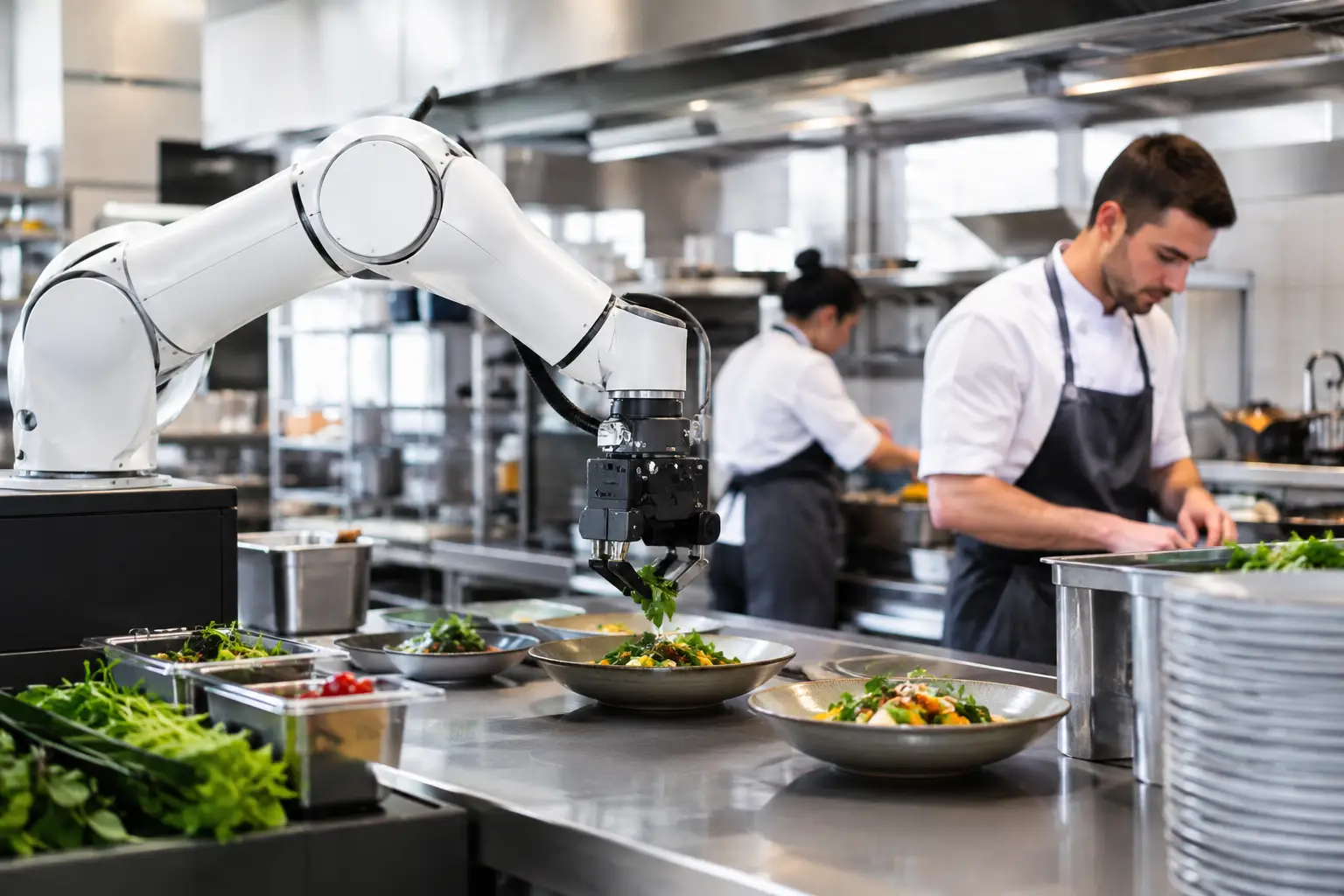
A lunch rush exposes every weak point in a commercial kitchen. Orders build up, one staff member is tied to the fryer, another is checking oven trays, and the dishwasher becomes a bottleneck just when clean plates matter most. Kitchen automation is not about removing people from the kitchen. It is about choosing equipment that takes care of repeatable work, gives staff better control and helps service run at a reliable pace.
For restaurants, cafés, pubs, caterers and institutional kitchens, the right automation can improve consistency while reducing unnecessary handling, guesswork and downtime. The wrong purchase, however, can add cost, take up bench space and create more training work than it saves. The starting point is always your menu, volume, staffing and available services.
What kitchen automation means in a commercial kitchen
In a working venue, automation usually means programmable, sensor-controlled or self-regulating equipment. A combi oven can run saved cooking programmes. A dishwasher can manage wash cycles and dosing. A refrigerated cabinet can maintain a set temperature and alert staff to an issue. A fryer filtration system can simplify oil management, while a high-output coffee machine or beverage dispenser can produce the same result repeatedly.
This is different from buying technology for its own sake. Good automation removes routine decisions where the process should be identical every time. It lets a chef focus on seasoning, presentation, quality checks and managing the pass rather than watching a timer or adjusting the same setting all day.
It also helps when experienced staff are hard to replace. A programmed oven cycle will not turn a new kitchen hand into a head chef, but it can make basic production safer and more repeatable across shifts.
Start with the service bottleneck
Before comparing models, look at where your team loses time during its busiest 30 minutes. For a takeaway shop, it may be cooking proteins to order. For a café, it may be dishwashing and glassware. A club kitchen may need to produce large batches across a changing menu, while an aged-care facility may place greater weight on controlled cooking, food safety and dependable holding.
Watch the actual workflow. Are staff waiting for a single appliance? Are products overcooking because a team member is pulled away? Is prep being repeated because batches vary between shifts? These are the problems automation can address.
A new oven with programmable recipes is useful when the same menu items are cooked repeatedly. It is less useful if the real delay is an undersized cool room, poor bench layout or insufficient extraction. Likewise, an automated dishwasher will not fix a wash-up area that has no landing space for dirty and clean racks. Equipment needs to suit the whole flow of food, not just one task.
Equipment where automation pays off
Combi ovens and programmable cooking
Combi ovens are often one of the strongest investments for venues producing varied menus at volume. They combine dry heat, steam and mixed cooking modes, with the ability to store programmes for common dishes. That can mean consistent roast proteins, steamed vegetables, regenerated meals or bakery items without relying on someone to continually adjust temperatures and humidity.
The benefit is not simply speed. It is repeatability. Once a recipe has been tested properly, staff can select the programme, load the correct product and follow a clear process. For caterers, hotels and institutional kitchens, this can make production easier to manage across large numbers of covers.
Capacity still matters. A small countertop unit may be ideal for a compact café but will not replace a full-size production oven in a high-volume restaurant. Check tray capacity, door clearance, water connection requirements, drainage, power or gas supply, ventilation and cleaning access before committing.
Dishwashing and wash-up systems
Wash-up is a labour-heavy part of many operations, and delays here quickly spread through front of house and kitchen service. Commercial dishwashers automate time, temperature and chemical dosing through set cycles, giving staff a consistent process for plates, glassware, utensils and gastronorm pans.
A pass-through dishwasher can suit high-turnover dining, while an underbench model may be the practical choice for a smaller bar or café. Larger operations may require a rack conveyor or flight-type system, particularly where the volume of trays and serviceware is constant.
Do not choose by hourly rack figures alone. Consider incoming water quality, drainage, ventilation from steam, chemical storage, access for servicing and the space needed to sort, scrape, load and unload. The machine is only one part of an efficient wash-up line.
Refrigeration monitoring and controlled holding
Refrigeration automation is quieter but critical. Digital controllers maintain set temperatures, while alarm and monitoring options can help identify temperature issues before stock is lost. For businesses holding high-value proteins, prepared meals, dairy or display stock, that visibility can be worth far more than the difference between basic and better-specified refrigeration.
Heated display cabinets, bain maries and hot-holding equipment can also provide controlled temperatures during service. They work best with sensible batch planning. Holding food longer than necessary may reduce waste in one area but compromise quality in another. Automation supports standards, but it does not replace good food rotation and temperature checks.
Frying, preparation and portion control
Automated fryer controls, timers and filtration features can support consistency in takeaway shops, pubs and quick-service venues. Set programmes can reduce the risk of undercooking or overcooking, while filtration can help extend oil life when used as part of a proper cleaning routine.
Portioning equipment, food processors, mixers, dough sheeters and bakery machinery can also automate repetitive prep. These items are often more valuable than flashy connected equipment because they reduce hands-on time where the same task is repeated hundreds of times each week. The best choice depends on product volume and how much menu flexibility you need.
Plan the kitchen around people, not just machines
Automation works when people can use it without fighting the layout. A programmable oven positioned too far from the prep bench adds steps. A display cabinet that blocks access to the refrigerator creates congestion. A dishwasher installed without enough benching forces staff to stack wet racks wherever they can find room.
Map the key movements: receiving goods, cold storage, preparation, cooking, plating or packing, wash-up and rubbish removal. Then place equipment to reduce crossing paths and unnecessary travel. Stainless-steel benches, shelving, sinks and mobile workstations may not seem automated, but they are often what allow the automated equipment to perform properly.
For a new venue, include automation decisions early in the kitchen design and fitout process. Services need to be planned around the equipment, including electrical load, gas, plumbing, drainage, water filtration, ventilation and extraction. Retrofitting is possible, but unexpected site work can quickly change the budget.
Balance purchase price with operating value
Automated equipment generally costs more upfront than a basic alternative, and some models need more specialised servicing. That does not automatically make them expensive. Calculate the likely value across labour time, energy and water use, food consistency, reduced waste, oil life, compliance and avoided breakdowns.
A pre-owned commercial machine can be a sensible option when the condition, capacity and service history suit the job. On the other hand, a new unit with warranty support may be the better decision for equipment that runs through every service. There is no one answer for every venue.
Ask practical questions before purchasing: Who will use it on each shift? How long will training take? Can it be cleaned correctly at close? Are replacement parts and servicing available? Will it still suit the menu if trade increases? A price match is useful, but the lowest initial price is not always the lowest operational cost.
Make the change manageable
Introduce automated equipment with clear recipes, set-up instructions and cleaning responsibilities. Test programmes during a quiet period, document the correct load sizes and nominate someone to check results. If settings are changed without control, consistency disappears quickly.
CKE Sydney can help operators match cooking, refrigeration, wash-up, preparation and stainless-steel equipment to the way their kitchen actually trades, whether the job is a single replacement or a complete fitout. The practical goal is simple: choose equipment that earns its space every service, gives your team a better shift and helps customers receive the same quality order after order.