
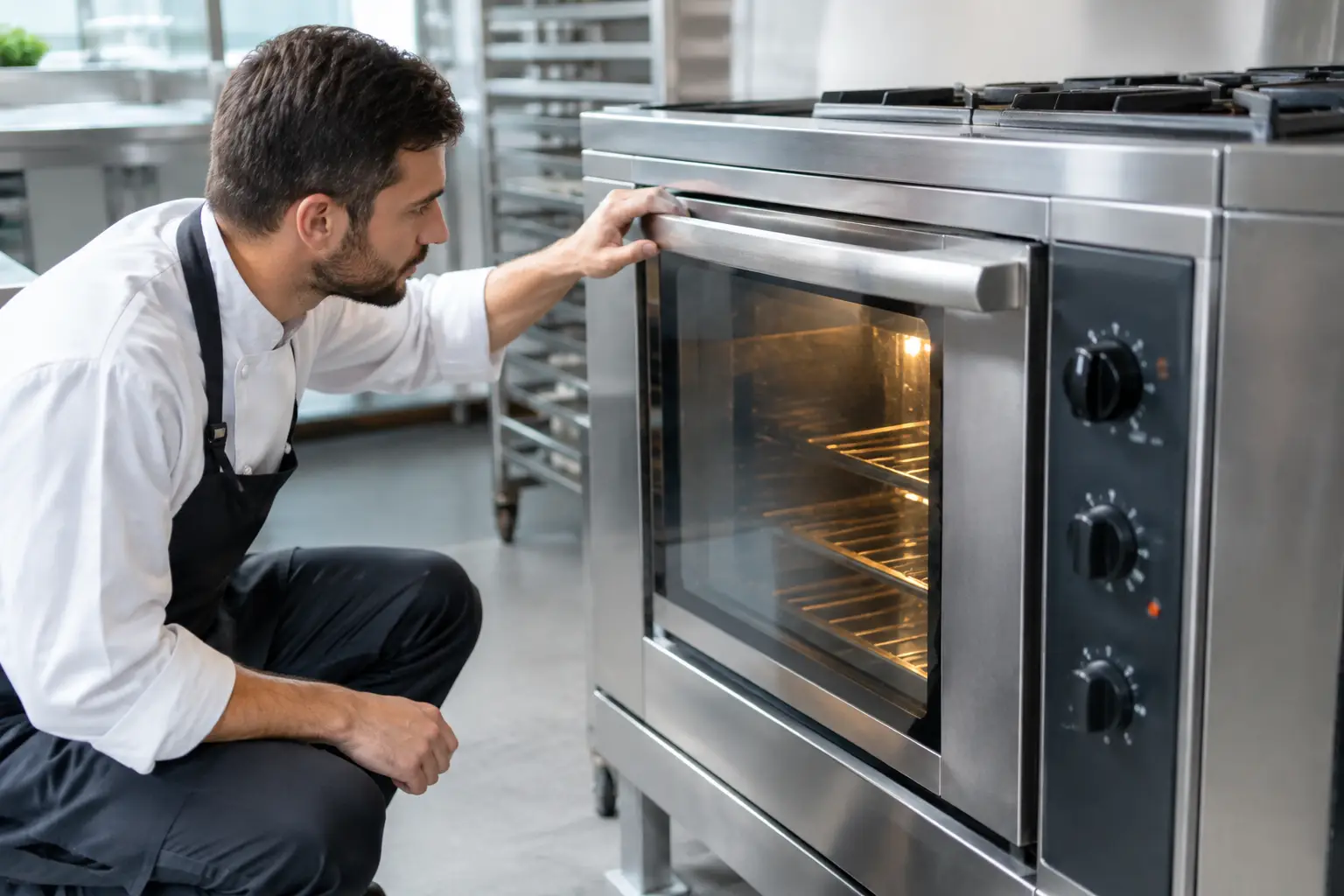
A combi oven failing halfway through a Saturday service is not a bargain, no matter how low the purchase price was. So, are preowned ovens reliable? They can be, provided the oven has been properly assessed, suits the volume and menu of your operation, and comes from a supplier prepared to stand behind what it sells.
For many Sydney cafés, restaurants, pubs, caterers and institutional kitchens, quality pre-owned equipment is a sensible way to access recognised commercial brands without tying up the entire fitout budget. The key is buying on condition and capability, not simply age or sticker price.
Are Preowned Ovens Reliable in a Busy Kitchen?
A well-maintained commercial oven can provide years of dependable service after its first owner has moved on. Commercial equipment is built for far heavier use than domestic appliances, and reputable brands are designed to be serviced, repaired and kept in operation. That makes a pre-owned convection oven, combi oven or deck oven a practical option for businesses that need value without compromising output.
Reliability does depend on the type of oven. A straightforward convection oven has fewer components to fail than a programmable combi unit with steam generation, probes, sensors and electronic controls. That does not mean a used combi oven is a poor buy. It means it deserves a more thorough inspection and a clear understanding of the servicing required.
Usage history matters more than the year on the compliance plate. An oven used lightly in a corporate kitchen may be in better condition than a newer model worked hard through breakfast, lunch and dinner in a high-volume venue. Equally, an older oven from a known commercial brand with available parts may be a safer purchase than an inexpensive newer unit with limited local support.
What Makes a Pre-Owned Oven a Safe Purchase?
The best pre-owned ovens are not just cleaned up for resale. They are checked for operation, wear and safety before they go into another working kitchen. Ask direct questions about the unit’s condition, what testing has been completed, and whether warranty cover is included.
A supplier should be able to explain the oven’s fuel type, electrical requirements, tray capacity, dimensions and whether installation accessories are included. This matters because a reliable oven on paper can still cause problems if it cannot be installed correctly in your site.
Start with the essential checks
Before committing to a pre-owned oven, check these practical areas:
- Heat performance: The oven should reach and hold temperature consistently. Uneven cooking, slow recovery or major temperature variation can point to element, burner, fan or control issues.
- Door condition: Door hinges, handles, catches and seals affect heat retention, cooking results and energy use. A worn gasket is often replaceable, but it should be factored into the price.
- Controls and programmes: Test every dial, display, timer and cooking function. For combi ovens, check steam, fan speeds, drainage, probe operation and automatic cleaning functions where fitted.
- Internal condition: Inspect racks, runners, fan covers, cavity panels and drainage points for damage, corrosion or excessive grease build-up. Surface marks are one thing; deep corrosion or damaged internal components are another.
- Serviceability: Confirm that spare parts and qualified technicians are available in Australia. A good deal loses its value quickly when a minor repair becomes a long wait for an unavailable part.
For gas ovens, arrange installation and commissioning through a licensed gasfitter. Electrical units should be assessed by a licensed electrician, particularly where three-phase power is required. These steps protect your staff, help meet site requirements and prevent avoidable faults caused by incorrect installation.
Match the Oven to Your Actual Service
The most reliable purchase is one that is not being pushed beyond its intended workload. A six-tray convection oven may be ideal for a small café producing pastries, roasted vegetables and cabinet food. It may not be enough for a large venue trying to turn out hundreds of meals across a short lunch period.
Think about your busiest hour, not your quietest day. How many trays need to be cooked at once? Do you need dry heat only, or will humidity and steam improve your proteins, bakery items and reheated meals? Is speed more valuable than flexibility? These questions help determine whether a convection, combi, deck or specialised bakery oven is the better fit.
A combi oven can replace several cooking processes in a compact footprint, which makes it attractive for tight kitchens. However, it also needs the right water connection, drainage, filtration and staff training. If your team will use only basic bake and roast functions, a simpler convection oven may offer better value and fewer maintenance demands.
For a bakery, pizza venue or operation requiring consistent crust and base heat, a deck oven may be the right choice. For caterers and institutions, capacity, recovery time and programme consistency can take priority. The correct oven is not always the cheapest unit available, but it is usually the one that reduces bottlenecks during service.
The Real Cost: Purchase Price, Installation and Downtime
Pre-owned ovens can deliver substantial upfront savings, freeing budget for refrigeration, extraction, stainless-steel benches, dishwashing equipment or fitout work. But the purchase price is only one part of the decision.
Allow for delivery, access into the premises, electrical or gas works, ventilation, water and waste connections, filtration, commissioning and any accessories needed to make the oven productive. A larger oven may look like good value until you discover it will not fit through the doorway or requires a power upgrade.
It is also worth considering operating costs. Poor door seals, scale in a steam system and failing thermostats can waste energy and affect food consistency. Ask whether the oven has been serviced and whether components such as seals, probes or filters are likely to need replacement soon. Honest condition information lets you compare options properly rather than being surprised after delivery.
Downtime should carry real weight in the decision. If a single oven is responsible for most of your menu, a very old or unsupported model may be a risk even at a sharp price. In that situation, warranty support, available parts and a backup cooking plan can be worth more than the initial saving.
When New May Be the Better Option
A pre-owned oven is not automatically the right answer. New equipment can be a stronger choice when your menu depends on the latest programmable features, when energy efficiency is a major priority, or when you need a full manufacturer warranty for a new venue or contract requirement.
New may also make sense where finance helps preserve working capital and the expected workload is intense from day one. If the kitchen will run seven days a week with long service hours, the predictable warranty period and latest technology can justify the higher upfront spend.
That said, pre-owned equipment remains a strong option for replacements, expansions, temporary production needs, secondary ovens and value-focused fitouts. A quality branded unit in sound condition can give an operator the capacity they need without overcapitalising.
Questions to Ask Before You Buy
Ask whether the oven has been tested under heat, whether it is sold with warranty, and what is specifically covered. Confirm its dimensions, connection requirements and delivery access before arranging transport. If it is a combi oven, ask about water quality requirements, filtration and whether the steam and wash functions have been checked.
Also ask whether the supplier can help match the oven to your menu and kitchen layout. This is particularly useful when you are fitting out a new site or replacing several pieces of equipment at once. CKE Sydney can assist operators with pre-owned equipment selection alongside cooking, refrigeration, wash-up and complete kitchen fitout requirements.
Do not be afraid to compare a pre-owned unit with a new equivalent. Compare the capacity, condition, warranty, installation needs and likely maintenance costs, not just the headline price. A clear comparison gives you a better chance of buying once and buying well.
A pre-owned oven should earn its place in your kitchen by producing consistent food, recovering quickly and keeping service moving. Choose a proven brand, inspect the practical details, budget for proper installation and buy from a supplier willing to answer the hard questions. That is how a cost-saving purchase becomes equipment your team can rely on every day.