
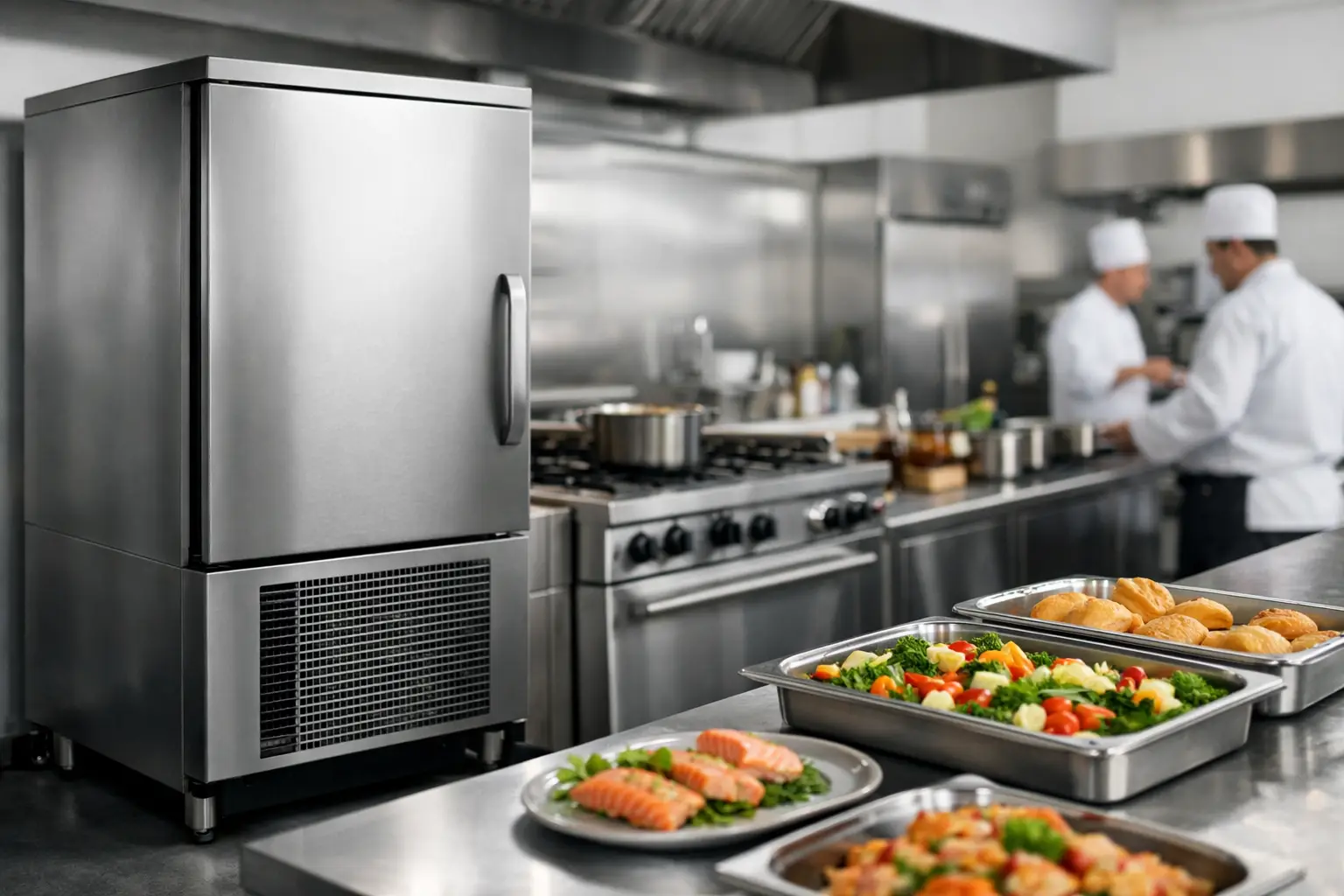
A blast chiller for commercial kitchens is not simply a colder fridge. It is a production tool that can help a busy venue cool cooked food quickly, protect quality, reduce unnecessary waste and take pressure off the service period. For restaurants, caterers, cafés, clubs, bakeries and institutional kitchens, the right unit can make batch cooking far more practical. The wrong one can become an expensive cabinet that is too small, poorly positioned or never used properly.
The buying decision starts with your workflow. Before comparing cabinet sizes, work out what food you need to cool, how much you produce in one batch and when staff need the space available again. Those answers matter more than choosing the biggest model on the floor.
What a blast chiller does in a working kitchen
A blast chiller uses powerful refrigerated airflow to pull heat out of food much faster than a standard refrigerator. It is designed to bring the core temperature of cooked food down rapidly, rather than storing already chilled food at a safe holding temperature.
That difference matters when you are cooling trays of lasagne, braises, soups, sauces, cooked rice, roasted meats, bakery fillings or prepared meal components. Putting a large volume of hot food straight into a normal upright fridge can warm the cabinet, affect nearby stock and take too long to cool the product evenly. It also places extra strain on the refrigerator.
A blast chiller gives production kitchens more control. You can cook outside peak periods, chill portions or trays correctly, then store them in refrigeration until they are needed for reheating, finishing or service. For caterers, it can mean producing ahead for a function without relying on a last-minute rush. For cafés and takeaway shops, it can make prepared cabinet food and grab-and-go lines easier to manage.
It is not a replacement for good food-handling procedures. Food still needs to be portioned sensibly, loaded with enough room for air movement, labelled, stored correctly and checked according to your food safety plan. A unit with a core probe is particularly useful because it measures the product itself, not just the cabinet air temperature.
Choosing a blast chiller for commercial kitchens
Start with batch size, not the number of people in the venue. A 60-seat restaurant that makes sauces, stocks and function food across several days may need more chilling capacity than a 150-seat pub that cooks largely to order. Likewise, a small bakery may need a larger unit if it regularly chills multiple trays of creams, fillings or baked items in one production run.
Manufacturers commonly describe capacity in kilograms per cycle and by the number of GN pans the cabinet accepts. Both figures are useful, but neither should be read in isolation. A stated kilogram rating assumes a particular product type, starting temperature, pan depth and loading arrangement. Dense products such as soups, curries and large joints will cool differently from shallow trays of vegetables or individual portions.
Ask a practical question: what is the heaviest real batch your team will need to chill on a normal busy day? Add room for growth rather than buying only for your quietest week. Overloading a small cabinet slows cooling and defeats the reason for installing it.
Capacity and pan configuration
For smaller operations, an underbench or compact five-tray blast chiller may suit a limited prep program and tight floor space. Larger restaurants, central production kitchens, aged-care facilities and caterers may need ten, fifteen or twenty-tray capacity, or a roll-in unit that accepts trolley loads.
Check the pan size and spacing as carefully as the overall capacity. If your kitchen works mainly with GN 1/1 pans, make sure the cabinet supports your preferred depth and that you can load pans without crushing delicate products. Bakery operators may need tray compatibility that suits their existing production equipment. Buying a machine that requires a new pan system can add cost and disrupt familiar prep routines.
Chilling performance and food safety controls
The purpose of blast chilling is to cool food through the temperature range where bacteria can multiply quickly. Your kitchen should follow the cooling requirements that apply to its food safety program and local authority guidance. As a practical benchmark used in Australian food safety procedures, potentially hazardous food is generally cooled from 60°C to 21°C within two hours, then from 21°C to 5°C within a further four hours.
A blast chiller can support that process, but capacity, product depth and loading practice determine the result. A probe-equipped model gives staff a clearer record of the cooling cycle and helps avoid guessing. Digital controls, cycle alarms and data logging can be worthwhile in hospitals, aged care, schools, large catering operations and any site with formal compliance records.
Do not confuse blast chilling with blast freezing. Some units offer both functions, while others are designed only to chill. If you intend to freeze cooked components or raw product for longer-term storage, check that the equipment is rated for the task and that your frozen storage capacity matches the production plan.
Plan the position before the unit arrives
A blast chiller should sit close enough to the cooking and prep areas that staff will use it, but it also needs a clear path for hot pans, trolleys and cleaning. If carrying full trays of hot soup across a crowded kitchen is awkward, staff may default to putting them in the nearest fridge instead.
Measure the installation area properly. Account for door swing, ventilation clearances, access for service technicians and the route through doors or corridors during delivery. A larger cabinet may need a three-phase power supply, while smaller models may run from single-phase power. Drainage requirements, heat output and ambient room temperature also deserve attention, especially in compact kitchens with cooking equipment operating nearby.
In a refurbishment or new fitout, the blast chiller should be considered alongside combi ovens, refrigeration, preparation benches and storage. A well-planned workflow moves food from cooking to portioning, chilling, cold storage and service with minimal backtracking. That saves labour every day, not just when the kitchen is busy.
Operating habits that protect the investment
Even a quality branded unit will underperform if it is loaded like a storage fridge. Use shallow pans where practical, divide large batches into smaller portions and leave space between trays so cold air can circulate. Keep lids or coverings appropriate to the product and process, and avoid placing very hot food in deep, tightly packed containers.
Train the team on what belongs in the blast chiller and when. The machine is most valuable when it is part of the prep schedule, not a last resort after service. Clear labels, date coding and a designated chilled-storage location help prevent a well-managed batch from becoming unidentified stock at the back of the coolroom.
Cleaning matters too. Food debris, blocked condensers and damaged door seals affect performance and increase running costs. Build basic checks into the closing or prep routine, and arrange professional servicing in line with the manufacturer’s recommendations. If the unit has a probe, staff should know how to clean, sanitise and store it correctly between uses.
New or pre-owned: where value makes sense
A new blast chiller offers current controls, warranty support and a known service history. It is often the right call for high-volume production or sites with strict documentation requirements. It can also be easier to specify during a full kitchen fitout, when electrical and ventilation needs can be planned from the start.
Quality pre-owned equipment can be a sensible option for a startup venue, an expansion project or a kitchen replacing failed equipment under budget pressure. The key is condition, suitability and support – not simply the lowest ticket price. Confirm capacity, power requirements, tray format, age, servicing history where available and whether the unit suits the food you actually produce.
Price should be assessed over the equipment’s working life. A cheaper cabinet that is too small can cost more through slower prep, wasted product and staff workarounds. A correctly sized unit with reliable refrigeration, accessible parts and local support is usually the better commercial purchase.
Questions to settle before you buy
Before placing an order, confirm your maximum batch size, the pans or trays you use, available power, physical access and where chilled product will go after the cycle finishes. Also consider whether a core probe, data recording, reversible door, castors or a trolley system will make daily work easier.
For operators planning a new venue or major upgrade, CKE Sydney can help match blast chilling capacity with the rest of the kitchen layout, from cooking equipment and refrigeration through to stainless workstations. The aim is not to add another appliance. It is to build a prep system that gives your team more time, more consistency and fewer avoidable losses when service starts.