
How to Choose a Bakery Dough Mixer for Your Shop

How to Choose a Bakery Dough Mixer for Your Shop

A bakery dough mixer is not simply another bench or floor machine. It sets the pace for your bread production, affects dough temperature and consistency, and can determine whether a busy morning bake runs smoothly or starts behind schedule. For a small café making focaccia twice a day, the right choice looks very different from the mixer needed by a wholesale bakery turning out hundreds of loaves.

The best purchase starts with your actual production, not the largest capacity your budget can stretch to. Consider the doughs you make, the flour weight in each batch, the number of batches required per shift and the power available on site. A well-matched mixer gives your team repeatable results without taking up unnecessary floor space or creating a bottleneck elsewhere in the kitchen.

Start with the dough you make most often

Different doughs place very different demands on a mixer. A soft cake batter, a high-hydration ciabatta dough and a stiff bagel dough should not be treated as the same job. Before comparing models, write down the products that account for most of your weekly output and identify the heaviest dough your mixer will need to handle.

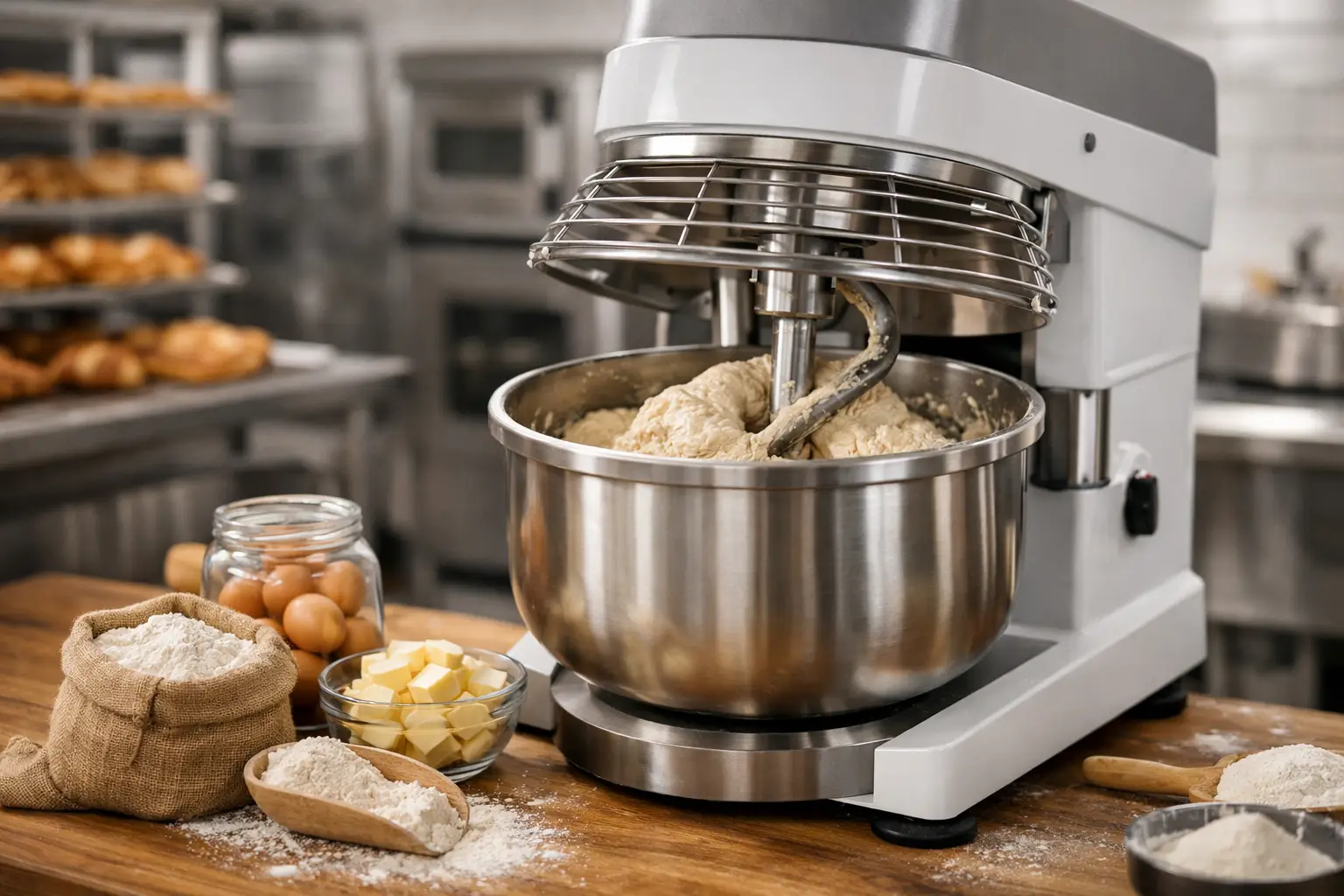
Spiral mixers are the usual workhorse for bread, pizza, focaccia and similar yeast doughs. The bowl and spiral hook rotate together, developing gluten efficiently while generally producing less friction than some other mixer styles. This helps when dough temperature matters, particularly in warm Australian kitchens or during long production runs.

Planetary mixers are more flexible. With a dough hook, paddle and whisk, they can mix smaller dough batches as well as creams, fillings, cake batter, meringue and mashed products. They suit cafés, patisseries and caterers that need one machine for varied preparation work. The trade-off is that a planetary mixer is not always the best choice for repeated batches of firm bread dough. Pushing it beyond its dough rating can strain the gearbox, slow production and shorten service life.

Fork mixers are often chosen for gentle dough handling, especially artisan bread and pizza. They can produce excellent dough quality, but they are a more specialised choice. If your menu is broad and labour is tight, a spiral or planetary model may offer better day-to-day value.

Size the bakery dough mixer by flour weight

Mixer bowl litres are useful, but they can be misleading. A 40-litre bowl does not mean every dough can be mixed at a 40-kilogram batch size. Dough density, hydration level and flour strength all affect the workable capacity. Flour weight is the figure to focus on when comparing equipment.

Ask for the manufacturer’s stated flour capacity and minimum dough load, then compare those numbers with your normal recipes. A mixer that is too large may struggle to properly develop small batches. One that is too small will force staff to run multiple loads, increasing labour, cleaning time and the risk of inconsistent results.

As a practical example, a business mixing 15 kilograms of flour per batch should not buy based only on the total finished dough weight. Once water, salt, yeast, oil and other ingredients are added, that batch may be closer to 24 to 26 kilograms of dough. The mixer must comfortably manage that load, with room for your occasional larger batch.

Avoid selecting a machine that will operate at its maximum rating every day. A sensible buffer supports reliable mixing and leaves capacity for growth. However, oversizing has a cost too: larger machines require more space, may need three-phase power and can make small-batch production inefficient.

Check power, access and the room around the machine

A mixer can look ideal on a product page and still be wrong for the site. Measure the equipment footprint, but also allow space for the operator, the bowl movement, ingredient loading, dough discharge and cleaning. A floor mixer needs practical access from more than one side, not a tight corner where staff have to twist around trays, racks and benches.

Electrical supply needs checking early. Smaller planetary mixers commonly operate on single-phase power, while many larger spiral and planetary units require three-phase power. Installing or upgrading three-phase power can be worthwhile for a growing bakery, but it needs to be included in the project budget and planned with a licensed electrician.

Also consider how the machine gets into the building. Door widths, steps, loading access and tight turns can all affect delivery and installation. Heavy commercial mixers are not equipment you want to discover is too large for the rear entrance on delivery day. For a new fitout, position the mixer close to dry stores, scales, a preparation bench and the proving or baking area so staff are not carrying heavy dough across the kitchen.

Look beyond capacity to everyday controls

The useful features are often the ones that reduce pressure during a busy shift. A two-speed spiral mixer gives operators more control over initial incorporation and final development. A timer supports repeatability when recipes are made by different staff, while a reversible bowl can assist with certain dough styles and cleaning routines.

On planetary mixers, a bowl-lift mechanism is especially valuable at larger capacities. It reduces manual handling and keeps the bowl securely positioned during mixing. For businesses producing several products each day, check which attachments are included and whether extra attachments are readily available. A mixer priced sharply upfront can become less attractive if the whisk, paddle or dough hook required for your menu is an additional cost.

Safety features should be non-negotiable. Look for a bowl guard with an interlock, stable feet or floor mounting where required, accessible emergency stop controls and a design that prevents operation when the bowl is not correctly locked in place. These features protect staff, but they also reduce downtime from avoidable incidents.

Think about dough temperature and batch consistency

Good mixing is not only about achieving a smooth dough. Overmixing, high friction and inconsistent timing can lift dough temperature, changing fermentation and final texture. This is particularly relevant for sourdough, artisan loaves and pizza dough where small variations can show up in proofing and oven spring.

A spiral mixer is often worth the investment when bread is a core product because it handles dough development efficiently. That said, the operator still needs a consistent process. Use weighed ingredients, record water temperature, keep mixing times consistent and train staff to assess dough development rather than relying on the timer alone.

If your premises are warm, factor in chilled water access, ingredient storage and the time dough sits after mixing. Buying a bigger or faster mixer will not fix a production process that is allowing dough to overheat before it reaches the prover.

New versus quality pre-owned equipment

New equipment gives you current specifications, warranty cover and the confidence of known service history. It is often the right path for a new bakery, a high-volume operation or a business that cannot afford unexpected downtime. It may also make more sense where a particular capacity, electrical configuration or attachment package is essential.

Quality pre-owned equipment can offer strong value for an established operator, a start-up controlling capital costs or a venue adding a secondary prep mixer. The key is condition, not just price. Check the bowl, hook, gears, controls, safety guard and power lead. Ask about service history where available, listen for unusual noise during operation and confirm the machine has been inspected before it goes into production.

Finance can also change the decision. Rather than tying up working capital in one purchase, eligible businesses may prefer approved equipment finance that keeps cash available for stock, wages, fitout work and opening costs. Compare the total commitment, warranty and expected operating life, not just the ticket price.

Plan the mixer as part of the full bakery workflow

A mixer works best when it is supported by the right surrounding equipment. You may need a stainless-steel preparation bench for scaling and dividing, ingredient storage, dough trays, bakery racks, a prover, refrigeration and an oven matched to the volume you intend to produce. Buying each item separately without considering the workflow often creates awkward handling and wasted steps.

For a complete bakery setup or refurbishment, CKE Sydney can help operators match bakery machinery with preparation, refrigeration, cooking and stainless-steel equipment. This is useful when floor space is limited or when the mixer needs to fit within a larger commercial kitchen design.

Before ordering, take your most demanding recipe, confirm its flour weight and hydration, measure the installation area, and verify the site power. Those few checks will point you towards a bakery dough mixer that earns its place in the kitchen from the first batch.
How to Choose a Bakery Dough Mixer for Your Shop

How to Choose a Bakery Dough Mixer for Your Shop

A bakery dough mixer is not simply another bench or floor machine. It sets the pace for your bread production, affects dough temperature and consistency, and can determine whether a busy morning bake runs smoothly or starts behind schedule. For a small café making focaccia twice a day, the right choice looks very different from the mixer needed by a wholesale bakery turning out hundreds of loaves.

The best purchase starts with your actual production, not the largest capacity your budget can stretch to. Consider the doughs you make, the flour weight in each batch, the number of batches required per shift and the power available on site. A well-matched mixer gives your team repeatable results without taking up unnecessary floor space or creating a bottleneck elsewhere in the kitchen.

Start with the dough you make most often

Different doughs place very different demands on a mixer. A soft cake batter, a high-hydration ciabatta dough and a stiff bagel dough should not be treated as the same job. Before comparing models, write down the products that account for most of your weekly output and identify the heaviest dough your mixer will need to handle.

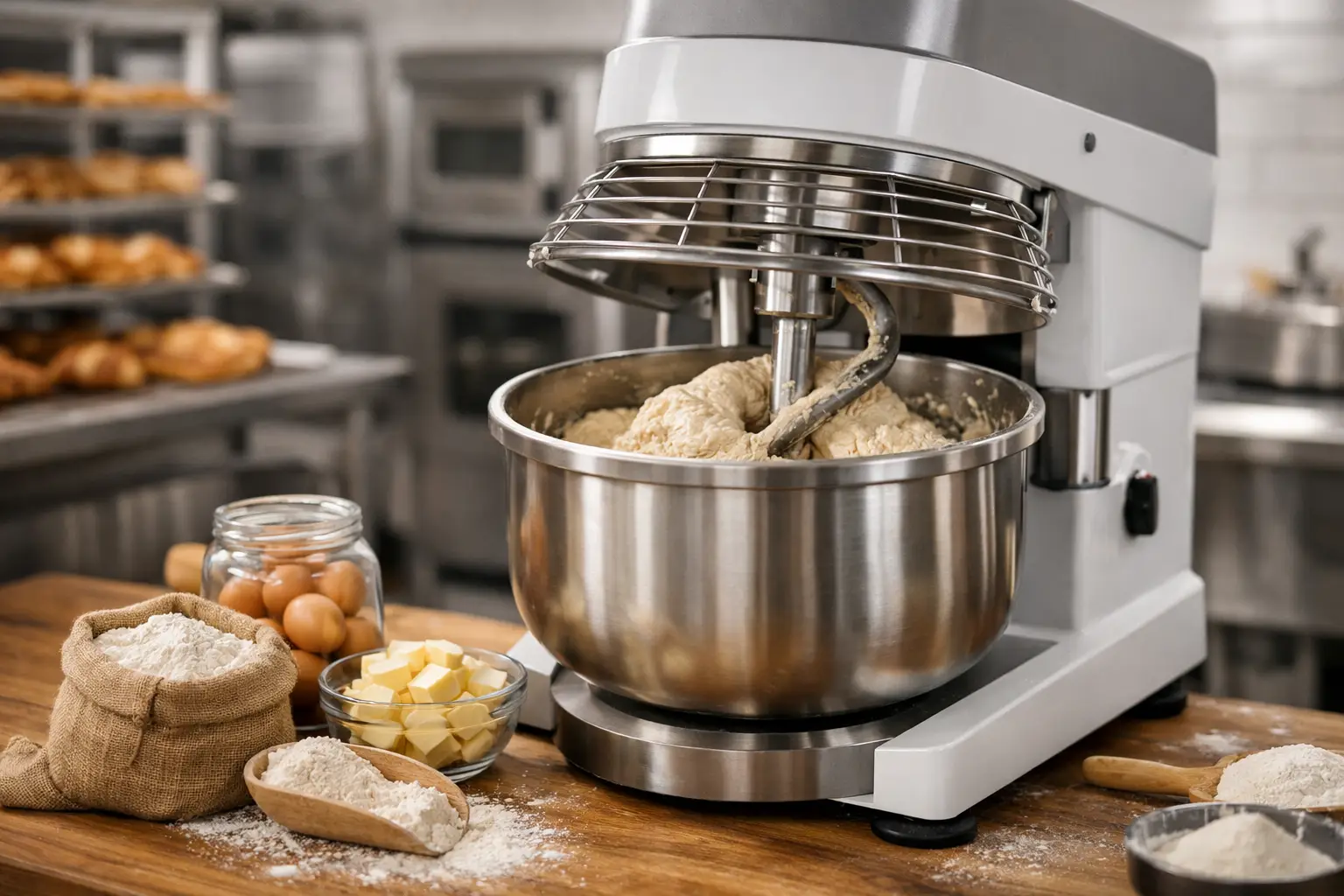
Spiral mixers are the usual workhorse for bread, pizza, focaccia and similar yeast doughs. The bowl and spiral hook rotate together, developing gluten efficiently while generally producing less friction than some other mixer styles. This helps when dough temperature matters, particularly in warm Australian kitchens or during long production runs.

Planetary mixers are more flexible. With a dough hook, paddle and whisk, they can mix smaller dough batches as well as creams, fillings, cake batter, meringue and mashed products. They suit cafés, patisseries and caterers that need one machine for varied preparation work. The trade-off is that a planetary mixer is not always the best choice for repeated batches of firm bread dough. Pushing it beyond its dough rating can strain the gearbox, slow production and shorten service life.

Fork mixers are often chosen for gentle dough handling, especially artisan bread and pizza. They can produce excellent dough quality, but they are a more specialised choice. If your menu is broad and labour is tight, a spiral or planetary model may offer better day-to-day value.

Size the bakery dough mixer by flour weight

Mixer bowl litres are useful, but they can be misleading. A 40-litre bowl does not mean every dough can be mixed at a 40-kilogram batch size. Dough density, hydration level and flour strength all affect the workable capacity. Flour weight is the figure to focus on when comparing equipment.

Ask for the manufacturer’s stated flour capacity and minimum dough load, then compare those numbers with your normal recipes. A mixer that is too large may struggle to properly develop small batches. One that is too small will force staff to run multiple loads, increasing labour, cleaning time and the risk of inconsistent results.

As a practical example, a business mixing 15 kilograms of flour per batch should not buy based only on the total finished dough weight. Once water, salt, yeast, oil and other ingredients are added, that batch may be closer to 24 to 26 kilograms of dough. The mixer must comfortably manage that load, with room for your occasional larger batch.

Avoid selecting a machine that will operate at its maximum rating every day. A sensible buffer supports reliable mixing and leaves capacity for growth. However, oversizing has a cost too: larger machines require more space, may need three-phase power and can make small-batch production inefficient.

Check power, access and the room around the machine

A mixer can look ideal on a product page and still be wrong for the site. Measure the equipment footprint, but also allow space for the operator, the bowl movement, ingredient loading, dough discharge and cleaning. A floor mixer needs practical access from more than one side, not a tight corner where staff have to twist around trays, racks and benches.

Electrical supply needs checking early. Smaller planetary mixers commonly operate on single-phase power, while many larger spiral and planetary units require three-phase power. Installing or upgrading three-phase power can be worthwhile for a growing bakery, but it needs to be included in the project budget and planned with a licensed electrician.

Also consider how the machine gets into the building. Door widths, steps, loading access and tight turns can all affect delivery and installation. Heavy commercial mixers are not equipment you want to discover is too large for the rear entrance on delivery day. For a new fitout, position the mixer close to dry stores, scales, a preparation bench and the proving or baking area so staff are not carrying heavy dough across the kitchen.

Look beyond capacity to everyday controls

The useful features are often the ones that reduce pressure during a busy shift. A two-speed spiral mixer gives operators more control over initial incorporation and final development. A timer supports repeatability when recipes are made by different staff, while a reversible bowl can assist with certain dough styles and cleaning routines.

On planetary mixers, a bowl-lift mechanism is especially valuable at larger capacities. It reduces manual handling and keeps the bowl securely positioned during mixing. For businesses producing several products each day, check which attachments are included and whether extra attachments are readily available. A mixer priced sharply upfront can become less attractive if the whisk, paddle or dough hook required for your menu is an additional cost.

Safety features should be non-negotiable. Look for a bowl guard with an interlock, stable feet or floor mounting where required, accessible emergency stop controls and a design that prevents operation when the bowl is not correctly locked in place. These features protect staff, but they also reduce downtime from avoidable incidents.

Think about dough temperature and batch consistency

Good mixing is not only about achieving a smooth dough. Overmixing, high friction and inconsistent timing can lift dough temperature, changing fermentation and final texture. This is particularly relevant for sourdough, artisan loaves and pizza dough where small variations can show up in proofing and oven spring.

A spiral mixer is often worth the investment when bread is a core product because it handles dough development efficiently. That said, the operator still needs a consistent process. Use weighed ingredients, record water temperature, keep mixing times consistent and train staff to assess dough development rather than relying on the timer alone.

If your premises are warm, factor in chilled water access, ingredient storage and the time dough sits after mixing. Buying a bigger or faster mixer will not fix a production process that is allowing dough to overheat before it reaches the prover.

New versus quality pre-owned equipment

New equipment gives you current specifications, warranty cover and the confidence of known service history. It is often the right path for a new bakery, a high-volume operation or a business that cannot afford unexpected downtime. It may also make more sense where a particular capacity, electrical configuration or attachment package is essential.

Quality pre-owned equipment can offer strong value for an established operator, a start-up controlling capital costs or a venue adding a secondary prep mixer. The key is condition, not just price. Check the bowl, hook, gears, controls, safety guard and power lead. Ask about service history where available, listen for unusual noise during operation and confirm the machine has been inspected before it goes into production.

Finance can also change the decision. Rather than tying up working capital in one purchase, eligible businesses may prefer approved equipment finance that keeps cash available for stock, wages, fitout work and opening costs. Compare the total commitment, warranty and expected operating life, not just the ticket price.

Plan the mixer as part of the full bakery workflow

A mixer works best when it is supported by the right surrounding equipment. You may need a stainless-steel preparation bench for scaling and dividing, ingredient storage, dough trays, bakery racks, a prover, refrigeration and an oven matched to the volume you intend to produce. Buying each item separately without considering the workflow often creates awkward handling and wasted steps.

For a complete bakery setup or refurbishment, CKE Sydney can help operators match bakery machinery with preparation, refrigeration, cooking and stainless-steel equipment. This is useful when floor space is limited or when the mixer needs to fit within a larger commercial kitchen design.

Before ordering, take your most demanding recipe, confirm its flour weight and hydration, measure the installation area, and verify the site power. Those few checks will point you towards a bakery dough mixer that earns its place in the kitchen from the first batch.