
A dishwasher that cannot keep pace with service quickly becomes everybody’s problem. Glassware runs short at the bar, chefs wait for pans, staff start washing by hand and hygiene standards are harder to maintain. Choosing the right commercial dishwasher supplier is not simply about finding the lowest ticket price. It is about matching the machine, site requirements and ongoing support to the way your kitchen actually operates.
For a busy café, restaurant, pub, club, caterer or institutional kitchen, the right purchase can save labour, reduce breakages and keep wash-up moving through the busiest part of the day. The wrong one can create expensive bottlenecks before the first week is out.
Start with Your Wash-Up Volume
Dishwasher capacity needs to reflect your peak trade, not the quiet hour between breakfast and lunch. A small underbench unit may suit a low-volume café with a limited menu, but it can struggle in a restaurant turning over a full dining room twice in an evening. Equally, buying a large pass-through machine for a compact takeaway shop can tie up valuable floor space and add unnecessary upfront and running costs.
Think about what goes through the wash-up area in one service: plates, bowls, cups, utensils, gastronorm pans, pots, trays and glassware. Then consider the rush. If staff regularly need clean items back within minutes, cycle time and rack capacity matter as much as the number of meals served each day.
A useful starting point is to identify whether your kitchen needs an underbench dishwasher, pass-through dishwasher, rack conveyor system or dedicated glasswasher. Each has a place.
Underbench Dishwashers for Smaller Footprints
Underbench dishwashers are a practical choice for cafés, small restaurants, bars and venues with restricted space. They sit beneath a workbench and can be positioned close to the service area, reducing the distance staff carry dirty plates and clean stock.
They are generally more affordable than larger machines and are well suited to steady, moderate volumes. The trade-off is capacity. During a sharp rush, a single rack at a time may not be enough unless staff have a well-organised landing area and clear wash-up process.
Pass-Through Machines for Busy Services
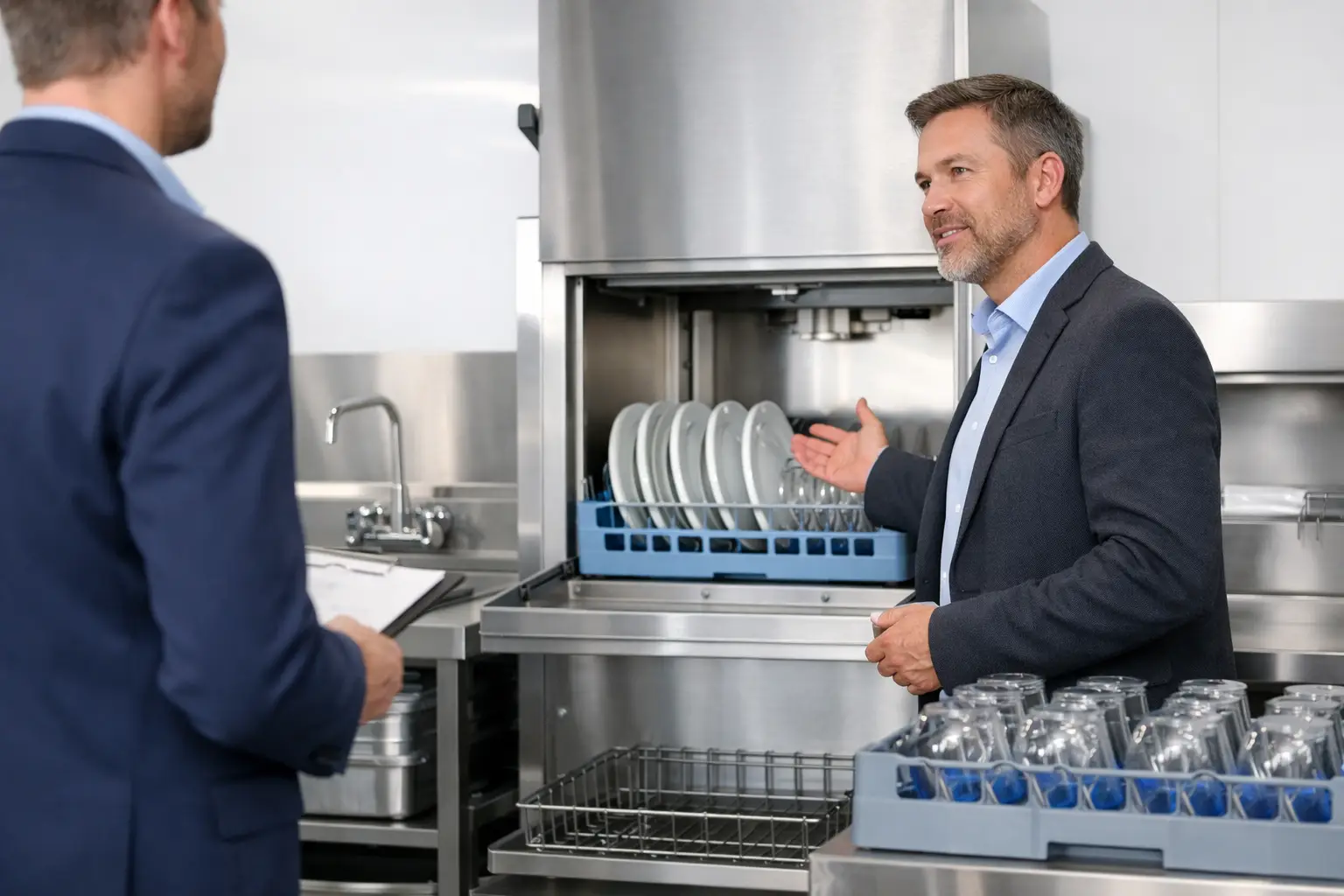
Pass-through, or hood-type, dishwashers are built for higher-volume kitchens. They allow staff to load racks at bench height, push them through the wash cycle and move clean racks to the exit side with less bending and lifting. That can make a meaningful difference during long shifts.
These machines work well in restaurants, pubs, clubs, hotels, aged-care facilities and catering operations where plates and cookware return in waves. They need more bench space and suitable plumbing, drainage and power, so confirming site dimensions before ordering is essential.
Glasswashers Are Not an Afterthought
A bar using a general dishwasher for glassware can lose time and end up with poor presentation. A purpose-built commercial glasswasher is designed for fast cycles and bar glassware, helping venues return clean glasses quickly without disrupting the main dishwashing flow.
For pubs, clubs, restaurants with active beverage service and event operators, separating glass washing from plate washing often makes operational sense. It reduces congestion and gives bar staff a reliable turnaround when demand peaks.
What a Commercial Dishwasher Supplier Should Confirm
A reliable commercial dishwasher supplier should ask questions before recommending a model. If the conversation begins and ends with price, there is a risk the machine will not suit your trade or installation conditions.
First, confirm your available footprint. Measure the width, depth and height of the proposed location, including clearances for opening doors or lifting a hood. Do not forget access routes. A machine that fits the wash-up room on paper still needs to get through doors, corridors and around corners during delivery.
Water, drainage and electricity also need attention early. Your site may require a particular electrical connection, water pressure range, waste arrangement or ventilation consideration. Older premises and tenancy refurbishments often uncover limitations that affect installation cost. A practical supplier will help you identify those requirements before the machine arrives, not after.
Ask about water treatment as well. Sydney Water conditions, usage patterns and the equipment’s specifications can make a filter, softener or treatment system worthwhile. Better water quality can support cleaner results, reduce spotting on glassware and help protect internal components. It is an extra cost, but it may be cheaper than repeated chemical issues, poor results and avoidable servicing.
Look Beyond the Purchase Price
A low advertised price is useful only if the machine is fit for purpose, has appropriate warranty cover and can be delivered when you need it. Compare the whole buying decision: machine capacity, energy and water use, included accessories, warranty terms, availability of parts and support for installation planning.
There is also a case for quality pre-owned commercial dishwashing equipment. For an operator opening on a tight budget, replacing a failed machine quickly or fitting out a temporary production kitchen, pre-owned equipment can offer strong value. The key is condition, suitability and what support comes with the purchase. A cheap unit with unclear history may be a false economy if it creates downtime when your kitchen is under pressure.
New equipment is often the better choice where you need current features, full manufacturer warranty coverage or known operating costs for a long-term site. It depends on your budget, expected trade and how critical the machine is to daily service.
Plan the Wash-Up Area, Not Just the Machine
Dishwashing performance is shaped by the area around the dishwasher. Even a high-capacity unit will be slowed down by poor bench layout, inadequate drainage or no room to sort dirty and clean items.
A functional wash-up zone usually needs a dirty dish landing bench, pre-rinse area, the dishwasher itself and a clean exit bench or racking space. Dirty ware should move in one direction, with clean items leaving the area without crossing back through the dirty side. This makes the work faster and supports safer hygiene practices.
For full kitchen projects, dishwashing should be considered alongside cooking, refrigeration, food preparation and service flow. CKE Sydney can assist with equipment selection as part of a broader commercial kitchen design and fitout, which is especially useful when opening a new venue, refurbishing an existing kitchen or changing the menu and production volume.
Questions Worth Asking Before You Order
Before committing to a model, get clear answers on the practical details that affect service. Ask how many racks the machine can process per hour, the length of standard cycles, its power requirements, water consumption and whether detergent and rinse aid dispensing are included or compatible.
It is also worth asking what happens after delivery. Confirm warranty arrangements, parts availability, service options and whether the supplier can coordinate Australia-wide delivery to your site. For Sydney operators working to a tight opening date, delivery timing and site readiness are often just as important as the model specification.
If cash flow is part of the decision, finance can help preserve working capital for stock, wages, fitout work and opening costs. Rather than selecting a machine solely because it is cheapest upfront, compare a suitable machine’s total value against the repayments and likely lifespan. Finance approval options for eligible purchases can make a better-suited unit more accessible.
Choose Advice That Matches Your Operation
The best commercial dishwasher supplier will not treat a café, high-volume club and aged-care kitchen as the same job. Each operation has different demand, staffing, compliance expectations, space limitations and budget priorities.
Bring clear information to the conversation: your menu, seat numbers, busiest service period, existing machine details, available utilities and site measurements. Photos of the wash-up area can also help identify access and layout issues early. The more accurately your operation is assessed, the more likely the recommended equipment will work from day one.
A dishwasher is one of the few pieces of equipment that touches almost every service. Buy for the pressure point in your operation, allow room for a sensible wash-up flow and choose support you can call on when trade is at its busiest.