
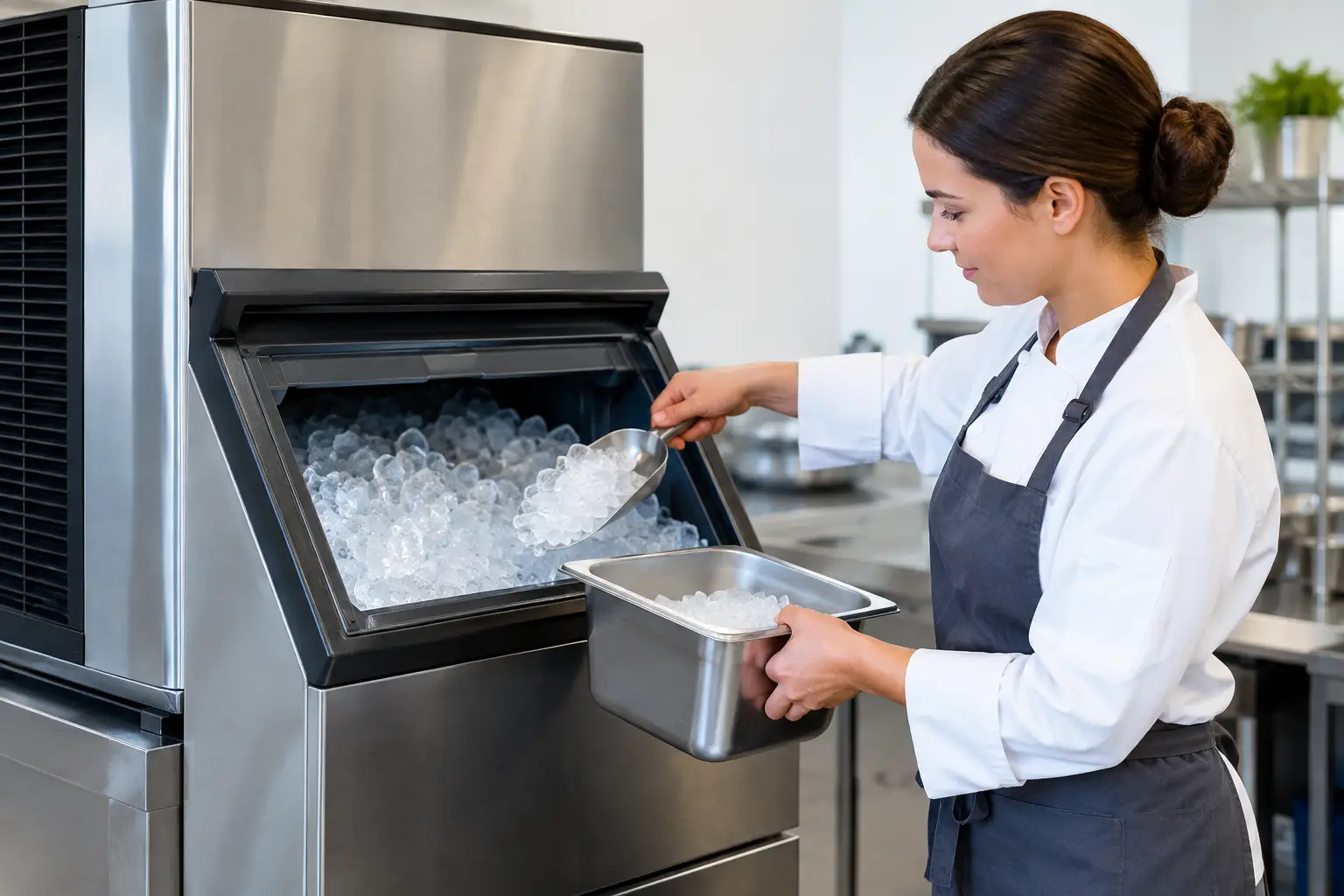
A Friday-night drinks rush can expose a poorly sized ice machine faster than almost any other equipment decision. When the bin is empty, cocktails slow down, display seafood loses presentation, staff start buying bagged ice, and margins disappear. Commercial ice makers need to suit your actual service pattern, not just the quietest hour of the day.
The right machine is a practical investment in speed, food safety and consistency. For a café, that may mean dependable cubes for iced coffees and cold drinks. For a bar, it can mean clear ice that fills glassware quickly without watering down a pour. For caterers and institutions, it is often about reliable volume, storage and a machine that keeps up when demand arrives all at once.
Start with daily output, then plan for the rush
An ice maker’s production rating is usually stated as kilograms per 24 hours. That figure is useful, but it is not the whole buying decision. It is measured under specified ambient and water temperatures. A hot kitchen, poor ventilation or warmer incoming water can reduce real-world output, particularly during a Sydney summer.
Start by looking at the busiest service period, the number of covers, your drinks list and other uses for ice. A small takeaway shop selling bottled drinks has very different needs from a 120-seat restaurant with a cocktail list, seafood display and frequent function bookings. A venue that operates seven days should also allow for weekend peaks, not average weekday trade.
As a working guide, consider how much ice is used per customer during your busiest shift, then add demand from bar stations, buffet displays, food preparation and staff drinks. Build in headroom rather than sizing to the exact number. If a machine is expected to run at its limit every day, there is little protection when temperatures rise or a large booking walks in.
Storage matters just as much as production. A high-output modular head paired with a properly sized storage bin can be a better fit for a busy bar or function venue than a self-contained unit with limited onboard storage. Conversely, a compact underbench machine can make more sense where floor space is tight and ice is drawn steadily through the day.
Choose ice makers by the ice your service needs
Not all ice performs the same job. The shape affects how a drink looks, how quickly it chills, how long it lasts and how easily it works in a dispenser or display. Buying the wrong ice type can create unnecessary waste or make a good drinks program look average.
Full cubes and large cubes
Full cubes are a common choice for bars, restaurants, pubs and clubs. They are hard, slow-melting and well suited to spirits, soft drinks and standard mixed beverages. Larger cube formats can add a premium look to selected cocktails, although they may not be the most efficient option where staff need to fill many glasses quickly.
Half cubes and dice ice
Half cubes are versatile, easy to scoop and pack well in glassware. They suit cafés, quick-service venues and restaurants with a high volume of soft drinks. Dice-style ice can be a sensible all-round option when presentation, fast chilling and efficient bin storage all matter.
Nugget, chewable and flake ice
Nugget or chewable ice is popular for smoothies, juices, blended drinks and self-serve beverage applications. It is softer than cube ice and can be easier for customers to chew, but it is not always the best choice for a premium spirit serve.
Flake ice is made for display and product cooling. Fish counters, butchers, buffet operators and healthcare applications often use it because it moulds around produce and creates even coverage. It melts faster than cubes, so it should be selected for display and chilling purposes rather than standard drinks service.
Check the installation before ordering
A commercial ice machine performs best when its installation is planned properly. Do not treat it like a domestic appliance that can simply be placed near a power point. It needs the correct water supply, drainage, electrical connection, ventilation clearance and service access.
Water quality deserves close attention. Scale, sediment and chlorine can affect ice clarity, taste and machine reliability. In many commercial sites, a suitable water filtration system is a worthwhile addition. It helps protect internal components, supports cleaner-tasting ice and can make regular maintenance easier. Filter changes still need to be scheduled – fitting a filter and forgetting it is not a maintenance plan.
Drainage is another common issue. Some machines require a gravity drain, while others may need a drain pump depending on the site layout. Measure the available area carefully, including door swing, clearance above the machine and access for cleaning. If the unit is installed under a bench, make sure heat can escape as specified by the manufacturer. Blocking vents to save a few centimetres can cost production capacity and shorten equipment life.
For new venues and refurbishments, include ice production early in the kitchen and bar layout. It may be practical to locate a machine close to the beverage station, but it should not be positioned beside high-heat cooking equipment where ambient temperatures will work against it. CKE Sydney can assist with equipment selection as part of a broader commercial kitchen design and fitout scope, helping avoid awkward late-stage changes.
Reliability is more valuable than a cheap upfront price
The lowest-priced unit is not necessarily the best value. In hospitality, downtime has a direct cost. Staff lose time managing shortages, customers wait longer, and emergency bags of ice are expensive. Look beyond the purchase price to the availability of parts, warranty support, cleaning requirements, energy use and the suitability of the machine for your expected workload.
Branded commercial equipment is generally built for repeated use, but every machine still needs care. Ask about the recommended cleaning cycle, whether the components are straightforward for staff to access, and what preventative maintenance is required. A machine that is simple to clean is more likely to be cleaned properly.
Quality pre-owned equipment can also be worth considering for an operator working to a tight opening budget or replacing a unit quickly. The key is to confirm its condition, output rating, age, service history where available, warranty terms and whether it suits the site requirements. A smaller bargain machine that cannot meet demand will be more costly than a correctly sized unit from the outset.
Create a simple ice-machine care routine
Ice is food, so hygiene cannot be an afterthought. The bin, scoop, water system and surrounding work area all need regular attention. Staff should use a dedicated scoop, store it hygienically and avoid reaching into the bin with hands or drink glasses.
A practical routine should cover daily checks, scheduled bin cleaning, filter replacements and professional servicing when required by the manufacturer. Watch for cloudy or misshapen ice, reduced output, unusual noise, water leaks or a change in taste. These signs are easier and cheaper to deal with early than after a complete breakdown during service.
Keep the area around the machine clear of cartons, cleaning chemicals and loose stock. Good airflow and easy access make routine checks far more likely to happen. If your team changes frequently, include ice-machine cleaning and safe ice handling in onboarding rather than relying on informal handovers.
Buy for the venue you are building
A compact café may only need one reliable underbench unit. A busy restaurant might need a larger cube machine for the bar plus a separate flake ice solution for fresh seafood. A caterer may value high storage capacity and rapid recovery between events. There is no single best option because service style, menu, climate, space and workflow all change the answer.
Before you commit, have your expected covers, peak service times, available dimensions and preferred ice type ready. That gives an equipment specialist enough detail to recommend a machine based on how your venue actually operates. Getting that decision right means one less problem for your team to solve when the doors open and the orders start coming in.