
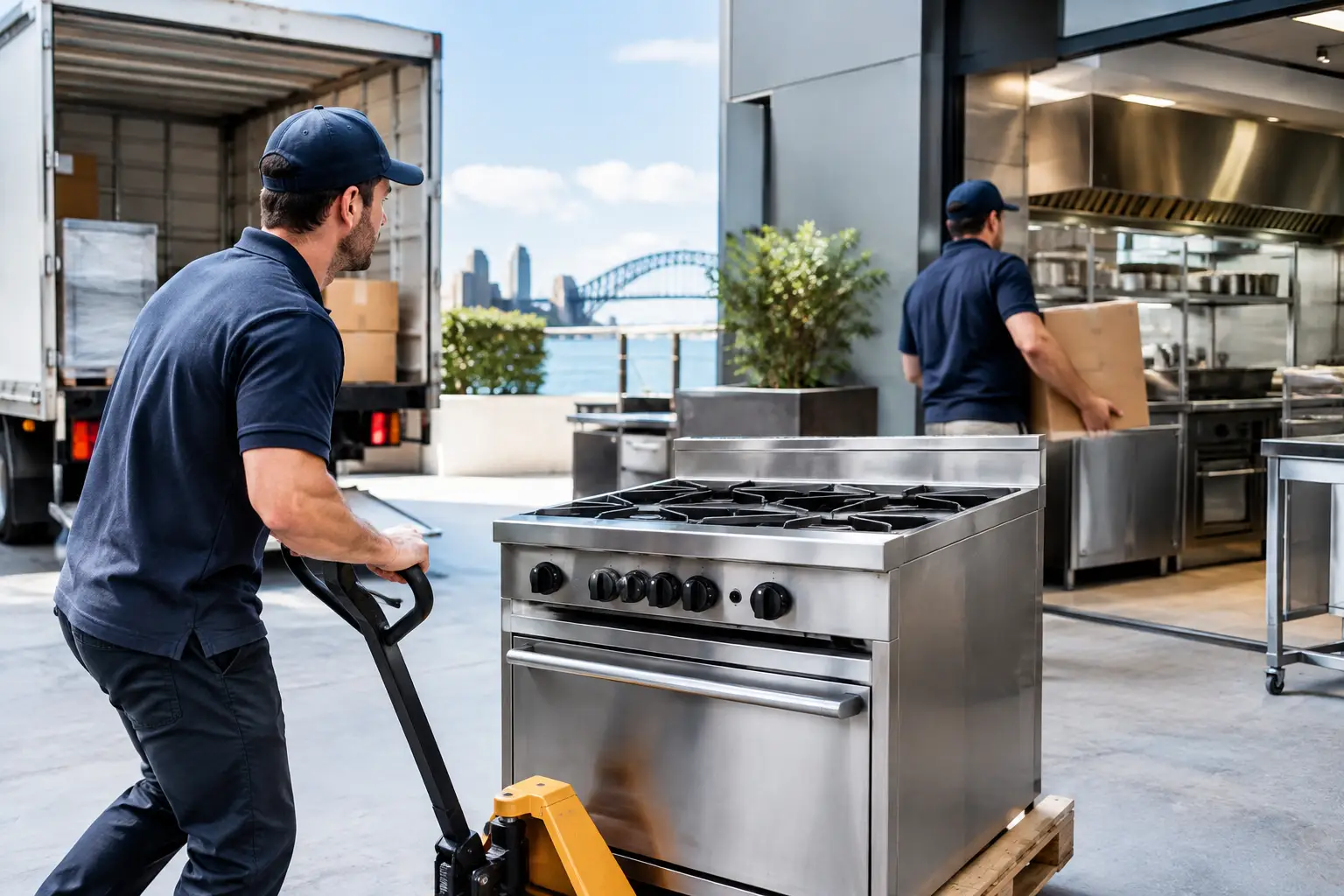
A combi oven arriving at 7 am is not much help if it cannot clear the front door, the coolroom is still powered down or nobody has booked a forklift. This commercial kitchen delivery guide is for operators who want new equipment on site, in position and ready for the next stage without holding up trades, opening dates or service.
Commercial kitchen equipment is heavy, expensive and often built for a specific location in the kitchen. A little preparation before freight arrives protects your equipment, your premises and your schedule. It also gives you a clear way to compare delivery options before you buy.
Start with the equipment, not the freight quote
Delivery planning begins when you choose the machine. Check the product dimensions, weight, electrical or gas requirements, door swing and ventilation needs before placing an order. The external carton or pallet can be larger than the equipment itself, so allow for packaging when measuring access.
This matters most with larger items such as combi ovens, upright fridges and freezers, dishwasher systems, cooking ranges, bakery machinery and display cabinets. A bench-top fryer may be manageable through a standard doorway. A three-door prep fridge or large oven may need a clear loading route, wide doors and mechanical lifting.
If you are replacing existing equipment, do not assume the new model will use the same footprint. Measure the allocated space, but also measure every point between the delivery vehicle and that space. Include gates, corridors, lifts, turns, doorways, ramps and the height below awnings, pipes or signs.
For a full fitout, plan delivery around the kitchen layout rather than treating each item as a separate drop. Heavy equipment usually needs to go in before benches, overhead shelving and some finishing works restrict access. This is where a supplier with kitchen design and fitout experience can help identify the sensible delivery order.
Choose the right commercial kitchen delivery service
Not every delivery service includes the same level of handling. Standard freight may deliver to a ground-level receiving point or kerbside, while other arrangements may be needed for placement inside the premises, difficult access, stairs or regional locations. Ask what is included before confirming the order.
The right service depends on the equipment and the site. A café receiving a small underbench dishwasher may only need a clear ground-floor entrance and a staff member available to sign. A club replacing several cooking appliances may need a booked time, a loading dock, pallet-moving equipment and a coordinated contractor schedule.
Be upfront about access restrictions. Freight providers need to know if the site is in a CBD loading zone, a shopping centre, a hospital, a school, an upper-floor tenancy or a regional property with limited vehicle access. Details that seem minor, such as a steep driveway or a narrow laneway, can determine whether a tail-lift truck, forklift, pallet jack or specialised handling is required.
Australia-wide delivery is useful for operators outside metropolitan areas, but lead times and unloading arrangements can vary by location. Remote or regional deliveries may need more notice. If your opening date is fixed, build a buffer into the programme rather than relying on the latest possible delivery day.
Prepare the site before the truck arrives
A delivery day runs far better when the site has one person in charge. That person should have the order details, delivery contact, site access instructions and authority to make practical decisions if the driver calls ahead.
Before delivery, confirm these points with your builder, venue manager or facilities team:
- The delivery route is unlocked, clear of stock, rubbish and construction materials, and wide enough for the equipment and its pallet.
- Floors, ramps and lifts can safely carry the load, especially for refrigeration, ovens, ice machines and stainless-steel assemblies.
- A suitable unloading area is available, with any loading dock booking, strata approval or centre-management approval organised in advance.
- The final position is ready, including sufficient clearance for ventilation, cleaning and service access.
- Qualified trades are booked separately where required for electrical connection, gas fitting, plumbing, drainage, exhaust and commissioning.
Do not ask drivers to work around unsecured flooring, wet paint, loose cables or a crowded construction site. Apart from slowing the job, it creates avoidable risk. If equipment must be held temporarily, choose a clean, dry, secure area away from weather and traffic.
Inspect equipment before you sign off
When commercial equipment arrives, inspect it before signing the delivery paperwork wherever practical. Check the number of items against the delivery docket, inspect cartons and pallets for obvious impact damage, and photograph anything that looks concerning.
External packaging can show whether an item has been dropped, crushed or punctured. If there is visible damage, note it clearly on the paperwork and contact the supplier promptly with photos and order details. Signing as received without recording an issue can make a freight claim harder to assess later.
Once unboxed, check the model number and key specifications against what you ordered. This is particularly worthwhile for equipment with similar-looking variants, such as left- or right-hinged refrigerators, gas or electric cooking units, different voltage options, and refrigerated display cabinets with varied configurations.
Keep manuals, warranty documents and accessories together. Small items such as shelves, trays, castors, filters, legs and fittings can be packed separately. A quick inventory now prevents a last-minute search when installers are waiting.
Plan installation, commissioning and first use
Delivery is not installation. Most commercial appliances need qualified trades and, in many cases, commissioning before they can be used safely or covered under warranty conditions. Confirm the installation requirements on the equipment documentation before the unit arrives.
A gas fryer or range needs the correct gas connection and testing by a licensed gas fitter. A dishwasher may require water, drainage, chemicals and electrical work. Refrigeration needs space for airflow and must be allowed to settle after transport if the manufacturer directs it. Combi ovens can involve water filtration, drainage, ventilation, electrical capacity and programming before the first cook.
The practical question is not simply, “Can we get it into the kitchen?” It is, “Can we put it into service without rehandling it?” Moving a heavy appliance twice increases labour, delays trades and risks damage. Have final services, clearances and bench positions checked before placement.
For new venues, coordinate delivery with the fitout programme. For operating venues, schedule replacement equipment around service hours and temporary production capacity. A busy takeaway shop may need a fryer swap before morning prep. An aged-care kitchen may need a staged replacement to keep meal service running. There is no single best timetable – it depends on the equipment, access and how much downtime the operation can absorb.
When pre-owned equipment is part of the order
Quality pre-owned equipment can be a smart way to protect the fitout budget, especially when several pieces are needed at once. Delivery planning is still essential. Confirm dimensions, condition details, included accessories and whether the item needs any site-specific preparation before arrival.
Pre-owned stock may be available sooner than a made-to-order item, but availability can change quickly. If it suits your kitchen, confirm the delivery plan at the same time as the purchase so the opportunity does not create a logistical headache later.
CKE Sydney can assist operators sourcing individual units or planning a complete kitchen, with practical advice on equipment selection, freight and fitout sequencing. Price matters, but a delivery plan that avoids missed access, double handling and delayed installation often saves more than the cheapest freight option.
The best delivery day is usually unremarkable: the truck arrives into a clear site, the equipment is checked, the right trades take over, and your team can focus on the first service rather than solving a problem at the door.