
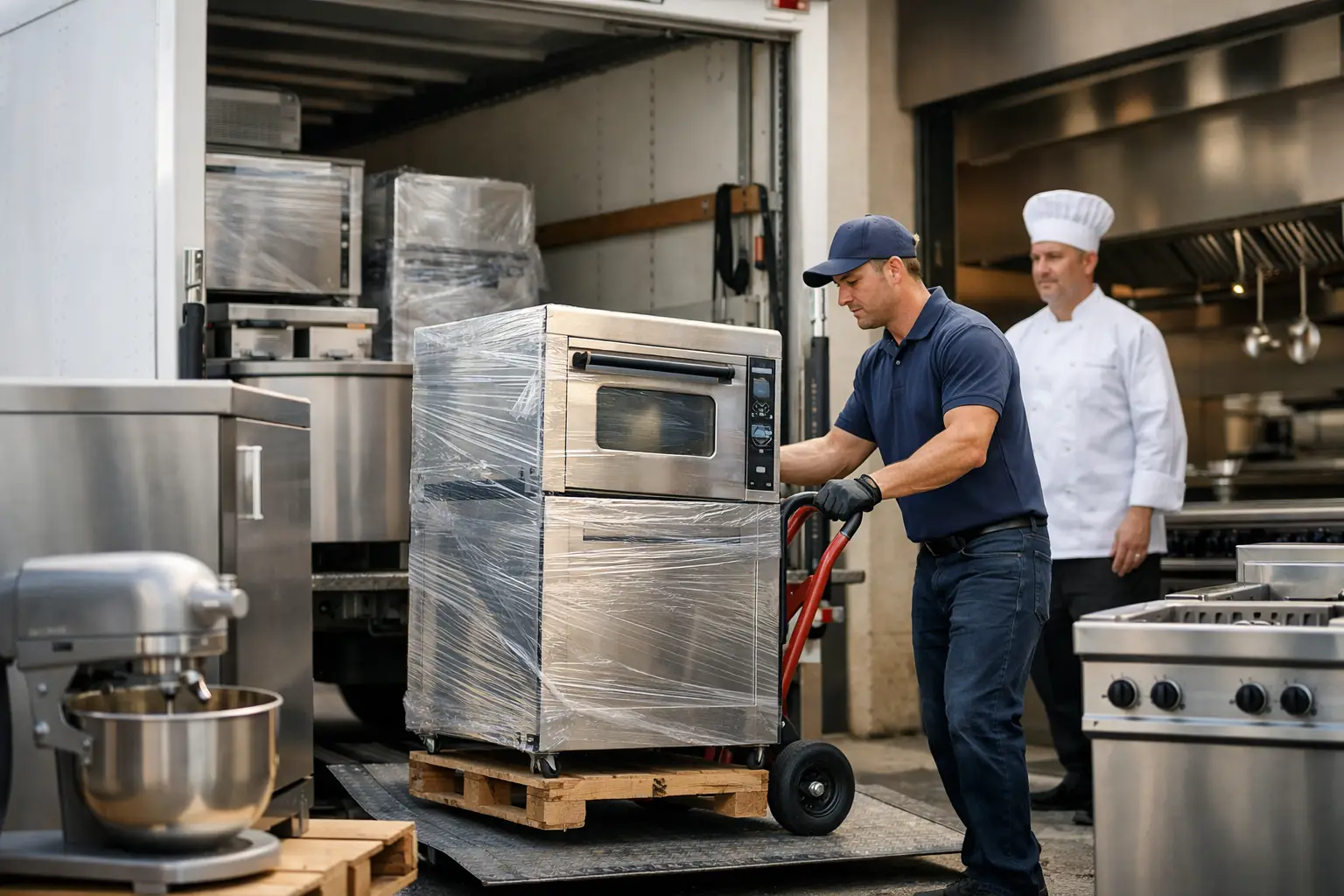
A combi oven arriving after the kitchen has been tiled, a two-door fridge meeting a narrow back entrance, or a fryer delivered during Friday lunch service can quickly become an expensive problem. Commercial kitchen equipment delivery is not simply the final step after purchase. It needs to be planned around access, staffing, site readiness and the practical demands of getting your venue operating.
For a café replacing one underbench fridge, the job may be straightforward. For a new restaurant, bakery, club kitchen or aged-care facility, delivery can involve multiple pallets, heavy equipment, tight installation sequences and several trades on site. The right preparation protects your equipment, avoids wasted labour and gives your team the best chance of opening or returning to service on time.
Plan Commercial Kitchen Equipment Delivery Before Ordering
The best time to think about delivery is before the order is confirmed. Product dimensions tell only part of the story. You also need to consider the complete path from the delivery vehicle to the final kitchen position.
Measure doorways, gates, corridors, lifts, loading docks and turns around corners. Check ceiling heights where tall refrigeration, display cabinets or bakery equipment is involved. A piece of equipment may fit through the front door but not clear a hallway turn, a low bulkhead or a stairwell landing.
Ask whether there is a loading zone, a clear rear lane or a suitable place for a truck to stop. Inner-city locations, shopping centres, hospitals and busy club sites often have delivery windows, vehicle-height limits or site rules that need to be arranged in advance. If a delivery has to happen outside normal hours, confirm who will provide access and receive the goods.
For larger projects, make sure builders and fitout teams understand the delivery schedule. Floors, door frames and walls can be damaged if equipment is moved through a completed site without proper protection. On the other hand, bringing equipment in too early can leave it exposed to dust, moisture and accidental damage while construction continues. Timing depends on the site, but delivery should be treated as part of the fitout programme, not an afterthought.
Know What Your Delivery Includes
Not all freight arrangements are the same. Some deliveries are made to the kerb or loading area, while others may be arranged with additional handling based on the equipment and site requirements. A pallet dropped at the front of a tenancy is very different from placing a heavy dishwasher in a rear wash-up area.
Before delivery, clarify where the equipment will be unloaded, whether pallets and packaging will need to be removed, and who is responsible for moving units inside. Do not assume a driver can take equipment through narrow accessways, up stairs or into a finished kitchen unless this has been specifically arranged.
This matters particularly with heavy and awkward items such as combi ovens, cool rooms, gas ranges, deck ovens, large display cabinets, ice machines and upright refrigeration. They may require appropriate moving equipment, extra labour or a specialised installer. Trying to save money by using unsuitable handling can lead to damaged panels, broken castors, injuries or a unit that cannot be positioned correctly.
If you are purchasing pre-owned equipment, inspect the listed dimensions and condition carefully before arranging site access. Quality used equipment can be a cost-effective choice for a startup, refurbishment or expansion, but it still needs the same careful transport and receiving process as new equipment.
Give the supplier a clear site brief
A short, accurate site brief helps avoid surprises. Include the delivery address, preferred date, delivery contact, access point, parking conditions and any restrictions. For larger equipment or a complete kitchen order, provide measurements, site photos or plans where available.
The most useful details to confirm are:
- doorway and corridor widths, including tight turns
- stairs, lifts, ramps and changes in level
- loading dock rules, booking requirements and vehicle limits
- whether the site is occupied, under construction or trading
- the final location of each item in the kitchen
- the name and mobile number of the person receiving delivery.
This information allows the delivery approach to match the actual site rather than relying on assumptions. It also helps ensure equipment arrives in the order that makes sense for the installation team.
Prepare the Kitchen Before Equipment Arrives
A clear receiving area makes delivery safer and faster. Remove boxes, tools, rubbish, spare furniture and other obstructions from the route. If your venue is trading, plan a path that keeps heavy equipment away from customers and staff wherever possible.
Make sure the final equipment position is ready. Benches should be assembled, walls finished where required, and service points accessible. Refrigeration needs suitable clearance for ventilation. Cooking equipment needs the correct gas, electrical and extraction arrangements. Dishwashers need water, waste and electrical connections planned. Appliances should never be pushed into position only to find the required services are on the wrong wall or blocked by cabinetry.
Electrical, gas, plumbing and ventilation connections must be completed by appropriately licensed trades. Delivery drivers and general movers are not a substitute for installers. Your installer should confirm the manufacturer requirements for clearances, power supply, gas type, water filtration, drainage and commissioning before equipment is connected.
For a full kitchen build, a coordinated equipment schedule is valuable. It identifies what arrives first, what needs to be installed before adjoining benches, and which items need to remain accessible for service connections. CKE Sydney can assist customers sourcing equipment as part of a broader kitchen design and fitout, helping keep purchasing and planning in the same conversation.
Check Every Item at Receiving
When the goods arrive, inspect them before signing off wherever practical. Check that the delivery matches your order, including model numbers, quantities and any accessories. Look over the packaging for punctures, crushing, moisture damage or signs that a pallet has shifted during transport.
If there is visible damage, take clear photos and note the issue on the delivery paperwork. Keep packaging in place until you have checked the unit properly. A small dent may be cosmetic, but damage around a door seal, refrigeration panel, control area or glass display cabinet can affect operation and should be raised promptly.
It is also sensible to keep manuals, warranty documents and serial-number details together. When a venue has several new appliances arriving at once, paperwork can easily be misplaced between the site manager, builder and installer. A simple folder or shared digital record makes future warranty and service enquiries easier.
Do not switch on refrigeration, ovens, fryers or dishwashers until the relevant installer has completed the required checks. Some equipment may need time to stand after transport before operation, particularly refrigeration. Follow the supplied instructions rather than rushing to put a unit into service.
Delivery Timing Can Affect Your Opening Date
For a new venue, equipment lead times should be considered alongside approvals, construction, signage, staff recruitment and menu development. A kitchen cannot be commissioned until key cooking, refrigeration and wash-up equipment is in place. One late item can hold up trades or prevent a final operational test.
For replacement equipment, the priority may be limiting downtime. A failed fridge in a café or a dishwasher issue in a high-volume restaurant needs a practical response. In these cases, check stock availability, delivery timing and installation arrangements before committing. The cheapest unit is not always the best value if it leaves your operation without essential capacity for days.
There is also a trade-off between consolidating deliveries and receiving equipment as it becomes available. A single delivery can reduce handling and make site coordination easier. However, staged delivery may suit projects with limited storage or equipment needed for an earlier installation phase. The right option depends on your kitchen layout, construction schedule and ability to store goods safely.
Make Delivery Part of the Equipment Decision
When comparing equipment, consider more than the purchase price. Dimensions, weight, access requirements, service needs and delivery timing all affect the real cost of getting an appliance operational. This is especially relevant for large refrigeration, heavy-duty cooking lines and complete fitouts where one item can affect several others.
Ask practical questions before you buy. Will it fit through the required access route? Is there enough room to service it once installed? Can your existing electrical supply handle it? Does the ventilation system suit the cooking equipment? Is the delivery date realistic for the project? Clear answers early are far cheaper than last-minute changes on site.
A well-planned delivery gives your equipment the right start. Measure the route, prepare the site, organise licensed installation and inspect the order carefully. That leaves your team focused on what matters most: preparing food, serving customers and getting the venue working the way it should.