
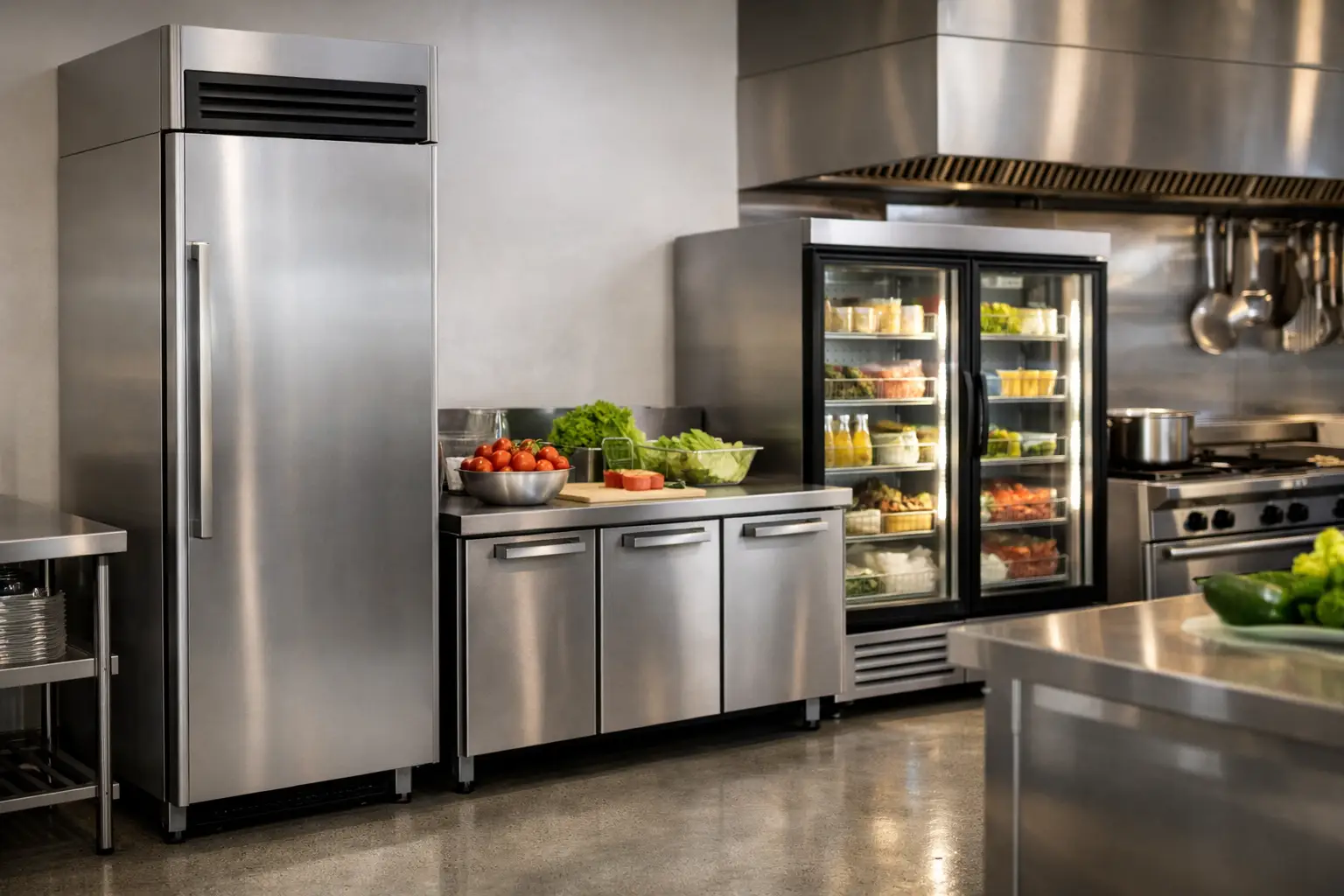
A fridge that cannot keep pace with a Friday-night service costs more than spoiled stock. It slows prep, creates stress at the pass and can put food safety at risk. The right commercial refrigeration gives your team dependable cold storage where they need it, with capacity that matches the way your kitchen actually trades.
For a café, that may mean an underbench fridge within arm’s reach of the coffee station. For a busy restaurant, it could mean a combination of upright storage, refrigerated prep benches and a cool room. The best choice is rarely the biggest unit on the floor. It is the equipment that protects stock, supports workflow and suits your available space, power supply and budget.
Start With Your Kitchen’s Daily Demand
Before comparing cabinet sizes or sale prices, look at what needs to be chilled during a normal service. Consider deliveries, prep volume, menu complexity, service peaks and how often staff open the doors. A venue doing breakfast and lunch may need fast access to dairy, sandwiches and ready-to-serve ingredients. A pub kitchen may need higher-capacity storage for proteins, garnishes and bulk prep.
Capacity matters, but usable capacity matters more. A tall upright refrigerator can hold plenty of stock, yet it may not be the best answer if cooks need ingredients close to the line. Likewise, a refrigerated prep bench adds valuable work surface and keeps pans within reach, but it should not become the only storage solution for a high-volume kitchen.
Allow room for stock rotation. Overfilled cabinets restrict air movement and make it harder for the unit to maintain safe temperatures. If your fridge is constantly packed to the door seals, it is often a sign that your operation has outgrown its current setup.
Match the Unit to the Job
Commercial refrigeration is not one category. Different equipment solves different workflow problems.
Upright fridges and freezers are a dependable choice for back-of-house storage, dry-store-adjacent prep areas and venues with limited floor space. They offer a strong volume-to-footprint ratio and are available in single-door, double-door and larger configurations.
Underbench fridges and freezers suit compact kitchens, bars and service stations. They keep ingredients close without taking up bench space above. Check the bench height, ventilation requirements and door clearance before committing, especially in tight café or takeaway layouts.
Refrigerated prep benches are built for production. Pizza benches, sandwich preparation units and saladette-style counters keep ingredients organised in pans while providing a practical worktop. They are particularly useful where speed and portion consistency matter.
Display fridges, cake cabinets and deli displays do more than hold temperature. They present product to customers. In these units, visibility, lighting, door style and easy cleaning can be as important as storage capacity. A cabinet that looks good but fogs up, runs loudly or is awkward to restock will quickly become a daily frustration.
Cool rooms and freezer rooms are suited to venues buying in bulk, catering operations, clubs, institutional kitchens and growing production sites. They provide serious volume, but need proper planning around access, shelving, condenser location, flooring and site conditions.
Commercial Refrigeration: Temperature Is Only One Part of the Decision
Every commercial fridge should maintain the required temperature range consistently, but performance depends on more than the thermostat setting. Heat load from nearby cooking equipment, frequent door opening, warm product placed inside and poor ventilation all make the refrigeration system work harder.
Positioning has a direct impact on running costs and service life. Avoid placing units beside ovens, grills, fryers or direct sun where possible. Leave the manufacturer-recommended clearance around vents and condensers. A unit pushed tightly against a wall may look neat, but restricted airflow can lead to higher power use and avoidable breakdowns.
Door style deserves attention too. Solid doors generally suit back-of-house storage and can offer better insulation. Glass doors are useful for front-of-house display or where staff need to see stock quickly, although they may be less efficient in some applications. Swing doors need clear space in front of them, while sliding doors can be a practical option for narrow work areas.
For freezer purchases, think about how stock arrives and how it is used. A chest freezer may provide excellent storage capacity and hold temperature well, but it can be slower to organise and access. An upright freezer gives better visibility and shelving, which can reduce wasted time during busy prep periods.
Don’t Ignore Energy Use and Noise
The purchase price is only part of the cost of ownership. Refrigeration runs around the clock, so energy consumption can add up over years of operation. Higher-efficiency equipment may cost more upfront, but it can be the sensible choice for venues with long trading hours or multiple refrigeration units.
That does not mean the most expensive model is automatically best. A smaller, well-specified cabinet that suits your stock levels can be more economical than an oversized unit operating half empty. Compare dimensions, litre capacity, temperature range, door configuration and power requirements against the job it needs to do.
Noise is also worth considering. A bar fridge behind a customer counter, a display cabinet in a quiet bakery or an underbench unit near a dining area should not dominate the room with constant compressor noise. Ask about the operating environment before selecting a model.
Plan for Access, Cleaning and Service
A commercial fridge has to get into the building before it can work for you. Measure doorways, corridors, lifts, stairs and the final equipment location. Include the depth of the unit with doors open, as well as space for staff to move safely around it. This is particularly important for Sydney venues with compact back-of-house areas and older building access.
Cleaning access should be part of the plan, not an afterthought. Shelves, door gaskets, drain points and condenser areas need regular attention. Equipment that is difficult to clean tends to be neglected, which affects hygiene, airflow and long-term reliability.
Your team also needs a simple routine for monitoring temperatures, rotating stock and reporting problems early. Damaged gaskets, unusual noise, ice build-up, water pooling or a cabinet struggling to recover temperature are not minor issues to leave until the next quiet period. Early action can prevent stock loss and a more expensive repair.
For many operators, quality pre-owned refrigeration can be a sensible way to stretch a fitout budget. It can free up funds for cooking equipment, extraction, stainless benches or front-of-house display. The trade-off is that condition, warranty coverage, age and expected service life need closer review. New equipment may be the better fit where energy efficiency, manufacturer warranty or long-term reliability is the priority.
Build Refrigeration Into the Whole Kitchen Layout
Refrigeration works best when it is planned alongside cooking, prep, wash-up and storage. Put everyday ingredients near the station where they are used, while keeping bulk stock out of high-traffic paths. Raw and ready-to-eat foods need sensible separation, and delivery access should not force staff to carry heavy cartons through the busiest part of the kitchen.
A poorly placed fridge creates extra steps on every order. Over a full shift, those steps become wasted labour and more congestion. A well-planned layout helps cooks reach, prep, cook and plate with less crossing over and fewer open fridge doors.
If you are fitting out a new venue or refurbishing an existing kitchen, it is worth getting equipment advice before finalising cabinetry and services. CKE Sydney can assist with individual refrigeration purchases as well as broader kitchen equipment and fitout planning, helping operators match practical equipment choices to the size and demands of the job.
The right unit should feel unremarkable during service: doors open easily, stock is where staff expect it, temperatures stay stable and the kitchen keeps moving. That is the standard worth buying for.