
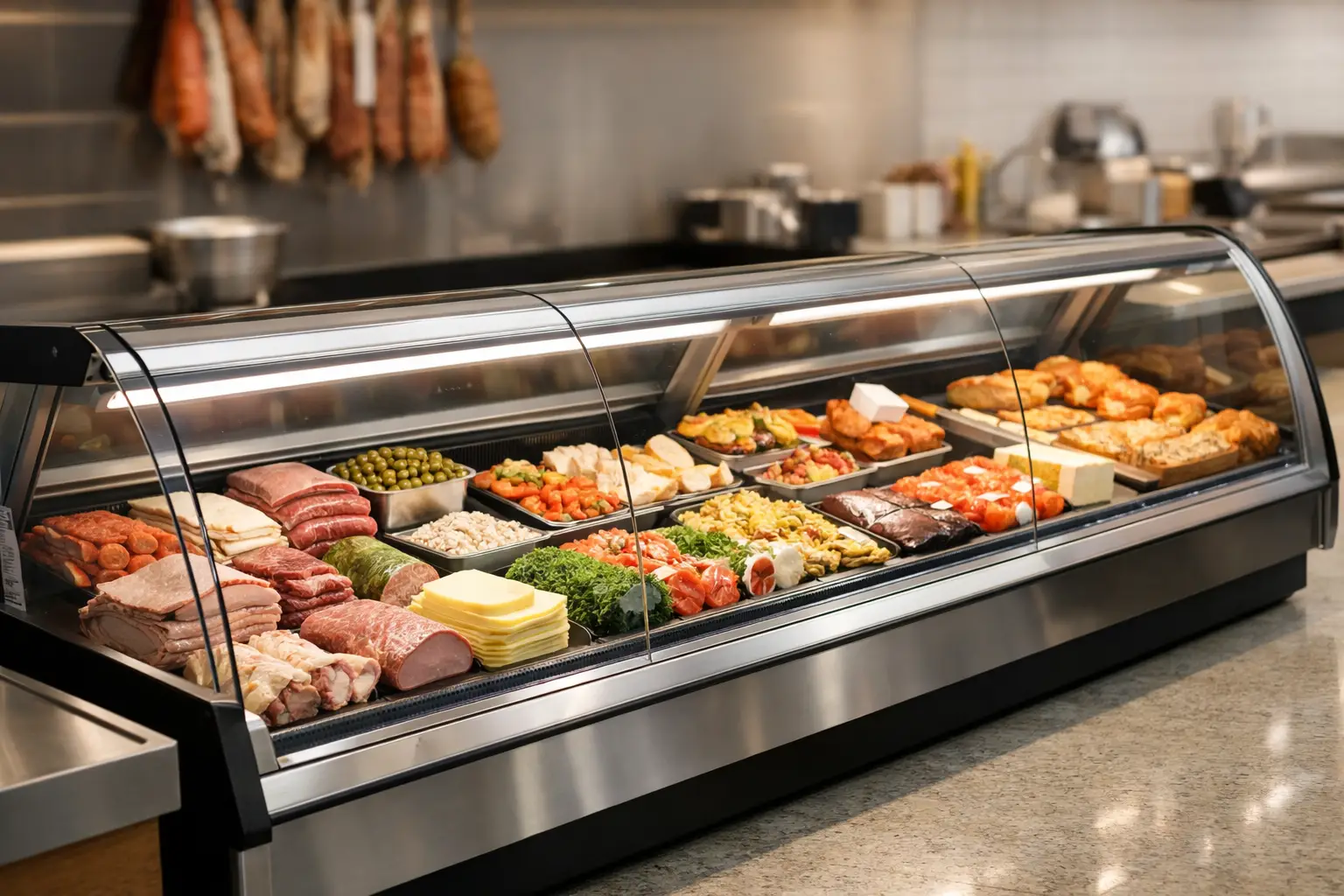
The right refrigerated display cabinet deli counter does two jobs at once: it keeps potentially hazardous food at a safe holding temperature and puts your best-selling products where customers can see them. Get the balance wrong and you can end up with tired-looking salads, dried-out meats, slow service or a cabinet that simply does not suit your counter space.
For delicatessens, cafés, sandwich bars, butchers, bakeries, pubs and takeaway shops, display refrigeration is not an afterthought. It is part of the sales counter, the food-safety plan and the daily workflow. Choosing well starts with knowing exactly what you will display, how quickly it moves, and how your staff will serve it during a busy lunch rush.
Start with the food you need to display
A deli counter holding sliced ham, cooked chicken, salads, cheese, antipasto and ready-to-eat meals has different needs from a cabinet built for cakes, drinks or packaged grab-and-go products. The product determines the temperature range, shelf layout, lighting, service access and even the style of glass that will work best.
Potentially hazardous foods need to be kept at safe temperatures. In most commercial foodservice settings, cold food should be held at 5°C or below, subject to your food safety requirements and the product manufacturer’s instructions. A digital temperature display is useful for quick checks, but it does not replace regular temperature monitoring as part of your venue’s food-safety process.
Moisture-sensitive products also need consideration. Fresh salads and prepared meals can lose appeal if they dry out under strong airflow. Cheese, cured meats and antipasto may require a different presentation approach again. If you are selling a broad range from one counter, speak with an equipment specialist about a cabinet designed for deli use rather than choosing solely on price or external appearance.
Choosing a refrigerated display cabinet deli counter style
The most suitable format depends on whether staff serve customers from behind the counter, customers help themselves, or the cabinet needs to do both.
Serve-over counters for assisted service
A serve-over refrigerated display cabinet is the standard choice for a staffed deli, butcher, sandwich shop or café counter. Customers can clearly view the food through the front glass while staff access trays from the rear. This keeps handling controlled, supports quick portioning and allows your team to keep the display neat throughout service.
Curved glass can provide a softer, premium look and works well in customer-facing food displays. Flat glass can be easier to integrate into a clean, modern fitout and may offer more practical space above the cabinet. The best choice is usually the one that suits your serving method, sightlines and bench layout rather than a purely cosmetic preference.
Self-service and grab-and-go cabinets
For bottled drinks, packaged salads, wraps, sandwiches and prepared meals, a self-service multideck or upright display cabinet can move customers through faster. It is a practical choice for cafés, hospital kiosks, service stations and busy takeaway venues where customers want to make a quick selection without waiting at the counter.
The trade-off is temperature recovery. Every time a customer opens a door or reaches into an open-front cabinet, warm air enters the display area. High-turnover packaged stock generally suits this format well. Delicate, uncovered or slow-moving deli products are usually better protected in a staff-served cabinet.
Countertop displays for limited space
A countertop refrigerated display can be a good fit for small cafés, bakeries and venues adding cold desserts, sandwiches or bottled products near the till. It can create an extra sales point without a major refit. However, it should not be treated as a shortcut around proper planning.
Check the bench load rating, ventilation clearance, power access and the space required for staff to restock and clean the unit. A compact cabinet can become inconvenient very quickly if its doors open into a service walkway or its condenser cannot breathe properly.
Size the counter for service, not just floor space
It is tempting to measure an available wall and buy the longest cabinet that fits. In practice, the better question is how much food you need on display during your busiest period, and how often staff can replenish it safely.
A larger cabinet gives you more display area and a stronger visual impact. It can also reduce restocking interruptions. But overfilling a large cabinet with slow-moving food creates waste, while a partly empty display can look uninviting. Smaller venues often do better with a well-stocked, regularly refreshed counter that matches their actual trade.
Before ordering, measure the full installation area, including doorways, corners, lifts, counter returns and access from the loading point. Allow room for the rear doors to open, staff to work comfortably, cleaning access and the manufacturer’s ventilation requirements. Do not forget the height of overhead shelving, menu boards and exhaust canopies where relevant.
If the cabinet is part of a new venue or refurbishment, plan it alongside preparation benches, handwashing facilities, storage and the point of sale. A deli counter should shorten the path between cold storage, preparation and service. It should not force staff to cross a busy aisle every time they need another pan of salad or sliced meat.
Refrigeration performance matters more than the glass
A good-looking cabinet will not help if it struggles to hold temperature during a hot Sydney afternoon or a packed Saturday service. Look at the refrigeration system, stated operating conditions, insulation, door seals, controller quality and available service support.
Fan-forced refrigeration can provide more even temperatures across the display, especially in larger cabinets. However, airflow can affect exposed food, so the cabinet needs to suit the products you intend to hold. Static cooling may be preferable for certain delicate items, but temperature distribution and recovery should still be assessed carefully.
Ambient conditions matter. A cabinet installed beside a cooking line, in direct sunlight or under warm lighting has a harder job than one positioned in a climate-controlled shopfront. Heat sources increase energy use and can reduce performance. Keep refrigeration away from fryers, grills and hot display equipment wherever possible.
Check whether the cabinet uses a self-contained refrigeration system or requires remote refrigeration. Self-contained units are generally simpler to install and can suit many small to medium venues, but they reject heat into the room. Remote systems can reduce heat and noise in the customer area, though they involve more installation planning and are often better suited to larger projects.
Think about cleaning, loading and daily maintenance
A deli display is seen up close by customers. Crumbs, spills, fogged glass and cluttered pans are noticed immediately. Choose a cabinet that your staff can clean properly without turning a basic closing task into a difficult job.
Removable trays, accessible internal surfaces, easy-to-clean glass and sensible drainage arrangements save time every day. Rear sliding doors should operate smoothly and leave enough room for staff to load food without knocking containers over. Adjustable shelving can be valuable if your menu changes between breakfast, lunch and afternoon trade.
The condenser also needs routine attention. Dust and grease build-up can reduce efficiency, increase running costs and put strain on the refrigeration system. Schedule cleaning according to the manufacturer’s guidance and your operating environment. A cabinet near a kitchen line will usually need more frequent attention than one in a clean retail space.
Build the purchase around total value
The cheapest refrigerated counter is not always the lowest-cost option once installation, energy use, repairs, food waste and replacement are considered. At the same time, there is no benefit in paying for capacity or features that your operation will never use.
Compare cabinet dimensions, usable display volume, temperature range, power requirements, warranty terms and the availability of parts and technical support. For an established operator replacing an old unit, it may also be worth considering quality pre-owned equipment where condition, capacity and warranty support are suitable for the job.
For new venues, finance can help preserve working capital for fitout, stock and wages while securing the refrigeration needed from day one. CKE Sydney can assist hospitality operators with equipment selection for individual replacements or broader kitchen and counter fitouts, including practical advice on matching display refrigeration to the rest of the workflow.
Make presentation work as hard as refrigeration
Once the cabinet is installed, the way it is stocked affects sales as much as the equipment itself. Use clean, correctly sized food pans, avoid overfilling, keep labels clear and replenish smaller quantities more often where practical. High-margin, visually appealing products should sit in the strongest customer sightlines.
Keep colour and variety in the display. Fresh salads, antipasto, sliced meats and prepared meals look more appealing when they are separated clearly and presented at sensible depths. Staff should have a simple routine for rotating stock, wiping glass, checking temperatures and removing food that no longer meets your quality standard.
A refrigerated display counter is a working piece of equipment, not just a cabinet with lights and glass. Choose one around your menu, service style and available space, then maintain it well. That gives your food a better chance to look fresh, stay safe and sell at the pace your venue needs.