
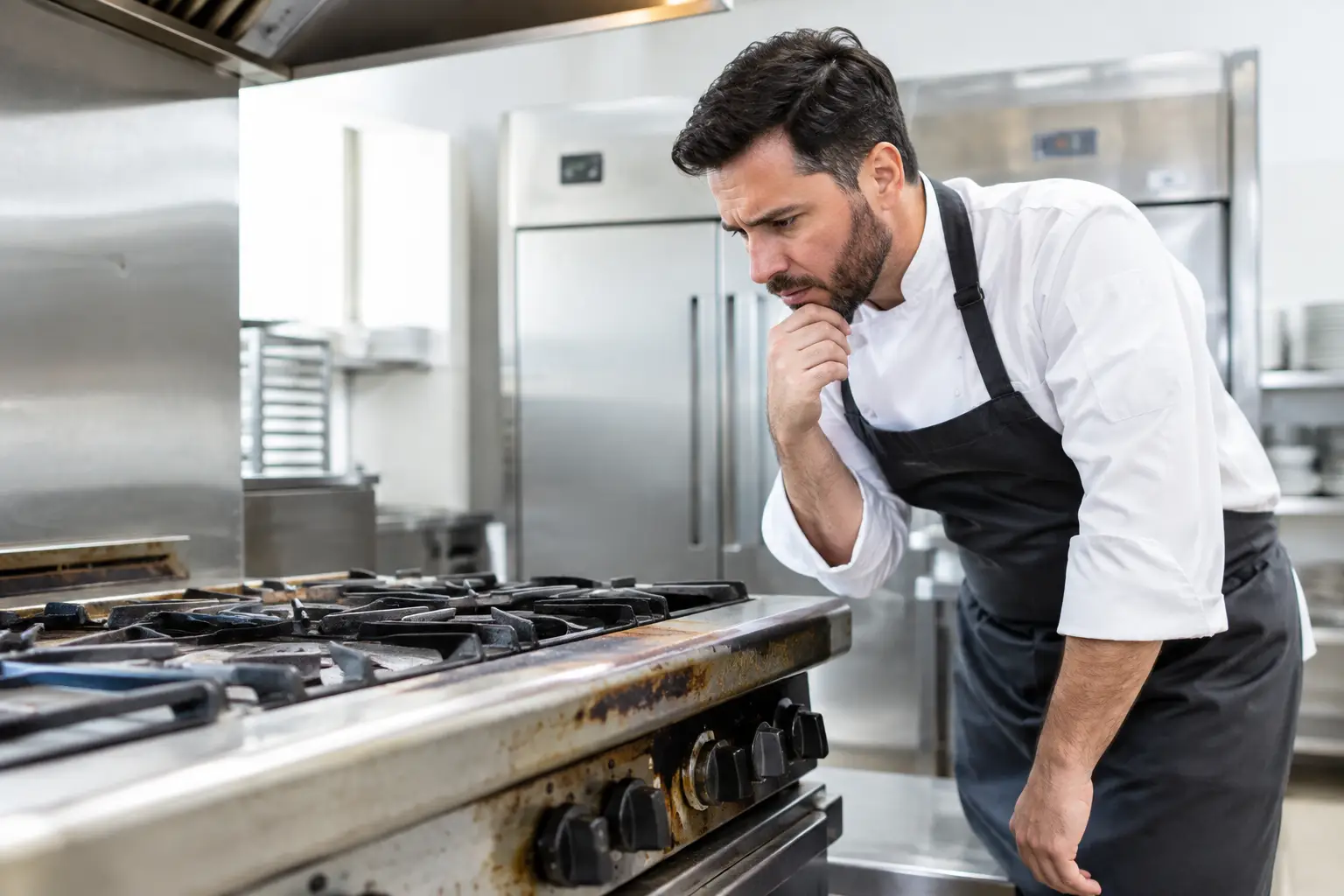
A fryer failing halfway through a Friday dinner rush is not just a repair problem. It can mean delayed dockets, unhappy customers, lost sales and staff trying to work around a bottleneck. Knowing when to replace restaurant equipment helps you make a planned purchase before an ageing machine starts running the kitchen instead of supporting it.
Replacement is rarely about chasing the newest model. For most operators, it is about protecting service, food safety, energy costs and production capacity. A reliable piece of equipment that suits your menu is worth keeping. One that regularly causes downtime or limits what you can sell is costing more than its repair invoice suggests.
When to replace restaurant equipment instead of repairing it
There is no single retirement age for commercial kitchen equipment. A well-maintained combi oven or stainless-steel bench can provide years of service, while a heavily used underbench fridge in a hot, busy kitchen may wear out much sooner. Usage, maintenance history, installation quality and the demands of your menu all matter.
The practical question is whether the next repair will return the equipment to dependable service, or merely buy time until the next failure. These signs help make the decision clearer.
1. Breakdowns are becoming part of the routine
One repair does not mean a machine needs replacing. Commercial equipment works hard, and parts such as door seals, thermostats, valves, elements and fans do wear out. But if staff are calling a technician every few months, the equipment is no longer reliable enough for its role.
Look beyond the cost of each individual repair. Add up call-out fees, replacement parts, temporary equipment hire, spoiled stock, staff overtime and the sales lost while an appliance is out of action. If those costs are climbing, replacement can be the more economical choice.
This is particularly important for critical equipment with no backup, such as a main refrigeration cabinet, dishwasher, fryer or cooking range. A minor fault is manageable when you have capacity elsewhere. It becomes urgent when it stops service.
2. Temperature control is inconsistent
Refrigeration, freezers, hot holding units and cooking equipment must hold stable temperatures. If a fridge is warm one day and freezing product the next, or a bain-marie struggles to maintain safe holding temperature, do not treat it as a minor inconvenience.
Inconsistent temperatures can affect food safety, product quality and compliance. You may see wilted produce, shortened shelf life, excessive ice build-up, melted display stock or staff regularly moving food between units to keep it safe. A qualified technician may be able to resolve an isolated issue, but recurring temperature faults often point to an ageing compressor, damaged insulation, failing controls or a system nearing the end of its working life.
Keep temperature logs and repair records. They provide useful evidence when deciding whether another repair is sensible, especially for facilities teams and multi-site operators working within a maintenance budget.
3. Energy and water bills have crept up
Older equipment can keep operating while quietly becoming expensive to run. A refrigerator with worn seals or a tired compressor may cycle constantly. An older dishwasher may use more water, power and chemicals than a current commercial model. A gas appliance with poor heat control can increase consumption and slow down production.
Compare recent utility bills with the same period last year, allowing for changes in trade and trading hours. Also ask staff what they are seeing day to day. A fridge that runs loudly all night, a dishwasher that needs repeat cycles or an oven that takes too long to recover temperature all deserve investigation.
New equipment has an upfront cost, so replacement should not be based on energy use alone. But when high running costs sit alongside repair bills and poor performance, the business case becomes much stronger.
4. It slows down the kitchen during peak service
Your equipment may still technically work but no longer match the pace of the operation. This often happens after a menu change, an increase in delivery trade, a larger function program or a successful venue expansion.
A small fryer bank can become a service bottleneck when fried menu items take off. A single-door fridge may be too limited for a busy prep section. An undersized glasswasher can leave a pub or club short of clean glassware on a busy night. In these cases, the issue is capacity rather than condition.
Replacing equipment with a better-sized unit can improve workflow and labour efficiency. Consider production volume, recovery time, basket or rack capacity, storage layout and where staff queue during service. Sometimes a different configuration – such as a larger combi oven, a second fryer or a refrigerated prep bench – delivers more value than replacing like for like.
5. Repairs are hard to source or parts are obsolete
A machine can be mechanically sound but still become a risk if parts are difficult to obtain. Long waits for a control board, motor, compressor or burner component can leave equipment unusable for weeks. Older imported models may be especially challenging where local parts support is limited.
Before approving a major repair, ask the technician whether the required parts are readily available and whether other key components are likely to fail soon. If parts are discontinued or repair lead times are affecting trade, replacement gives you more certainty.
Choosing a recognised commercial brand with accessible service support can reduce future downtime. Warranty terms, parts availability and local technician coverage should all be part of the purchase decision, not an afterthought.
6. Cleaning, safety or compliance has become difficult
Damaged equipment can create problems that are not fixed by better cleaning routines. Split fridge seals, cracked cutting surfaces, corroded shelving, faulty door latches, worn fryer controls and damaged electrical leads can all compromise safe operation.
Watch for equipment that is difficult to clean properly because panels are loose, surfaces are pitted or drainage is poor. Grease and food debris collect in places staff cannot reasonably access. For refrigeration, check seals, hinges and door alignment. For gas cooking equipment, any smell of gas, irregular flame or ignition issue needs immediate attention from a licensed professional.
Replacement may also be necessary when an appliance no longer suits current compliance requirements or insurance expectations. This is common during refurbishments, ownership changes and major kitchen upgrades. Do not assume an existing item can simply be moved into a new fitout without checking its condition, connection requirements and ventilation needs.
7. The equipment no longer supports your menu
A restaurant kitchen evolves. Perhaps the venue has introduced breakfast, expanded its pastry offer, added catering or moved towards faster takeaway service. Equipment that was right at opening can become the wrong tool a few years later.
For example, a standard convection oven may no longer provide the control needed for high-volume roasting and regeneration. A display fridge may not present your new grab-and-go range effectively. A basic mixer may struggle once bakery production grows. Replacing equipment at this stage is an investment in revenue, consistency and menu quality rather than a response to failure.
Before buying, map the journey from delivery and storage through prep, cooking, pass and wash-up. The best replacement should solve the current pain point without creating another one further down the line.
8. Staff have lost confidence in it
Experienced kitchen staff notice equipment problems early. They know which burner takes too long to ignite, which fridge door needs a shoulder push to close and which dishwasher needs watching every cycle. If the team has built workarounds into every shift, performance is already being affected.
Ask specific questions rather than simply asking whether an appliance is working. Does it hold temperature? Does it recover quickly? Is it safe to use? Does it create delays? Is cleaning taking too long? Their answers can reveal a repair-or-replace issue before a full breakdown occurs.
How to make a replacement decision with confidence
Start with a simple record of age, repairs, downtime, running costs and the equipment’s role in service. For an inexpensive bench-top appliance, replacement may make sense quickly. For a large combi oven, cool room or custom exhaust system, a professional assessment and repair quote are usually worthwhile before committing.
Then compare total ownership cost, not just the ticket price. Include installation, electrical or gas works, ventilation, water connections, delivery, removal of the old unit, warranty and expected running costs. Measure the available space carefully, including doorways, bench clearances and service access. A larger appliance is not helpful if it cannot be installed safely or maintained once in place.
New equipment offers current features, warranty coverage and predictable performance. Quality pre-owned equipment can be a smart value option for a start-up, seasonal operation or venue working to a strict budget, provided it has been properly assessed and suits the workload. Finance can also help spread the cost of essential equipment rather than forcing a business to keep an unreliable unit for another year.
For a broader refurbishment, replacement is the right time to review the whole workflow. Cooking, refrigeration, preparation, wash-up and stainless-steel benches need to work as one kitchen. CKE Sydney can assist with equipment selection and custom kitchen fitout planning, whether you are replacing one critical appliance or preparing a full operational upgrade.
The best time to replace equipment is usually before the next busy service exposes its weakness. Plan the purchase around your quieter trading period, confirm installation requirements early and choose equipment that gives your team room to work well tomorrow, not just enough capacity to get through tonight.