
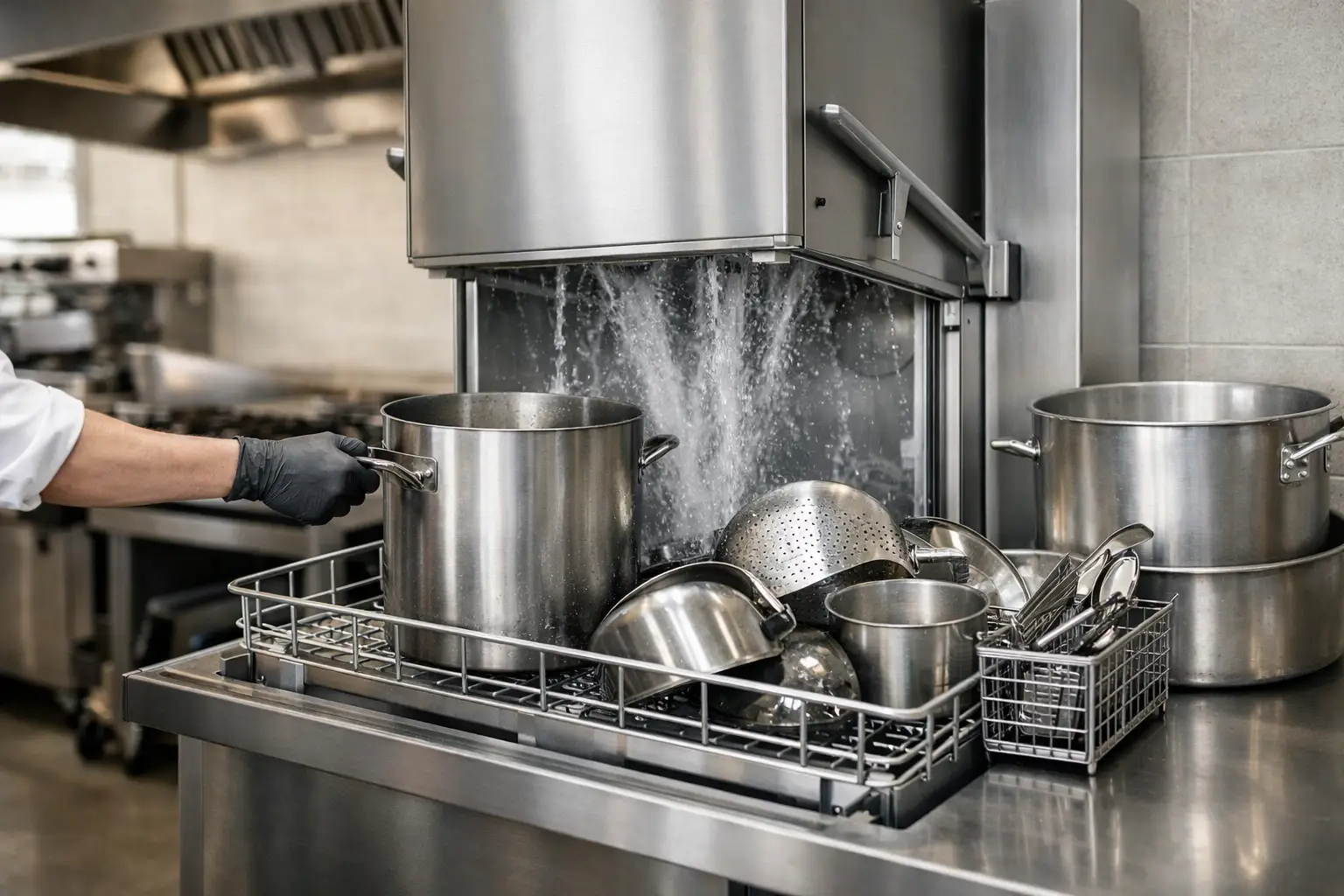
The wash-up area can slow a whole kitchen down long after service has finished. A commercial pot washer gives restaurants, pubs, cafés, caterers and institutional kitchens a faster, more consistent way to clean pots, gastronorm pans, mixing bowls and heavy utensils without tying up staff at a sink. The right machine improves turnaround, supports hygiene procedures and helps protect the life of expensive cookware. The wrong one can create bottlenecks, waste water and leave your team wrestling with racks that do not suit the equipment you actually use.
What makes a commercial pot washer different?
A commercial pot washer is built for larger, dirtier and more awkward items than standard glasswashers or underbench dishwashers. It typically has a larger chamber, stronger wash action and rack capacity designed for cookware, trays, utensils and food preparation equipment. Many operators also call these utensil washers or pot and pan washers.
That does not mean every large dishwasher is automatically right for pots. A machine may look generous on paper but still be impractical if its entry height will not take stockpots, its racks do not support trays, or its wash cycle is not suited to heavy soils. Ask for the internal clearance, usable rack dimensions and recommended applications, not just the outside footprint.
For a small café with modest food preparation, a heavy-duty underbench unit may be enough. A high-volume restaurant, hotel, club kitchen or central production facility may need a pass-through or bonnet-type pot washer that keeps pace with a busy wash-up team. Catering businesses should also consider whether the machine needs to turn around large batches after an event, rather than handle a steady service load.
Start with the items you need to wash
Buying on capacity alone is a common mistake. First, look at the largest and most frequent items coming back to the wash-up area. Measure your biggest pots, baking trays, gastronorm pans, mixing bowls, fryer baskets and utensils. Include handles and lids. A unit that accepts a 500 mm rack may still have an internal height that rules out taller cookware.
Also consider the shape of the load. Bakery trays, pizza pans and long-handled utensils may need specialist racks, inserts or an open-sided arrangement. If racks are awkward to load, staff will stack items poorly, water will not reach every surface and cycle results will suffer. Good rack layout is not an add-on. It is part of the machine’s working capacity.
A pot washer should take the pressure off your team, not simply move the scrubbing stage elsewhere. Burnt-on food, labels, skewers and heavy grease still need to be removed before washing. Build a pre-scrape bench, waste bin and suitable sink into the process so staff can load the washer efficiently and safely.
Match throughput to your busiest hour
The advertised cycle time is useful, but it is only one part of throughput. A 90-second cycle sounds quick until you factor in scraping, loading, unloading, re-racking, waiting for heat recovery and dealing with items that need a second wash. The number that matters is how much usable cookware your staff can return to service during your peak period.
Think about the busiest 30 to 60 minutes, not an average quiet shift. A venue serving 180 covers in a concentrated lunch rush needs different wash-up capacity from a café with consistent all-day trade. Similarly, a caterer may need to process a large volume in one hit once equipment returns from site.
A larger bonnet-type washer can reduce handling and keep the flow moving for teams with several people in the wash-up area. But it needs more floor space and may require suitable drainage, extraction and power. An underbench unit can be a smart value choice where space is tight and volume is controlled, particularly if cookware is washed in smaller batches throughout the day.
Check the site before choosing a pot washer
Commercial dishwashing equipment performs best when the installation is planned properly. Before ordering, confirm the available width, depth and height, including room for doors, hoods, loading benches and safe staff movement. Leave access for servicing. A machine squeezed against a wall may look neat on opening day but become difficult and costly to maintain.
Utilities are equally important. Check your electrical supply, water connection, water pressure, hot-water capacity, drainage point and any ventilation requirements. Some higher-capacity machines may require three-phase power. Depending on the model and site, you may also need a suitable exhaust canopy or steam management solution. Your licenced trades should confirm final requirements before installation.
Water quality deserves attention as well. Hard water can affect wash results, create scale inside the machine and increase chemical use. A water softener or filtration system may be worthwhile, especially where scale has caused problems with other equipment. It adds to the upfront cost, but can help protect heating components and improve presentation over time.
Hygiene, temperature and repeatable results
Commercial kitchens need a wash-up system that staff can use consistently under pressure. Choose a machine with clear controls, easy-to-clean filters and accessible wash arms. If cleaning and daily checks are complicated, they tend to get skipped during a busy close.
Your machine, chemicals and operating process must work together. Correct detergent and rinse-aid dosing help prevent residue, while the right wash and rinse settings support the hygiene standard required for your operation. Requirements can vary by equipment type, local council expectations and the foodservice environment, so review the manufacturer’s specifications and your food safety procedures before making a final decision.
Thermal sanitation and chemical sanitation are not interchangeable terms to use loosely. The right option depends on the machine, the chemicals, the items being washed and the process you can reliably manage. A quality supplier can help clarify what the model is designed to do, but operators still need staff training, documented cleaning routines and regular checks.
New versus quality pre-owned equipment
New equipment offers current specifications, manufacturer warranty coverage and the confidence of a known service history from day one. It can be the right decision for a new venue, a high-output kitchen or a business with strict procurement requirements.
Quality pre-owned equipment can offer genuine value when the budget is tight or an existing kitchen needs a quick replacement. The key is condition, not just price. Ask about the machine’s age, servicing, parts availability, rack condition, pumps, heating performance and what warranty is included. A cheap unit that needs repeated repairs or cannot achieve reliable wash results is not a saving.
It is also worth comparing the total installed cost. Include delivery, plumbing, electrical work, water treatment, benches, chemicals and staff training. The purchase price is only one line in the project budget.
Choose a supplier that can support the whole wash-up area
A pot washer is rarely a stand-alone purchase. It sits between dirty-dish landing space, pre-rinse or pot sinks, clean storage, drainage, waste handling and staff workflow. If you are fitting out a new kitchen or refurbishing an existing one, planning this area early prevents expensive changes after stainless benches and services are already in place.
CKE Sydney can assist operators with equipment selection as part of a broader commercial kitchen purchase or fitout, from stainless-steel workstations and sinks through to dishwashing equipment and delivery across Australia. For larger projects, practical advice on layout can be as valuable as the machine itself.
Before you commit, have these details ready for an accurate recommendation:
- Your largest cookware and tray dimensions
- Expected wash-up volume during the busiest service period
- Available floor space, door clearance and bench layout
- Electrical, water, drainage and ventilation details
- Whether you need new equipment, quality pre-owned equipment or finance options
A better wash-up decision starts on the floor
The best commercial pot washer is the one that fits the real rhythm of your kitchen: what comes back dirty, when it arrives, who loads it and how quickly it must return to service. Measure the cookware, check the services and allow for the full wash-up workflow. That practical groundwork will help you buy once, keep service moving and give your team equipment they can rely on every shift.