
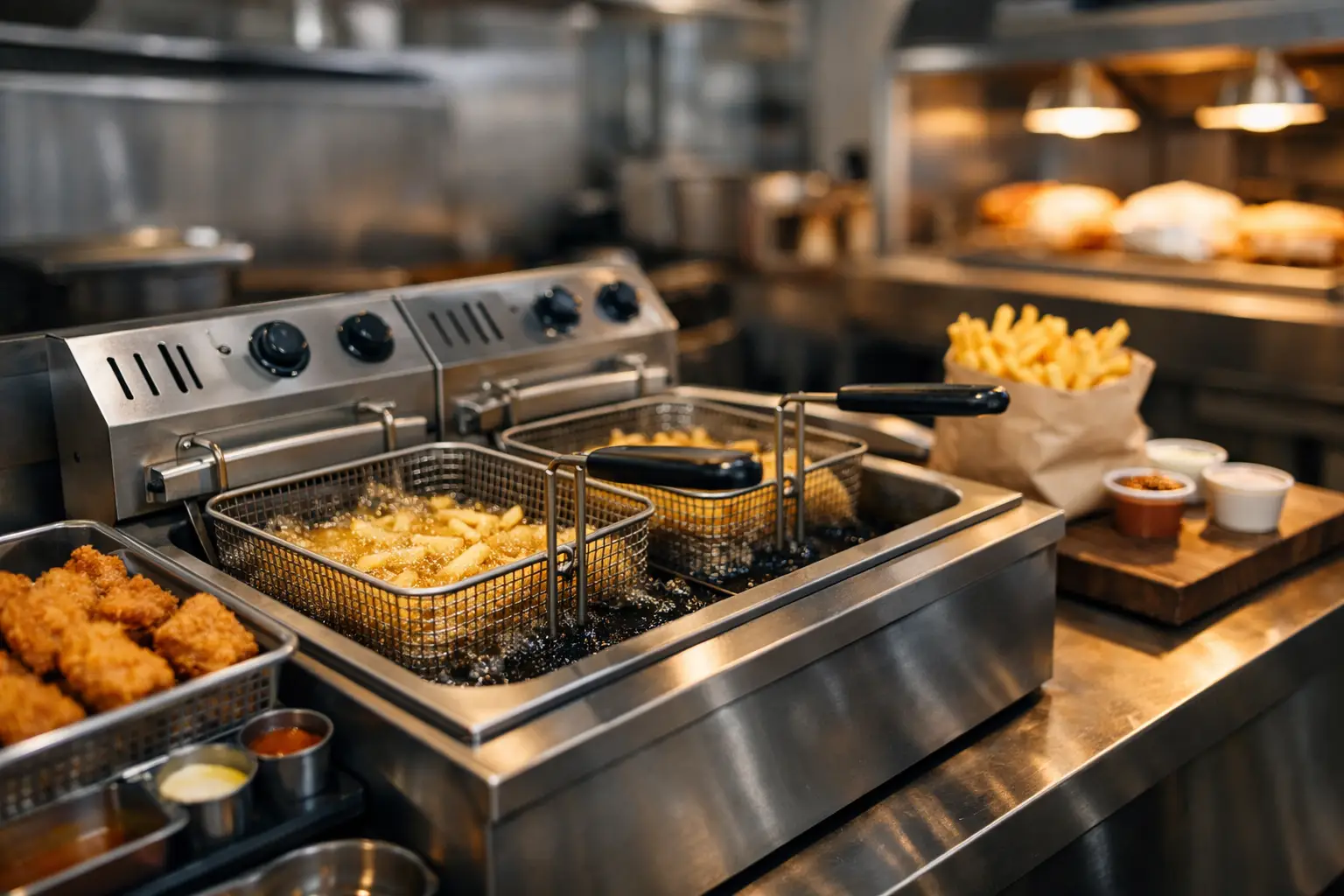
The rush between 11.30 am and 1.30 pm tells you quickly whether your frying setup is earning its keep. A domestic unit might handle a slow start-up menu, but a commercial deep fryer takeaway shop operation needs fast recovery, consistent results and enough capacity to keep chips, chicken, seafood or snacks moving without holding up every other order.
The right fryer is not always the biggest one on the floor. It needs to suit your menu, expected covers, available gas or electrical supply, bench space and cleaning routine. Buy too small and staff wait for oil temperature to recover. Buy too large and you may spend more on oil, energy and floor space than the business needs.
Start with what you fry and how often
A fryer should be selected around the product that drives your busiest service, not the occasional menu item. A shop selling burgers with a side of chips has different requirements from a fish and chip shop, fried chicken outlet or busy food-court takeaway.
Look at the size and frequency of each batch. Chips require room to move and recover well after frozen product is dropped into the oil. Battered fish and seafood can create more crumbs, which affects oil life and makes filtration more important. Fried chicken has a heavier load and may require more capacity, strong heat recovery and careful separation from lighter flavoured products.
If your peak trade regularly involves back-to-back baskets, a single small tank becomes a bottleneck. A twin-tank model can make more sense because staff can cook different products separately, manage allergen considerations more easily and keep one side operating while the other is filtered or cleaned. For lower-volume cafés or small takeaway counters, a quality bench-top fryer can be a practical, lower-cost option where the menu and workflow allow it.
Commercial deep fryer takeaway shop capacity explained
Fryer capacity is usually discussed in litres, but litres alone do not tell the full story. Consider the basket size, the amount of food being loaded at once and how quickly the machine brings oil back to cooking temperature after a drop. This is known as recovery.
A fryer with a larger oil tank may handle bigger batches, yet it also needs more oil to fill and more time to heat from cold. High-output gas fryers are often favoured by high-volume chip shops, quick-service venues and busy pubs because they recover quickly during sustained service. Electric fryers can be an excellent choice where gas is unavailable, where equipment placement is tighter or where a controlled, compact setup suits the site.
Ask a simple operational question: how many serves of chips, pieces of chicken or baskets of product need to leave the pass in a 15-minute rush? Work backwards from that figure. It is better to choose capacity based on realistic peak demand than average daily sales.
Single tank, twin tank or multiple fryers?
A single-tank fryer is straightforward to run and can be economical for a limited menu. It suits venues where one main fried product dominates and volume is manageable.
Twin-tank fryers offer more control. You might allocate one tank to chips and another to seafood or chicken, reducing flavour transfer and helping staff keep service organised. Separate tanks can also support allergen management, although procedures, product suppliers and cleaning practices still need to be properly assessed.
For a larger takeaway, two dedicated fryers may be better than one oversized unit. This creates redundancy if one unit is being serviced and allows stations to be arranged around the way your team actually works. The trade-off is higher upfront cost, more extraction demand and additional cleaning time.
Choose gas or electric for your site
Gas and electric commercial fryers can both produce excellent results. The right choice depends on the infrastructure already available, expected output and the overall kitchen design.
Gas fryers are well suited to high-volume production and are commonly selected where a venue has suitable gas connections and extraction. They can provide strong recovery when baskets are continually loaded. They also need appropriate installation, ventilation and servicing by qualified professionals.
Electric fryers are often easier to position within certain kitchen layouts and can be a practical solution for food courts, smaller shops and sites without gas. They offer responsive temperature control and may be available in compact bench-top formats. However, confirm that your electrical supply can support the load. A fryer is not an appliance to plug into an unsuitable circuit and hope for the best.
Before ordering, check the site services, access route, clearances, extraction and fire-safety requirements. This is especially important for new fitouts, tenancy changes and refurbishments. Planning a fryer around the kitchen rather than squeezing it into the last available gap usually prevents expensive changes later.
Oil management affects food quality and margins
Oil is a daily operating cost, not an afterthought. Poor oil management gives chips a darker finish, leaves fried food greasy and can make customers notice an off taste before they know why. It also shortens the useful life of the oil and creates unnecessary waste.
Choose a fryer with practical drainage and cleaning access. A cold zone beneath the cooking area can help collect crumbs and sediment away from the hottest part of the oil, reducing burning. For busy operations, an oil filtration system or a compatible filtering routine can save time and extend oil life when used correctly.
Train staff to skim regularly, avoid overloading baskets, shake excess ice from frozen products where appropriate, and use the right cooking temperature. Different products bring different levels of moisture and debris into the tank. A clear oil-change schedule based on product volume and oil condition is more reliable than changing oil only when it looks obviously dark.
Do not overlook safe oil handling. Hot oil burns are serious, and carrying containers through a crowded kitchen is not a good process. Position the fryer so staff have clear working space and can drain, filter and dispose of oil safely.
Make cleaning and service part of the buying decision
The fryer that looks good on day one still has to be cleaned at close, maintained through a busy year and repaired quickly if something goes wrong. Removable baskets, accessible drains, sturdy controls and readily available parts all matter in a commercial kitchen.
Consider who will clean the unit at the end of the shift. If the drain valve is difficult to reach or the frypot design traps debris, staff may rush the job. That leads to poorer oil quality, smoke, odours and avoidable maintenance issues. A slightly higher-priced fryer that is easier to clean can be better value over time.
Ask about warranty, servicing support and whether the equipment is suited to your intended workload. Quality pre-owned equipment can also be a sensible option for a new operator or a venue replacing a failed unit on a tight budget, provided its condition, capacity and service history are properly checked.
Plan the fryer station, not just the appliance
A fryer performs best as part of a well-organised line. Staff need landing space for raw product, a safe zone for baskets, a draining and seasoning area, and a clear route to packing. Put the chip dump too far away and every order costs extra steps. Place the fryer beside incompatible equipment and heat, splatter and traffic become ongoing problems.
Extraction is equally important. Frying creates heat, vapour and grease-laden air that must be managed by a suitable canopy and ventilation setup. Local approvals, building requirements and fire-safety obligations vary, so get advice early rather than treating ventilation as a final-stage item.
CKE Sydney can help takeaway operators assess fryer options alongside cooking lines, refrigeration, stainless benches, extraction planning and complete kitchen fitouts. Whether you need one replacement fryer or a full new-shop setup, the best result comes from matching equipment to service volume, site conditions and budget.
A good fryer should make the rush feel controlled: baskets moving, oil holding temperature, staff working safely and customers receiving the same crisp result every time.