
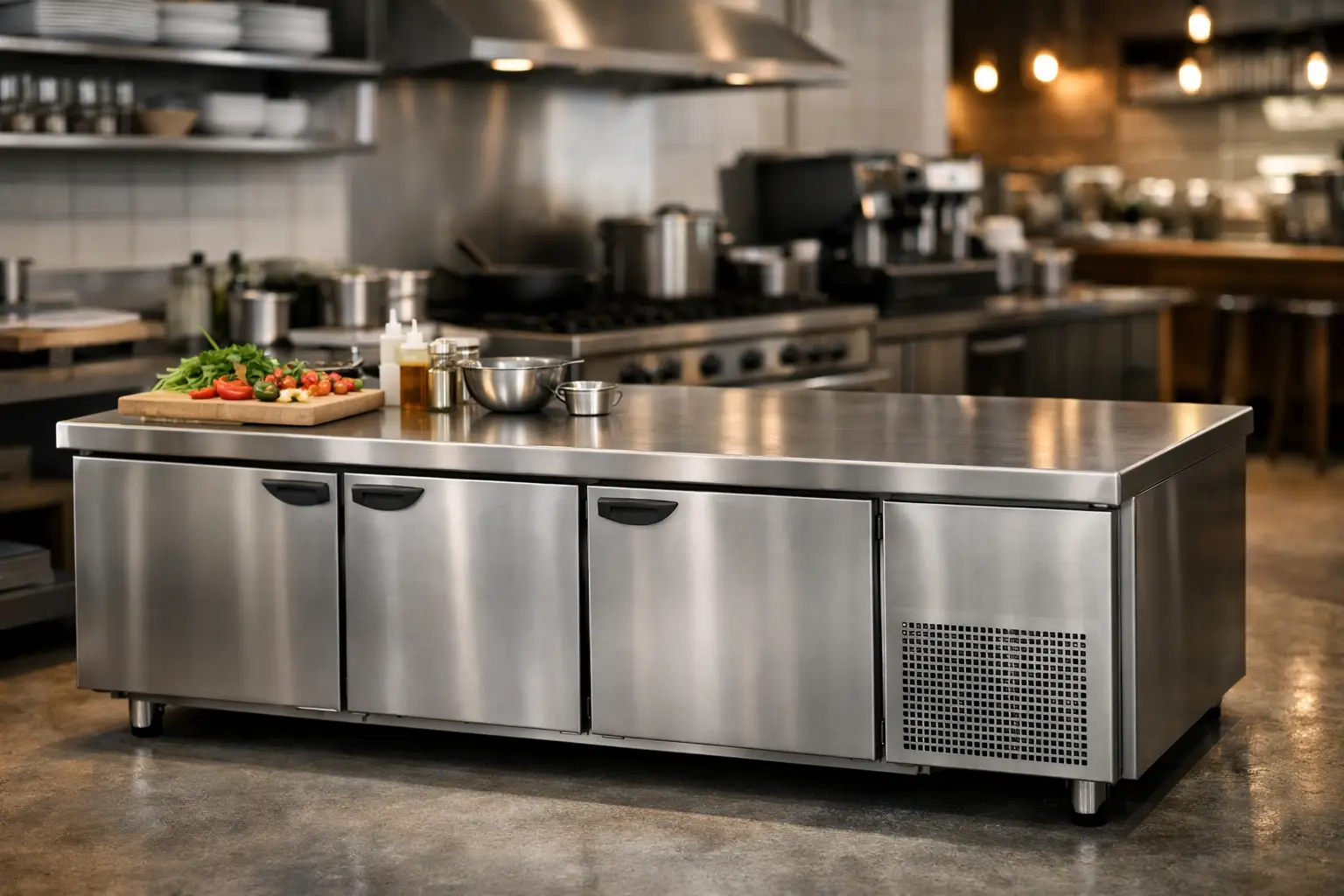
A freezer bench can solve two daily café problems in one footprint: where to hold frozen stock and where to prep service. But the wrong unit can create a different problem – cramped workflow, poor access to ingredients, excess heat around the compressor or a bench that cannot keep up during a busy weekend. Choosing a freezer bench for cafe kitchen use means looking beyond the sticker price and matching the unit to your menu, prep volume and available space.
For a small café, a compact two-door freezer bench may be all that is needed for pastries, frozen berries, chips, dessert components and backup food stock. A high-volume brunch venue, takeaway operation or café with a strong dessert menu may need more underbench capacity, a larger worktop and faster access during service. The best option is the one that earns its space every shift.
Start with the way your café actually works
Before comparing dimensions, look at where frozen product enters the kitchen, where it is stored and where staff need it. A freezer bench works best when it removes unnecessary walking. For example, placing it beneath a preparation area can keep frozen pastry, portioned proteins or dessert stock close to the team without sending staff across the kitchen to an upright freezer.
Think about the busiest 30 minutes of your day, not the quiet period. If two staff members need the bench at once to portion food, assemble takeaway orders or prepare dessert plates, the available worktop matters as much as the cabinet volume. If the bench will sit on a production line, make sure door openings, handles and staff movement do not block adjacent cooking, wash-up or cold-prep equipment.
A freezer bench is not always the right replacement for a large upright freezer. It is excellent for accessible working stock, but it may not provide enough capacity for bulk deliveries. Many cafés use a combination: an upright freezer for reserve stock and an underbench unit for the ingredients needed through service.
Freezer bench for cafe kitchen sizing and capacity
Bench freezers are commonly available in two-door, three-door and larger configurations. More doors generally mean more storage and a longer worktop, but they also take up valuable floor space. Measure the installation area carefully, including access routes through doors, corridors and around fixed counters. There is little value in buying a larger unit if it cannot be delivered into the kitchen or prevents a safe working aisle.
Internal capacity should be assessed against your ordering cycle. If frozen goods arrive once or twice a week, allow enough room to store stock without packing the cabinet tightly. Overloading can restrict air circulation, make stock rotation harder and affect consistent temperature performance.
Also check the shelf layout and usable internal dimensions. A quoted litre capacity is useful, but it does not tell you whether your bakery trays, food pans, dessert tubs or boxed products will fit efficiently. A shallow cabinet may suit portioned items, while deeper storage is useful for cartons and larger containers. Bring the dimensions of your usual packaging into the buying decision.
Choose a worktop that suits the task
The stainless-steel top is a key reason cafés choose a freezer bench. It provides a practical, easy-clean surface for prep, plating or holding small appliances. However, not every top should be treated as a chopping block. Use appropriate boards for knife work, and avoid placing excessive loads on the bench unless the manufacturer confirms it is suitable.
Consider what will sit above it. A compact microwave, bench-top mixer, display equipment or packaging station can change the load and clearance requirements. If the unit is being installed under a counter, confirm the finished height allows for safe operation, airflow and cleaning.
For venues with specific workflow requirements, stainless-steel benching can be planned around refrigeration rather than added as an afterthought. This is particularly useful in narrow café kitchens where every centimetre of preparation space needs to serve a purpose.
Doors, drawers and day-to-day access
Door configuration affects speed and convenience. Standard hinged doors offer flexible storage and suit boxed or bulky ingredients. Drawer models can make it easier to organise smaller items, portioned stock and frequently used products, reducing the time staff spend searching through shelves.
There is a trade-off. Drawers can improve organisation, but they may be less suited to awkward cartons or taller containers. Doors tend to provide more open internal space, though they require staff to bend and reach further. Consider the products that move most often, not just the items that are stored occasionally.
Refrigeration performance is not an optional extra
Commercial freezer benches work hard in Australian kitchens, particularly where ambient temperatures rise, extraction is limited or the unit sits near cooking equipment. Check the specified operating conditions and ensure the freezer is designed for commercial use rather than light-duty back-of-house storage.
Ventilation is essential. Many refrigeration units reject heat through the front, rear or side of the cabinet. Blocking those areas with walls, boxes or tight cabinetry can force the system to work harder and may lead to higher energy use or premature service issues. Follow the required clearances, and make sure staff can clean dust and debris from accessible components.
The location matters too. Avoid placing a freezer bench directly beside fryers, chargrills, ovens or dishwashers where possible. Heat and steam place extra demand on refrigeration, while grease and moisture can make cleaning more difficult. If the layout leaves no alternative, speak with an equipment adviser before installation so the right model and clearances can be considered.
Check electrical, cleaning and compliance details early
A freezer bench is a long-term operational purchase, so the small details deserve attention. Confirm the electrical supply required, the plug type and whether a dedicated circuit is needed. Do not assume the nearest power point is suitable, especially in an older tenancy or a café undergoing refurbishment.
Cleaning access is equally important. Staff need room to sweep and mop around the unit, wipe down the stainless top and clean door seals. Cracked or dirty seals can affect temperature retention and increase running costs. Choose a position where doors can fully open and where the cabinet can be moved or serviced when needed.
Food safety relies on good process as well as good equipment. A freezer bench should hold frozen food at the required temperature, but staff still need to minimise door opening, avoid loading warm product straight into the cabinet and rotate stock using clear date labels. A visible temperature display is useful, while separate temperature monitoring may be appropriate for venues with stricter internal procedures.
New versus quality pre-owned freezer benches
A new freezer bench offers current specifications, manufacturer warranty coverage and a clean starting point for a new fitout. It can be the sensible choice where appearance, energy use, exact dimensions or a specific configuration are priorities.
Quality pre-owned equipment can offer strong value for a café replacing a failed unit, opening on a tighter budget or adding short-term capacity. The key is buying from a supplier that can clearly explain the unit’s condition, dimensions and inclusions. Ask about the refrigeration system, door seals, shelves, temperature performance and warranty terms before committing.
The lowest upfront price is not always the best value. A unit that is too small, poorly positioned or unsuitable for the kitchen’s heat load can cost more in lost time, service call-outs and replacement stock. Factor in delivery, installation, electrical work and any changes needed to surrounding benches or cabinetry.
Plan the purchase around your wider kitchen
A freezer bench should fit into the full café workflow: receiving, storage, preparation, cooking, service and wash-up. If you are fitting out a new venue or rebuilding an existing kitchen, consider refrigeration alongside cooking equipment, stainless workstations and storage from the start. That approach can prevent expensive layout changes later.
CKE Sydney can assist operators sourcing individual refrigeration equipment or planning a broader commercial kitchen fitout, with new and quality pre-owned options available. For eligible purchases, finance can also help preserve cash flow for opening stock, staffing and other launch costs.
The right freezer bench will not make noise in your operation because it simply works: frozen ingredients are within reach, the prep surface is usable, staff can move freely and the cabinet holds temperature through service. Measure carefully, buy for your busiest trade and leave enough room for the unit to breathe.