
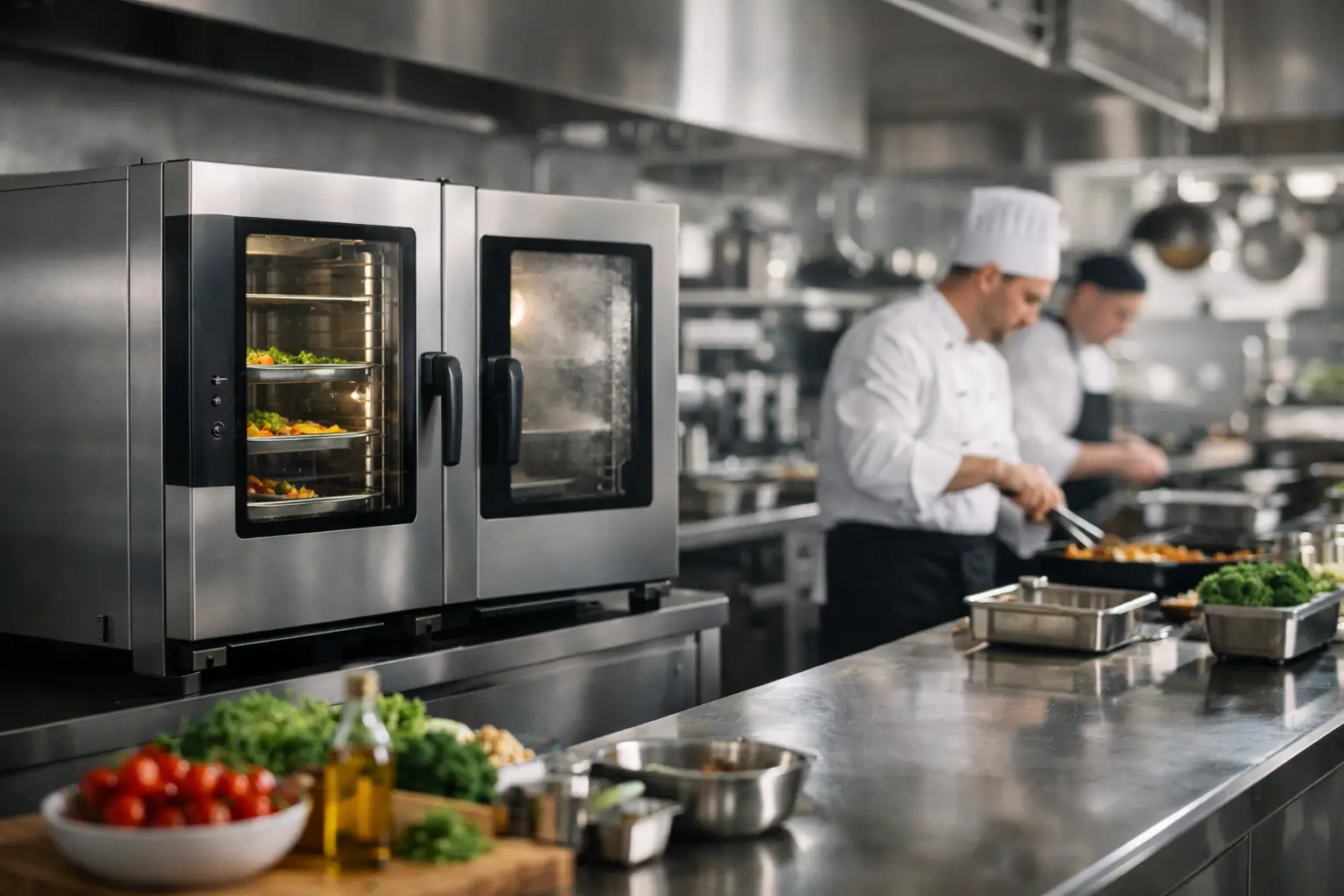
A combi oven can quickly become the busiest piece of cooking equipment in a commercial kitchen. When it is handling breakfast bacon, lunch roasts, bulk vegetables, regeneration and bakery work in the same shift, the decision is about more than oven capacity. Convotherm combi ovens are worth considering for operators who need consistent results, better production control and a practical way to get more output from limited kitchen space.
For a Sydney cafe, a high-volume pub, a caterer working off-site or an aged-care kitchen producing meals on schedule, the right unit can reduce reliance on separate steamers, convection ovens and holding equipment. The wrong unit, however, can create service bottlenecks, add avoidable cleaning work or demand utilities the site cannot support. Start with the way your kitchen actually works, then match the oven to that workload.
What a combi oven does in a working kitchen
A combi oven combines dry heat, steam and combination cooking in one cabinet. This gives kitchen teams more control over moisture, heat transfer and cooking results than a standard convection oven alone. In practical terms, it can roast proteins while retaining yield, cook trays of vegetables with consistent colour, steam seafood or grains, bake, regenerate plated or bulk meals, and hold food at controlled temperatures where the model supports it.
The attraction is flexibility, but flexibility only pays off when it supports your menu and production pattern. A cafe doing cabinet food, breakfast and light lunch service may benefit from a compact unit that handles baking, reheating and batch cooking. A club bistro or hotel may need a larger roll-in or high-capacity configuration for functions, carveries and banquet production.
Convotherm equipment is commonly selected by kitchens that want programmable cooking, repeatable results across different staff members and a more organised approach to batch production. Features and capacities vary by series and model, so confirm the exact specification before planning your menu around a function.
Choosing Convotherm combi ovens by capacity
The first question is not simply, “How many people do we serve?” It is, “How much food must be cooked at the same time, and when?” A venue serving 180 covers across a long lunch period has a different requirement from a caterer producing 180 meals for a 30-minute collection window.
Smaller countertop or compact units can suit cafes, bakeries, takeaway shops and satellite kitchens where bench space is available but floor space is tight. They are often useful for baking pastry, cooking breakfast items, regenerating cabinet food and producing smaller batches without firing up larger equipment.
Medium-capacity units are a common fit for restaurants, pubs, clubs and school kitchens. They can support a broad menu while allowing tray-based production during prep. The key is to check the tray format, shelf spacing and usable load, not just the number of trays listed on a brochure. Deep gastronorm pans, hotel pans, baking trays and bulky roasts all use space differently.
Larger floor-standing units are designed for serious volume. They make sense for hotels, central production kitchens, hospitals, aged-care facilities, major events and caterers. These kitchens should look closely at loading arrangements, trolley compatibility, door clearance, extraction and the space needed for staff to work safely around the oven.
Buying too small usually means more cooking cycles, rushed prep and pressure during service. Buying too large can waste floor space and energy if the oven runs lightly loaded most of the week. The sensible choice is the size that covers regular peak production, with a realistic allowance for growth rather than an oversized guess.
Utilities and site checks before you order
A combi oven purchase should begin with a site check, particularly when replacing a conventional oven. The cabinet may fit the old position, but the electrical supply, water treatment, drainage, ventilation and access route may not.
Electricity requirements differ between models. Confirm voltage, phase, amperage and isolator requirements with a qualified electrician before finalising the purchase. If gas is being considered, check the available gas supply, compliance requirements and whether the selected configuration is suitable for the site.
Water quality matters as much as the connection itself. Steam equipment needs an appropriate water supply and drainage arrangement, and poor water quality can lead to scale build-up, reduced performance and avoidable service costs. Discuss filtration or treatment requirements for your location and local water conditions. It is a small part of the project that can protect a much larger investment.
Ventilation also needs proper planning. Depending on the oven model, cooking application and local regulations, you may require a canopy or another approved ventilation solution. Do not assume a ventless option removes every site requirement. Speak with your installer, certifier and equipment supplier early, especially for shopping-centre tenancies, strata sites and institutional facilities.
Finally, measure the delivery path. Check door widths, tight turns, lifts, ramps and the final position. A quality oven is not much use if delivery crews cannot safely get it through the rear access or into the kitchen without removing doors or benches.
Match the cooking modes to your menu
Combi ovens are often sold on their long list of modes, but a busy operator should focus on the programs that will be used every day. A roast-heavy menu benefits from controlled combination cooking and probe cooking. A bakery or cafe may place more value on baking control, humidity management and repeatable settings. A catering kitchen may prioritise regeneration, overnight cooking and easy program selection for multiple staff.
Programming is particularly useful where recipes are repeated across shifts. A chef can set a cooking sequence for chicken, lamb shoulder, roasted vegetables or breakfast muffins, then give staff a clear process to follow. This helps protect consistency when the head chef is off-site, the kitchen is short-staffed or casual staff are covering a busy weekend.
There is a trade-off. More functions can improve control, but only if the team is trained to use them. An oven with advanced programming will not fix poor portioning, overloaded trays or rushed cleaning. Allow time for commissioning, staff training and a simple set of house programs based on your actual menu.
Cleaning, maintenance and daily use
Cleaning is one of the strongest reasons to assess a combi oven carefully rather than choose on purchase price alone. Look at the cleaning system available for the model, the cost and supply of cleaning chemicals, and how easily staff can inspect door seals, racks, drains and the cooking chamber.
At the end of a long service, complicated cleaning routines tend to be skipped. That affects hygiene, performance and the lifespan of the equipment. Choose a process your team can complete consistently, then make it part of the closing checklist. Staff should also know not to use unsuitable chemicals or abrasive tools that can damage the chamber and components.
Preventive servicing is equally practical. Keep records of water filtration changes, cleaning cycles, error messages and technician visits. A small issue dealt with during quiet trade is generally far less disruptive than an oven failure before a booked function or Saturday dinner service.
Build the oven into the kitchen workflow
A combi oven needs more than a place against the wall. Think about where raw product arrives, where trays are loaded, where hot food lands, and how it moves to pass, holding or packaging. If staff must carry hot trays through a crowded prep area or across the dishwashing path, the layout will slow service and raise safety risks.
For a new venue or refurbishment, plan adjacent bench space for tray staging and a landing area for cooked food. Consider nearby refrigeration for mise en place, hot holding for service and shelving for trays and gastronorm pans. In higher-volume operations, a well-positioned oven can reduce steps throughout the day. In a poorly planned kitchen, even a premium unit becomes another obstacle.
CKE Sydney can assist operators sourcing individual equipment as well as those planning a full commercial kitchen fitout. That is useful when an oven decision affects benches, refrigeration, extraction, electrical services and the flow of the whole kitchen rather than one replacement item.
A practical buying checklist
Before selecting a Convotherm combi oven, confirm the menu applications, peak-hour batch volume, tray sizes, available utilities, water treatment, ventilation, access dimensions and cleaning process. Also consider who will operate it. The best specification for an experienced hotel brigade may not be the best choice for a small venue with a lean team and frequent staff turnover.
Ask for clear pricing, warranty details, delivery arrangements and the support available after installation. If capital needs to be preserved for fitout works, stock or opening costs, finance may also be worth considering as part of the equipment plan.
The right combi oven should earn its bench or floor space every day: producing reliable food, helping staff work faster and giving your kitchen room to handle the next busy service with confidence.