
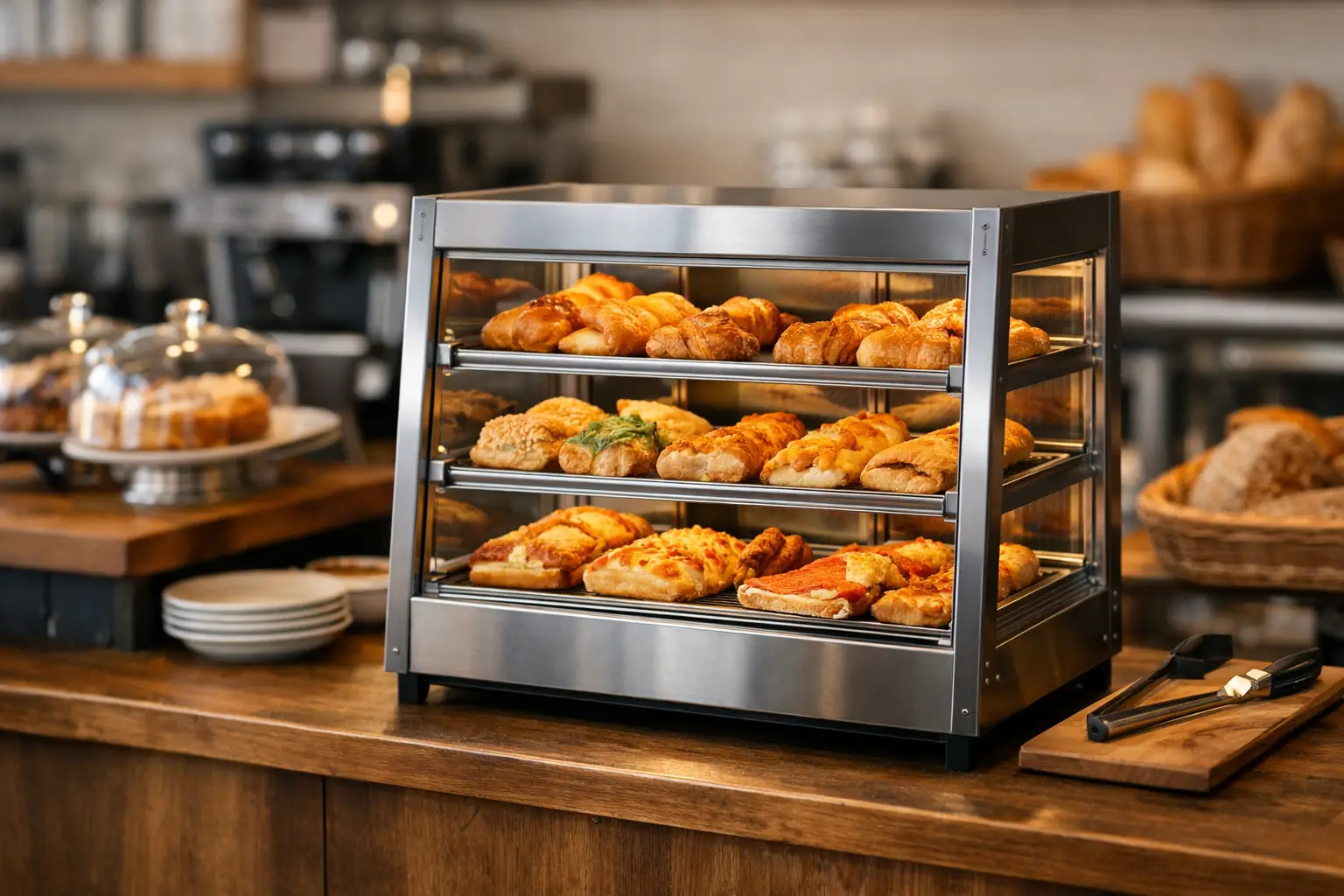
The lunchtime rush is not the time to find out your pies have dried at the edges, your sausage rolls are only warm in the middle, or your cabinet cannot keep up with the queue. The right heated food display cabinet bakery operators choose does more than hold stock. It protects product quality, presents food properly and helps staff serve quickly without constantly returning to the oven.
For bakeries, café counters, petrol stations, clubs and takeaway shops, a heated cabinet is a working part of the service line. Choosing one comes down to the food you sell, the volume you expect and the bench space you can realistically give it.
Start With the Food You Need to Hold
Not every hot display cabinet suits every bakery product. A cabinet that keeps pies and sausage rolls appealing for a busy morning may not be the best choice for delicate pastries, pizza slices or fried food. The aim is to hold food at a safe serving temperature while retaining the texture customers expect.
Pies, pasties and sausage rolls generally benefit from steady, even heat. Products with a crisp base need airflow and suitable trays so steam does not build underneath them. Croissants, danishes and other light pastries can dry out quickly if held too hot or too long. If your offer includes several product types, allow for separate shelves or a cabinet with adjustable temperature control rather than relying on one fixed setting.
Holding time matters as much as temperature. A display cabinet is not a substitute for fresh batch production. For a strong bakery counter, it is usually better to bake or reheat smaller batches regularly than fill every shelf at opening and hope the product lasts through lunch. This approach reduces waste and keeps the cabinet looking full with food worth buying.
Heated Food Display Cabinet Bakery Size and Layout
Cabinet capacity should reflect your busiest trading period, not just the quiet hours. Look at how many hot items you sell in a typical 30-minute peak, then consider how often staff can replenish from the kitchen. A small counter-top unit can work well for a café with a focused pie and toastie offer. A high-volume bakery, food court tenancy or service station may need a larger multi-shelf cabinet with rear access for fast restocking.
Measure the installation area properly before ordering. Include the cabinet footprint, door clearance, power lead, ventilation space and room for staff to work behind the counter. It is easy to buy a cabinet that fits on the bench but leaves no practical space to load trays, clean glass or take payments.
Front-access cabinets suit self-service areas where customers choose their own product, provided the layout supports safe traffic flow. Rear-service models keep handling with staff and can be a better fit for premium bakery counters, busy cafés and venues where speed and presentation are priorities. Some operators prefer pass-through designs where the kitchen loads from one side and customers are served from the other.
Shelf configuration also affects what you can display. Check shelf dimensions, spacing and the tray sizes supplied or supported. A cabinet with more shelves is not automatically better if your larger pies, family quiches or pizza slices cannot sit comfortably on them. Adjustable shelves give more flexibility when your menu changes.
Heat, Humidity and Food Quality
The heating system has a direct impact on the result in the cabinet. Fan-forced heat can provide even temperature distribution and recovery when doors are opened frequently. Static heat may suit some applications but can create warmer and cooler zones, especially in a fully loaded cabinet. If consistent quality is critical, ask how the cabinet heats each shelf rather than comparing wattage alone.
Humidity is another practical consideration. Too little moisture can make pastry hard and dry. Too much can soften a crisp crust and leave food looking tired. Some cabinets include humidity controls or water pans, while others are designed for dry holding. The right option depends on your menu. A cabinet for moist items such as filled rolls or prepared meals may need a different setup from one carrying crisp savouries.
Temperature controls should be easy for staff to read and adjust. A clear digital display is useful during busy service, especially where different team members are responsible for opening, closing and food checks. Confirm the operating temperature range suits your planned products and follow your food safety procedures for temperature monitoring, batch rotation and disposal times.
Glass visibility is not just cosmetic. Heated glass and effective airflow help reduce fogging, so customers can see the food rather than a misted-up window. Bright, well-positioned internal lighting also makes a real difference to sales. Food that looks hot, fresh and easy to choose is more likely to move.
Counter-Top or Floor-Standing Cabinet?
A counter-top heated cabinet is often the sensible choice when space is tight or hot food is one part of a broader offer. It can sit near the point of sale, making upselling easier for coffee customers and reducing steps for staff. It is also a practical starting point for a new café, small bakery or takeaway shop managing a careful equipment budget.
Floor-standing cabinets offer more display capacity and a stronger visual presence. They suit high-footfall venues, bakeries with a large hot range and operators who want their hot food to be a key sales category. The trade-off is a larger footprint, higher initial cost and more planning around power, cleaning access and positioning.
Do not choose a larger unit simply because it has more shelves. Empty space can make a display look poorly stocked, while overfilling can restrict airflow and make it difficult for customers to see what is available. Match capacity to your actual sales pattern and production routine.
Build Quality, Cleaning and Daily Use
A bakery display cabinet works hard. Doors open repeatedly, trays are changed throughout the day and crumbs collect in places staff cannot always reach quickly. Stainless-steel construction, sturdy shelf supports, quality hinges and easy-to-remove trays are worthwhile features because they reduce downtime and make daily cleaning less of a chore.
Look closely at access. Can staff reach every internal corner? Can glass panels and shelves be cleaned without a complicated strip-down? Is there a crumb tray or drain arrangement where needed? A cabinet that is difficult to clean will eventually affect presentation, food hygiene and staff time.
Power requirements need checking before delivery. Confirm whether the unit runs on standard single-phase power or requires a different electrical setup. A larger cabinet may also add significant heat to a compact service area, particularly in summer. Good kitchen design considers the cabinet alongside ovens, coffee equipment, refrigeration and staff movement, rather than treating it as an afterthought.
Buy for Service, Not Just the Ticket Price
Price matters, particularly when fitting out a new venue or replacing several pieces of equipment. But the cheapest heated cabinet can cost more if it does not hold temperature well, looks poor after a short period or cannot support your peak trade. Compare dimensions, capacity, construction, controls, warranty and the availability of practical advice before making the call.
For operators balancing cash flow, finance can make the right equipment more accessible without compromising on capacity or quality. It is also worth considering whether a quality pre-owned unit suits your requirements, particularly for a secondary counter, temporary operation or straightforward hot-holding task. The condition, warranty and suitability for your menu should be clear before purchase.
CKE Sydney can help bakery and foodservice operators compare options based on real counter space, menu mix and expected volume, whether you are buying one cabinet or planning a complete kitchen fitout.
Before ordering, sketch the service area, count the trays you need during peak periods and write down the foods you plan to hold. Those three details will narrow the field quickly. A well-chosen cabinet lets your food do the selling, while your team stays focused on serving customers.